Black-eyed Susan

RUDBECKIA FULGIDA

If you’ve been searching for a plant that laughs in the face of Connecticut’s unpredictable summers, thrives in poor soil, and blooms so prolifically you’ll run out of places to cut flowers, Black-eyed Susan is your answer. This cheerful native wildflower has been quietly stealing the show in New England gardens for generations, and honestly, it deserves all the attention. There’s something deeply satisfying about a plant that simply *works*—no fussing, no second-guessing, just waves of golden-yellow blooms from July through October.

What it looks like

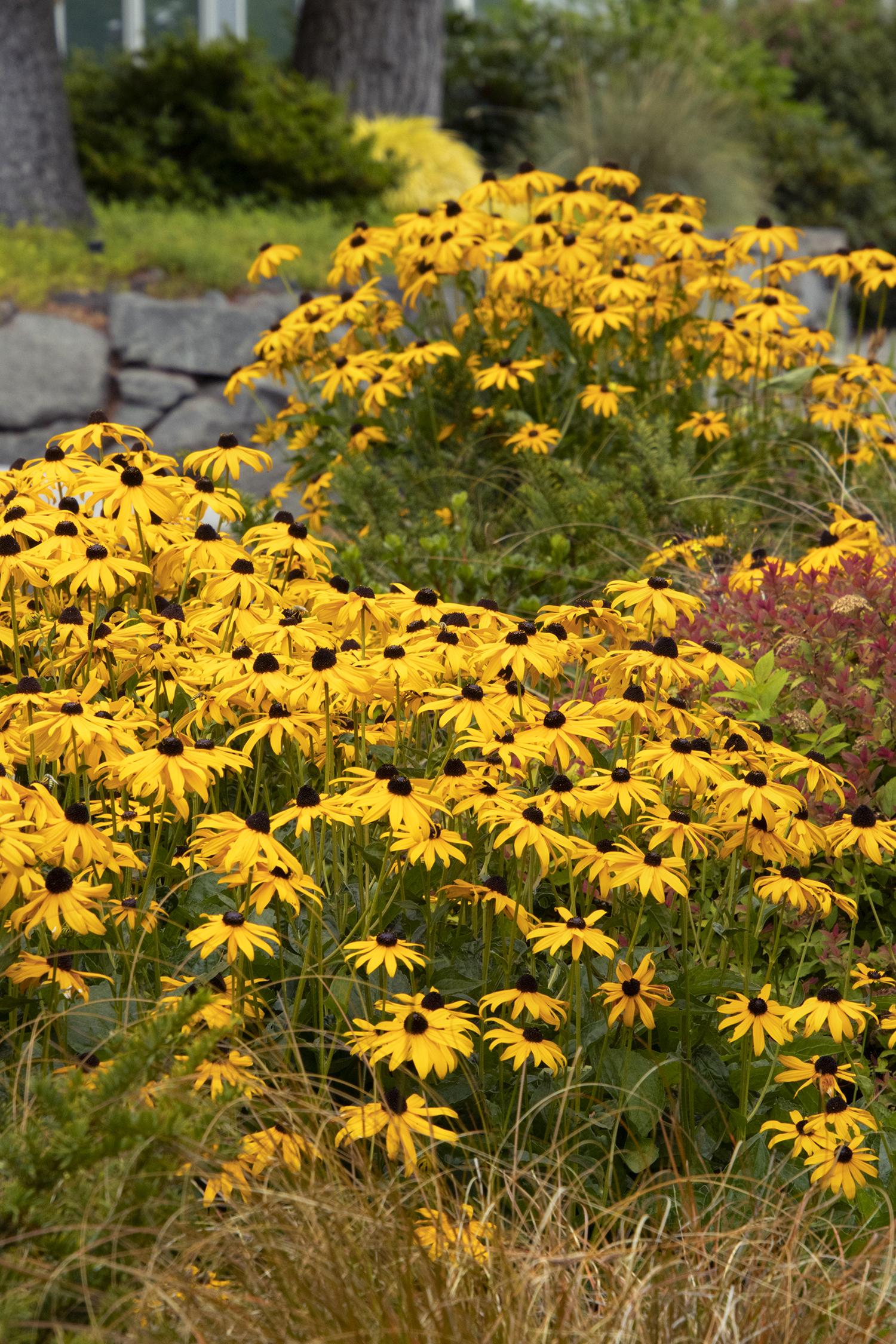
Black-eyed Susan lives up to its common name beautifully. Each flower is a perfect circle of bright golden-yellow petals—think pure sunshine—surrounding a rich, dark brown-black central disc. The blooms sit atop sturdy, branching stems clad in lance-shaped, medium-green leaves that have a slightly rough, natural texture. Plants grow into neat, full mounds that are pretty even before the flowers show up. The overall effect is wonderfully cheerful without being saccharine. These are serious flowers with character, the kind that make you smile every time you walk past.

Growing it in your garden

This is where Black-eyed Susan truly shines for Connecticut gardeners. RUDBECKIA FULGIDA asks very little and gives abundantly in return. It’s not picky about soil—in fact, it actually prefers conditions on the leaner side. Poor, well-draining soil? Perfect. Existing garden bed that’s been picked over? Even better. Black-eyed Susan doesn’t get leggy or weak from lack of fertilizer; it just stays compact and flowers beautifully. Plant it in a location with at least six hours of direct sun, though it’ll still perform respectably in partial shade. Space plants 18 to 24 inches apart—they’ll fill in nicely without looking crowded.

One of the best parts about growing Black-eyed Susan is that it naturally spreads through underground rhizomes, so established plantings become increasingly full and abundant over time. Your first-year plants might be modest, but by year three, you’ll have substantial, flowering drifts that require minimal intervention.

Through the seasons

Spring brings fresh green growth as Black-eyed Susan emerges reliably from the ground. Early summer is all about foliage development and the appearance of flower buds. Then comes the main event: from mid-July through October, you’ll have continuous blooming. In a typical Connecticut season, this plant stays in flower right up until the first hard frost, sometimes even pushing through light frosts with blooms intact. The dark seed heads that follow the flowers are incredibly attractive and provide food for goldfinches through fall and into winter. Leave the dried stems standing through winter—they add textural interest to the garden and shelter overwintering insects.

Where it shines

Black-eyed Susan is a workhorse for sun-drenched garden beds, wildflower meadows, and pollinator gardens. It’s equally at home in a casual cottage garden or a more structured perennial border. Use it to edge paths, anchor mixed plantings, or create bold drifts in open spaces. It’s exceptional in naturalized areas where you want to encourage native pollinators—butterflies and bees absolutely love these flowers. Black-eyed Susan also makes a fantastic cut flower, with a long vase life and cheerful presence in arrangements.

Perfect companions

Black-eyed Susan pairs beautifully with other long-blooming perennials that share its sunny disposition. Plant it alongside purple coneflowers (ECHINACEA), which bloom simultaneously and create a striking color contrast. Pair it with ornamental grasses like little bluestem for movement and texture. It’s wonderful with other daisy-form flowers such as Shasta daisies or blanket flower. For a later-season combo, grow it near Joe-Pye weed or tall sedum for extended color into fall. In a cottage garden style, it softens the edges of shrubs and creates a relaxed, abundant feeling.

Care tips

Black-eyed Susan practically takes care of itself. Water regularly during establishment (first season), then it becomes quite drought-tolerant once established. Deadheading extends bloom season, but it’s entirely optional—if you want those seed heads for wildlife, skip it. No staking needed, even in rain. No fertilizing necessary (again, this plant prefers lean conditions). In late fall or early spring, cut back the previous year’s growth to about 3 inches. That’s honestly all this plant needs. It’s not susceptible to serious pests or diseases in Connecticut gardens.

Quick facts

  • Hardiness Zone: 3–9 (thrives throughout Connecticut)
  • Mature Height & Spread: 18–24 inches tall and wide
  • Bloom Season: July through October
  • Light Requirements: Full sun (6+ hours); tolerates partial shade
  • Water Needs: Moderate during establishment; drought-tolerant once established
  • Available at: Both our retail and wholesale locations

Black-eyed Susan

A colorful, fuss-free border plant and excellent choice for cut flowers. Bright, daisy-like, golden yellow flowers with black centers cover the dark green foliage. Tolerates heat, humidity, and clay soil.

Pot Size (gallons), Height: #2

Description

Black-eyed Susan

RUDBECKIA FULGIDA

If you’ve been searching for a plant that laughs in the face of Connecticut’s unpredictable summers, thrives in poor soil, and blooms so prolifically you’ll run out of places to cut flowers, Black-eyed Susan is your answer. This cheerful native wildflower has been quietly stealing the show in New England gardens for generations, and honestly, it deserves all the attention. There’s something deeply satisfying about a plant that simply *works*—no fussing, no second-guessing, just waves of golden-yellow blooms from July through October.

What it looks like

Black-eyed Susan lives up to its common name beautifully. Each flower is a perfect circle of bright golden-yellow petals—think pure sunshine—surrounding a rich, dark brown-black central disc. The blooms sit atop sturdy, branching stems clad in lance-shaped, medium-green leaves that have a slightly rough, natural texture. Plants grow into neat, full mounds that are pretty even before the flowers show up. The overall effect is wonderfully cheerful without being saccharine. These are serious flowers with character, the kind that make you smile every time you walk past.

Growing it in your garden

This is where Black-eyed Susan truly shines for Connecticut gardeners. RUDBECKIA FULGIDA asks very little and gives abundantly in return. It’s not picky about soil—in fact, it actually prefers conditions on the leaner side. Poor, well-draining soil? Perfect. Existing garden bed that’s been picked over? Even better. Black-eyed Susan doesn’t get leggy or weak from lack of fertilizer; it just stays compact and flowers beautifully. Plant it in a location with at least six hours of direct sun, though it’ll still perform respectably in partial shade. Space plants 18 to 24 inches apart—they’ll fill in nicely without looking crowded.

One of the best parts about growing Black-eyed Susan is that it naturally spreads through underground rhizomes, so established plantings become increasingly full and abundant over time. Your first-year plants might be modest, but by year three, you’ll have substantial, flowering drifts that require minimal intervention.

Through the seasons

Spring brings fresh green growth as Black-eyed Susan emerges reliably from the ground. Early summer is all about foliage development and the appearance of flower buds. Then comes the main event: from mid-July through October, you’ll have continuous blooming. In a typical Connecticut season, this plant stays in flower right up until the first hard frost, sometimes even pushing through light frosts with blooms intact. The dark seed heads that follow the flowers are incredibly attractive and provide food for goldfinches through fall and into winter. Leave the dried stems standing through winter—they add textural interest to the garden and shelter overwintering insects.

Where it shines

Black-eyed Susan is a workhorse for sun-drenched garden beds, wildflower meadows, and pollinator gardens. It’s equally at home in a casual cottage garden or a more structured perennial border. Use it to edge paths, anchor mixed plantings, or create bold drifts in open spaces. It’s exceptional in naturalized areas where you want to encourage native pollinators—butterflies and bees absolutely love these flowers. Black-eyed Susan also makes a fantastic cut flower, with a long vase life and cheerful presence in arrangements.

Perfect companions

Black-eyed Susan pairs beautifully with other long-blooming perennials that share its sunny disposition. Plant it alongside purple coneflowers (ECHINACEA), which bloom simultaneously and create a striking color contrast. Pair it with ornamental grasses like little bluestem for movement and texture. It’s wonderful with other daisy-form flowers such as Shasta daisies or blanket flower. For a later-season combo, grow it near Joe-Pye weed or tall sedum for extended color into fall. In a cottage garden style, it softens the edges of shrubs and creates a relaxed, abundant feeling.

Care tips

Black-eyed Susan practically takes care of itself. Water regularly during establishment (first season), then it becomes quite drought-tolerant once established. Deadheading extends bloom season, but it’s entirely optional—if you want those seed heads for wildlife, skip it. No staking needed, even in rain. No fertilizing necessary (again, this plant prefers lean conditions). In late fall or early spring, cut back the previous year’s growth to about 3 inches. That’s honestly all this plant needs. It’s not susceptible to serious pests or diseases in Connecticut gardens.

Quick facts

  • Hardiness Zone: 3–9 (thrives throughout Connecticut)
  • Mature Height & Spread: 18–24 inches tall and wide
  • Bloom Season: July through October
  • Light Requirements: Full sun (6+ hours); tolerates partial shade
  • Water Needs: Moderate during establishment; drought-tolerant once established
  • Available at: Both our retail and wholesale locations