
Description
NYSSA SYLVATICA
If you’ve been searching for a tree that handles wet soil, deep shade, and Connecticut winters without complaint—while also putting on one of New England’s most spectacular autumn shows—Black Gum might be the answer you’ve been waiting for. This native deciduous tree is a quiet overachiever, thriving in conditions where many ornamentals struggle, then absolutely stealing the spotlight come fall when its foliage turns a luminous scarlet-crimson that seems almost unreal against the gray New England sky.
What it looks like
Black Gum grows as a medium to large tree with a naturally pyramidal shape when young, becoming more rounded and spreading with age. Its fine-textured dark green leaves are glossy and narrow—almost elegant in their simplicity—creating a refined appearance throughout the growing season. What really sets it apart, though, is the autumn transformation. The color isn’t just red; it’s a deep, glowing crimson that often appears weeks before neighboring maples turn, and it holds that color longer too. The bark develops an attractive blocky, alligator-like texture as it matures, adding winter interest to your landscape.
Growing it in your garden
Black Gum is one of Connecticut’s most accommodating native trees. It performs beautifully in wet, acidic soils where you might otherwise struggle to plant anything substantial. It thrives in full sun to partial shade, making it versatile for various garden locations. The tree develops a deep taproot system, so while it needs consistent moisture when young, established trees become quite drought-tolerant—a valuable trait as our New England summers become increasingly variable. Plant it in spring or early fall to give it time to establish before winter’s demands.
Through the seasons
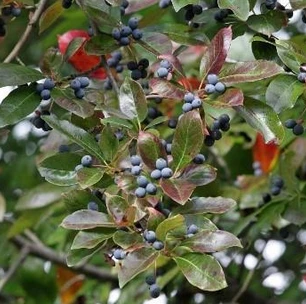
Spring arrives quietly on Black Gum, with small greenish flowers that are easy to miss but beloved by pollinators. Summer is when the tree settles into its job, providing reliable shade and that attractive fine-textured foliage that filters light beautifully. Fall is when Black Gum becomes the showstopper—leaves turn an intense scarlet-crimson earlier than most trees, often by late September in Connecticut. Small dark blue berries appear after flowering, feeding birds and wildlife through winter. Winter reveals that handsome blocky bark and the tree’s strong structural branching pattern.
Where it shines
Black Gum absolutely excels as a specimen tree where its fall color can be appreciated from a distance—plant it where you can see it from your house or garden entrance. It’s perfect for naturalizing near water features, wetlands, or low-lying areas of your property where water collects seasonally. It’s also an excellent choice for rain gardens and bioswales throughout Connecticut. The tree works beautifully as a backdrop in larger landscapes, and its understory compatibility means you can plant shade-tolerant shrubs and groundcovers beneath it without issue. In smaller gardens, select a cultivar or younger specimen, as this tree ultimately wants room to grow.
Perfect companions
Plant Black Gum with other moisture-loving Connecticut natives like Buttonbush (CEPHALANTHUS OCCIDENTALIS), Elderberry (SAMBUCUS CANADENSIS), or Red Maple (ACER RUBRUM) for a cohesive native planting. In the understory, try Christmas Fern (POLYSTICHUM ACROSTICHOIDES), Foamflower (TIARELLA CORDIFOLIA), or Sedges for a natural woodland feel. For a multi-season planting, combine it with flowering dogwood or serviceberry for spring interest, and add sweetshrub for fragrance. The dark foliage also looks striking against plants with chartreuse or silvery foliage.
Care tips
Black Gum is remarkably low-maintenance once established. Water young trees regularly through their first two growing seasons, especially during dry spells—deep, infrequent watering encourages strong root development. Established trees rarely need supplemental water except during severe drought. Pruning is minimal; remove any crossing or damaged branches in late winter, but otherwise let this tree develop its natural form. The tree is pest and disease-resistant, a refreshing quality that makes it a genuinely carefree choice. It’s naturally pest-resistant and doesn’t require regular spraying or fussing. Just plant it and let it do its thing.
Quick facts
- Hardiness Zone: 4-9
- Mature Height & Spread: 30-50 feet tall, 20-30 feet wide
- Bloom Season: Spring (small, inconspicuous flowers)
- Light Requirements: Full sun to partial shade
- Water Needs: Moderate to high; tolerates wet soil and drought once established
- Available at: Both our retail and wholesale locations