
Description

LIATRIS SPICATA
If you’ve been searching for a plant that brings fireworks to your garden without requiring a degree in horticulture, Blazing Star is your answer. This native wildflower earned its common name honestly—those tall, electrifying spikes of purple-pink flowers seem to glow against the summer garden like flames reaching toward the sky. But here’s what makes it truly special: it’s not just beautiful, it’s practically impossible to kill, and it loves Connecticut’s hot, dry summers as much as you do.
What it looks like
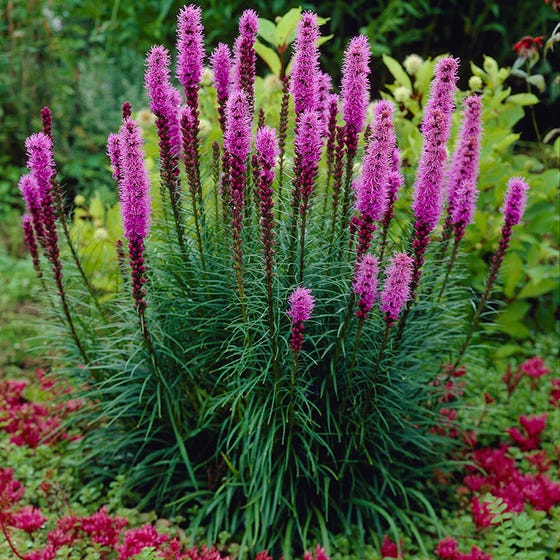
Blazing Star is an architectural plant that commands attention. Dense, narrow flower spikes rise 2 to 4 feet tall, packed tightly with tiny florets that open from bottom to top, creating a dramatic vertical accent that looks nothing like anything else in your garden. The flowers themselves are a luminous purple-pink—sometimes deeper, sometimes softer depending on the variety—and they practically vibrate against green foliage. The leaves are thin and grass-like, forming neat clumps at the base. It’s the kind of plant that looks equally striking standing alone or massed in groups where the cumulative effect is absolutely stunning.
Growing it in your garden
This is where Blazing Star truly excels. Unlike some showy perennials that demand fussy conditions, this plant thrives in ordinary Connecticut soil, especially if that soil tends toward the sandy or well-draining side. It actually prefers dry conditions once established, making it ideal for that sunny spot where water seems to disappear faster than you can say “drought.” Full sun is its happy place—at least six hours daily, though eight or more is even better. In partial shade, the stems may get leggy and flop, which you want to avoid. Plant in spring or fall, and space plants about 18 inches apart. The root system is relatively shallow, so it won’t compete aggressively with neighbors once it settles in.
Through the seasons
Blazing Star wakes up slowly in spring, which sometimes makes you wonder if it survived the winter—don’t panic, it’s just being reserved. By early summer, you’ll see the grass-like foliage emerging, building toward those dramatic flower spikes that typically begin showing color in mid-to-late July. The blooming period lasts until September, with flowers staying fresh and attractive even as August heat intensifies. Unlike some perennials that fade to brown mush by fall, Blazing Star maintains its structural appeal through autumn, and many gardeners leave the dried spikes standing through winter. They look surprisingly architectural against snow, and they provide seed for winter birds before you cut them back in early spring.
Where it shines
This plant is absolutely made for Connecticut’s heat and dry spells. It’s perfect for sunny borders where you want strong vertical accents, especially mixed in with other summer bloomers like coneflowers and black-eyed Susans. It’s ideal for cutting gardens—those spikes are stunning in arrangements and they last incredibly well in water. Butterfly gardens love it; pollinators find it irresistible. It’s also excellent for meadow gardens and naturalized settings where you want something that feels relaxed and authentic rather than fussily maintained. If you have a sunny slope prone to drying out, or a challenging spot where you’ve failed with water-loving plants, Blazing Star is worth trying.
Perfect companions
Pair Blazing Star with other sun-loving, drought-tolerant companions like COREOPSIS, RUDBECKIA (black-eyed Susan), ECHINACEA (purple coneflower), and SALVIA. The vertical spikes look particularly striking against mounding plants like NEPETA or ARTEMISIA. It works beautifully with ornamental grasses, where the textural contrast is absolutely gorgeous. White-flowering plants like GAURA or white PHLOX create drama alongside the purple spikes. For a hot-color combination, try it with orange DAYLILIES or warm-toned HELENIUM.
Care tips
Once established, Blazing Star is remarkably low-maintenance. Deadheading extends the bloom period, though leaving some flowers to mature and dry provides winter interest and bird food. It doesn’t need fertilizing unless your soil is particularly poor. Divide clumps every three to four years in spring if you want more plants or if the center dies out (rare, but it happens). In areas with persistently wet soil, ensure excellent drainage or you may lose plants to root rot. Staking tall varieties can prevent flopping, especially in partially shaded locations or where wind is a factor. Otherwise, just enjoy the show and let this low-demand performer do what it does best.
Quick facts
- Hardiness Zone: Zones 3-9
- Mature Height & Spread: 2-4 feet tall, 12-18 inches wide
- Bloom Season: July through September
- Light Requirements: Full sun (6+ hours daily)
- Water Needs: Low to moderate; prefers dry to well-draining soil
- Available at: Both our retail and wholesale locations