
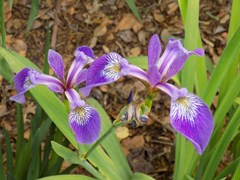
Description
IRIS VERSICOLOR
If you’ve been searching for something that handles wet soil, deep shade, and Connecticut winters without complaint, while also bringing jewel-toned beauty to your garden, the Blue Flag Iris has been waiting for you. This native wildflower is one of the toughest, most rewarding plants you can grow in New England, especially if you have a boggy corner, a rain garden, or a poorly drained spot that other plants refuse to colonize. The Blue Flag doesn’t just tolerate these challenging conditions—it absolutely thrives in them, rewarding your faith with stunning purple-blue flowers that seem impossibly elegant for a plant this adaptable.
What it looks like
The Blue Flag is a study in architectural grace. From sturdy clumps of upright, sword-like foliage emerge tall, slender stems crowned with flowers that look like they’ve been designed by someone who understands both geometry and romance. Each bloom features three upright petals called “standards” and three drooping petals called “falls,” typically in shades of deep blue-purple with white or yellow beards running down the centers of the falls. The flowers appear in mid-spring and continue for several weeks, with each stem producing multiple blooms that open sequentially. Even after the flowers fade, the elegant foliage remains attractive, adding vertical texture and structure to your garden beds.
Growing it in your garden
This is where the Blue Flag earns its reputation as a workhorse. While many irises demand well-drained soil and sunny spots, IRIS VERSICOLOR laughs in the face of those requirements. Plant it in consistently moist to wet soil—think swamp edges, rain gardens, and areas that stay soggy even in summer. It will also grow in regular garden soil, but it truly shines when conditions are damp. If you have that problem area where nothing else will establish, this is your answer. Space plants about 12 inches apart, and don’t feel pressured to amend the soil extensively. The Blue Flag prefers things as they are.
Through the seasons
Spring is the Blue Flag’s moment to shine, when those stunning purple-blue flowers emerge in May and early June. Summer brings lush green foliage that stays attractive and provides a backdrop for other garden plants. In autumn, the foliage takes on warm tones before eventually dying back. Winter is no concern—this native iris is completely hardy throughout Connecticut and beyond, settling into dormancy and emerging reliably each spring without any winter protection needed. It’s a plant you can literally plant and forget about, knowing it will be there, stronger and more established, year after year.
Where it shines
The Blue Flag is made for New England gardeners dealing with real-world conditions. Plant it in rain gardens where water collects after storms. Use it to naturalize around pond edges and stream banks. It’s perfect for bioswales and retention areas. In regular garden beds, it adds architectural interest and that native plant authenticity that’s becoming increasingly important for supporting local wildlife. Because it’s a Connecticut native, it also supports native pollinators and provides habitat for beneficial insects. If you’re working on a native plant landscape or a pollinator garden, the Blue Flag is a cornerstone plant.
Perfect companions
Group the Blue Flag with other moisture-loving natives for a cohesive, dynamic planting. Joe-Pye Weed (EUPATORIUM) creates wonderful textural contrast with its tall, airy flowers. Swamp Milkweed (ASCLEPIAS INCARNATA) brings additional color and supports monarchs beautifully. Sedges and rushes make excellent companions for the Blue Flag’s upright form, and astilbes add soft, feathery texture in shaded wet areas. Even in drier, regular garden conditions, the Blue Flag pairs beautifully with coreopsis, daylilies, and black-eyed Susans.
Care tips
Here’s the beautiful part: the Blue Flag requires almost no maintenance once established. Deadhead spent flowers if you want to keep it looking tidy, though this is entirely optional. In late fall or early spring, cut back old foliage to make room for new growth—a quick task that keeps the planting looking fresh. Divide congested clumps every 3 to 4 years if you want to expand your planting or rejuvenate older stands. Otherwise, just let it do what it does best: grow vigorously and return reliably every spring with flowers that seem too beautiful to be this low-maintenance.
Quick facts
- Hardiness Zone: Zones 3–9 (fully hardy throughout Connecticut and New England)
- Mature Height & Spread: 24–36 inches tall, 12–18 inches wide
- Bloom Season: Late May through June
- Light Requirements: Full sun to part shade (more shade-tolerant than many irises)
- Water Needs: Wet to consistently moist soil; loves boggy conditions
- Available at: Both our retail and wholesale locations