ILEX x MESERVEAE ‘BLUE PRINCESS’

Here’s what nobody tells you about hollies: the females are the real stars. While male hollies dutifully provide pollen from the shadows, the females—the true showstoppers—spend autumn and winter absolutely covered in brilliant red berries that persist long after the leaves fall. Blue Princess Holly is one of the finest female selections available, and she’s been stealing the spotlight in New England gardens for decades for excellent reason. Plant her where you need year-round structure, winter color, and a plant tough enough to laugh at Connecticut’s worst weather.

What it looks like

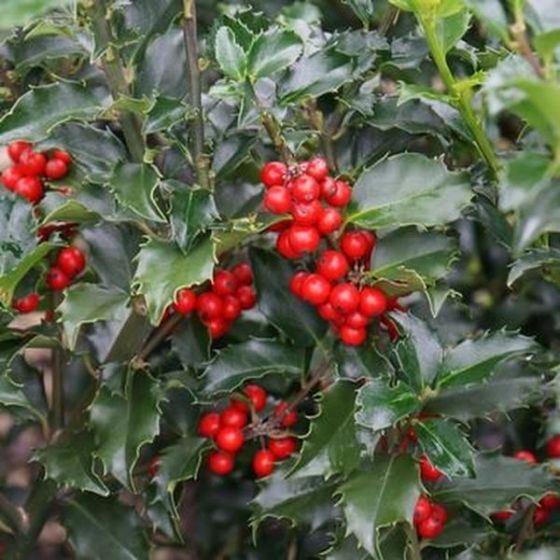
This is an evergreen holly with character. The foliage is dense and refined, with small, deep blue-green leaves that have the classic holly shape—slightly glossy, spiny-margined, and arranged in a way that creates beautiful textural depth. The real magic happens in late fall and continues right through winter: abundant scarlet-red berries emerge in clusters along the stems, creating a striking contrast against the dark foliage. The overall silhouette is naturally pyramidal and tidy, looking polished without requiring you to spend hours pruning. You’ll see berries from October straight through February or March in Connecticut, assuming the songbirds haven’t completely discovered them yet.

Growing it in your garden

Blue Princess Holly is remarkably adaptable, which is exactly why it performs so reliably throughout Connecticut and New England. She prefers full sun to partial shade—at least four hours of direct sun will maximize berry production, though she’ll tolerate dappled afternoon shade in warmer microclimates. The critical detail: she’s a female plant and requires a male holly nearby for cross-pollination and berry set. A male ILEX like Blue Prince or even a native male American Holly should be within a reasonable distance (bees are excellent pollen delivery systems). Soil-wise, she’s not fussy. She’ll grow in average to rich soil and actually prefers slightly acidic conditions. Unlike some finicky evergreens, she handles New England clay without complaint and even performs well in moist sites where other plants might sulk.

Through the seasons

Spring arrives quietly with Blue Princess—new growth emerges fresh and glossy, sometimes tinged with bronze. Small, inconspicuous white flowers appear in late spring, and if you have a male holly nearby, pollination occurs. Summer is all about foliage production and berry development; she’s building her autumn wardrobe all season long. Fall is when she truly performs: the berries redden and intensify from October onward, creating a focal point that deserves its own moment. Winter is her finest hour. When most of the garden has gone dormant and gray, Blue Princess stands bright-eyed and berry-laden, a beacon of color and life. The berries feed overwintering cedar waxwings and robins well into the season, adding movement and wildlife interest to your garden.

Where it shines

Blue Princess Holly is a garden workhorse. Plant her as a specimen where her berry display can be appreciated—perhaps visible from a kitchen window or along an entry path. She’s excellent in mixed evergreen borders, providing seasonal interest and vertical structure among other shrubs. Use her in foundation plantings where you need something that stays looking good year-round. She’s perfect for hedging applications too—you’ll get screening and seasonal color simultaneously. In urban and suburban Connecticut gardens where winter interest matters, she’s invaluable. She’s also wonderful in containers, making her an option for patios and decks where you want the drama of a berried evergreen.

Perfect companions

Pair Blue Princess Holly with other evergreens that share her love of sun and well-drained soil—ILEX GLABRA (Inkberry) shares her native adaptability, while SKIMMIA or TAXUS (Yew) provide different textural contrasts. For deciduous companions, CLETHRA (Sweet Pepperbush) blooms nearby in summer, and ILEX VERTICILLATA (Winterberry) picks up the berry story in late season. Consider underplanting with shade-tolerant groundcovers like HELLEBORUS or CAREX for softer texture at the base. The combination of Blue Princess with other berried plants creates extended seasonal interest and more reliable food sources for winter birds.

Care tips

Water regularly during her first season, then taper to natural rainfall once established—she’s quite drought-tolerant. A light mulch keeps roots happy without encouraging collar rot. Pruning is optional; she naturally forms a neat shape. If you want to shape her, do it in early spring before new growth explodes. She has no serious pest issues in our region, though spider mites occasionally appear in very hot, dry summers—a spray from the hose usually handles it. Ensure you have that male holly pollinator nearby; without one, you’ll get plenty of beautiful foliage but no berries. She’s unfazed by Connecticut salt spray, making her excellent for coastal gardens.

Quick facts

  • Hardiness Zone: 5-9 (very reliable throughout Connecticut)
  • Mature Height & Spread: 12-15 feet tall, 6-8 feet wide (slower-growing and compact for a holly)
  • Bloom Season: Late spring (flowers); berries persist autumn through winter
  • Light Requirements: Full sun to partial shade (4+ hours direct sun ideal for maximum berries)
  • Water Needs: Medium; tolerates both average moisture and occasional drought once established
  • Available at: Both our retail and wholesale locations.

Blue Princess Holly

Category:

A beautiful member of the wildly popular Blue Holly series, the Blue Princess (Ilex x meservae) is a female plant that produces tiny flowers and knockout red berries as long as there is a male pollinator, such as Blue Prince, nearby.

Pot Size (gallons), Height: #15

Description

ILEX x MESERVEAE ‘BLUE PRINCESS’

Here’s what nobody tells you about hollies: the females are the real stars. While male hollies dutifully provide pollen from the shadows, the females—the true showstoppers—spend autumn and winter absolutely covered in brilliant red berries that persist long after the leaves fall. Blue Princess Holly is one of the finest female selections available, and she’s been stealing the spotlight in New England gardens for decades for excellent reason. Plant her where you need year-round structure, winter color, and a plant tough enough to laugh at Connecticut’s worst weather.

What it looks like

This is an evergreen holly with character. The foliage is dense and refined, with small, deep blue-green leaves that have the classic holly shape—slightly glossy, spiny-margined, and arranged in a way that creates beautiful textural depth. The real magic happens in late fall and continues right through winter: abundant scarlet-red berries emerge in clusters along the stems, creating a striking contrast against the dark foliage. The overall silhouette is naturally pyramidal and tidy, looking polished without requiring you to spend hours pruning. You’ll see berries from October straight through February or March in Connecticut, assuming the songbirds haven’t completely discovered them yet.

Growing it in your garden

Blue Princess Holly is remarkably adaptable, which is exactly why it performs so reliably throughout Connecticut and New England. She prefers full sun to partial shade—at least four hours of direct sun will maximize berry production, though she’ll tolerate dappled afternoon shade in warmer microclimates. The critical detail: she’s a female plant and requires a male holly nearby for cross-pollination and berry set. A male ILEX like Blue Prince or even a native male American Holly should be within a reasonable distance (bees are excellent pollen delivery systems). Soil-wise, she’s not fussy. She’ll grow in average to rich soil and actually prefers slightly acidic conditions. Unlike some finicky evergreens, she handles New England clay without complaint and even performs well in moist sites where other plants might sulk.

Through the seasons

Spring arrives quietly with Blue Princess—new growth emerges fresh and glossy, sometimes tinged with bronze. Small, inconspicuous white flowers appear in late spring, and if you have a male holly nearby, pollination occurs. Summer is all about foliage production and berry development; she’s building her autumn wardrobe all season long. Fall is when she truly performs: the berries redden and intensify from October onward, creating a focal point that deserves its own moment. Winter is her finest hour. When most of the garden has gone dormant and gray, Blue Princess stands bright-eyed and berry-laden, a beacon of color and life. The berries feed overwintering cedar waxwings and robins well into the season, adding movement and wildlife interest to your garden.

Where it shines

Blue Princess Holly is a garden workhorse. Plant her as a specimen where her berry display can be appreciated—perhaps visible from a kitchen window or along an entry path. She’s excellent in mixed evergreen borders, providing seasonal interest and vertical structure among other shrubs. Use her in foundation plantings where you need something that stays looking good year-round. She’s perfect for hedging applications too—you’ll get screening and seasonal color simultaneously. In urban and suburban Connecticut gardens where winter interest matters, she’s invaluable. She’s also wonderful in containers, making her an option for patios and decks where you want the drama of a berried evergreen.

Perfect companions

Pair Blue Princess Holly with other evergreens that share her love of sun and well-drained soil—ILEX GLABRA (Inkberry) shares her native adaptability, while SKIMMIA or TAXUS (Yew) provide different textural contrasts. For deciduous companions, CLETHRA (Sweet Pepperbush) blooms nearby in summer, and ILEX VERTICILLATA (Winterberry) picks up the berry story in late season. Consider underplanting with shade-tolerant groundcovers like HELLEBORUS or CAREX for softer texture at the base. The combination of Blue Princess with other berried plants creates extended seasonal interest and more reliable food sources for winter birds.

Care tips

Water regularly during her first season, then taper to natural rainfall once established—she’s quite drought-tolerant. A light mulch keeps roots happy without encouraging collar rot. Pruning is optional; she naturally forms a neat shape. If you want to shape her, do it in early spring before new growth explodes. She has no serious pest issues in our region, though spider mites occasionally appear in very hot, dry summers—a spray from the hose usually handles it. Ensure you have that male holly pollinator nearby; without one, you’ll get plenty of beautiful foliage but no berries. She’s unfazed by Connecticut salt spray, making her excellent for coastal gardens.

Quick facts

  • Hardiness Zone: 5-9 (very reliable throughout Connecticut)
  • Mature Height & Spread: 12-15 feet tall, 6-8 feet wide (slower-growing and compact for a holly)
  • Bloom Season: Late spring (flowers); berries persist autumn through winter
  • Light Requirements: Full sun to partial shade (4+ hours direct sun ideal for maximum berries)
  • Water Needs: Medium; tolerates both average moisture and occasional drought once established
  • Available at: Both our retail and wholesale locations.