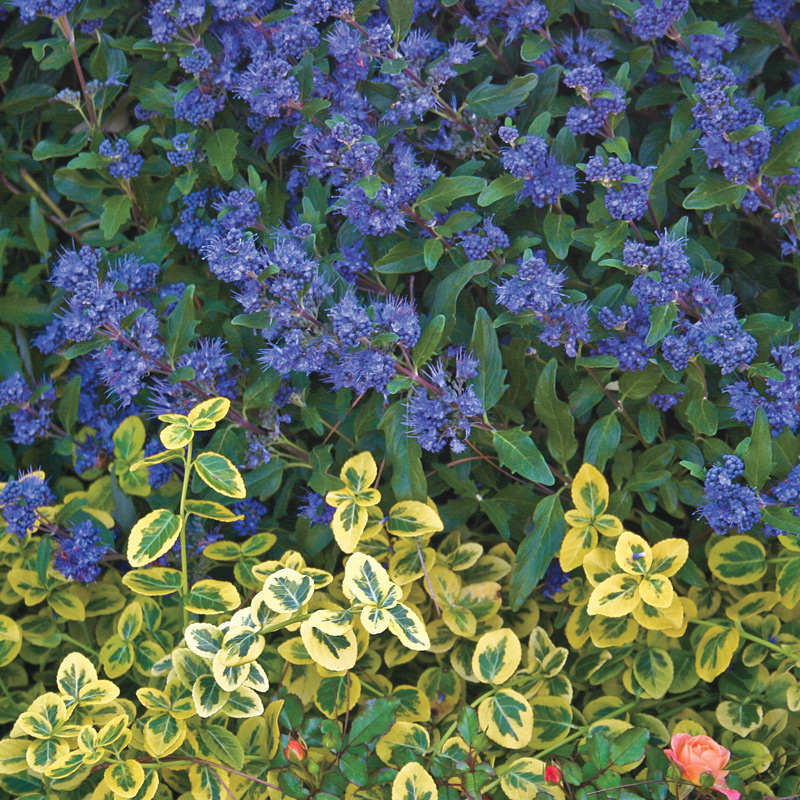
CARYOPTERIS X CLANDONENSIS ‘DARK NIGHT’

Here’s the honest truth about Bluebeard ‘Dark Night’: it’s one of those plants that works harder for your garden than you’d ever expect from something so delicate-looking. This stunning cultivar brings an almost electric shade of deep blue-purple to late summer gardens when most other plants are running out of steam. In a Connecticut landscape that can feel exhausted by August, ‘Dark Night’ arrives like a second wind, covered in wispy, fragrant flowers that seem to glow in the fading light.

What it looks like

Bluebeard ‘Dark Night’ is a deciduous woody shrub with an airy, fountain-like habit that never feels heavy or imposing. The foliage is fine-textured and gray-green, the kind of foliage that makes a perfect backdrop for the real star of the show: those remarkable flowers. The blooms appear in late summer through fall as delicate, feathery clusters in a deep, jewel-tone blue-purple that’s darker and richer than the species type. The flower clusters have an almost ethereal quality—they’re not showy in a bold way, but rather refined and sophisticated, like fireworks in miniature. You’ll also notice the flowers are incredibly fragrant, with a sweet, slightly spicy scent that attracts butterflies and bees like a magnet.

Growing it in your garden

Bluebeard ‘Dark Night’ is refreshingly unfussy about where you plant it, as long as you give it full sun and well-draining soil. Connecticut gardeners will appreciate that this plant is woody at its base but herbaceous at the tips, meaning it behaves somewhat like a perennial in our climate. Most years, winter will kill back the top growth, and the plant will regrow from the woody base in spring—this is completely normal and actually helps keep the plant compact and vigorous. If you live in a warmer microclimate or have a particularly mild winter, your plant might retain more top growth, which is fine too.

The real key to success is drainage. If your soil tends to be heavy clay, amend it generously with compost or aged bark to improve structure. This plant will not tolerate waterlogged conditions, especially over winter. Plant it in spring once the soil is workable, giving it space to reach its mature size without crowding. If you’re in a particularly cold microclimate, planting against a south-facing wall or in a spot with afternoon warmth can help.

Through the seasons

Spring arrives quietly with ‘Dark Night’—it’s often one of the last shrubs to leaf out, which can make you wonder if it survived the winter. Don’t panic. Wait until late May before you assume winter damage has occurred. Once growth begins, the plant fills in quickly with fine gray-green foliage. Summer finds the plant establishing itself, creating that lovely airy framework. Then September and October are when ‘Dark Night’ truly shines. As other plants fade, those incredible blue-purple flower clusters appear and continue blooming until frost. The flowers actually deepen in color as temperatures cool, becoming even more intense in the shortened days of fall. Come winter, the stems provide subtle winter interest, and the plant goes completely dormant, re-energizing for next year.

Where it shines

This is a plant for sunny borders, butterfly gardens, and late-season color displays. It’s perfect for cottage gardens, mixed perennial borders, and Mediterranean-inspired plantings. Because of its airy habit and fine foliage, it works beautifully as a see-through plant—you can plant it near the middle of a border and still see plants behind it. It’s excellent in containers where drainage is guaranteed, and stunning in combinations with ornamental grasses, which echo its delicate texture. In small yards or urban gardens, ‘Dark Night’ provides maximum interest without taking up much visual weight.

Perfect companions

Pair ‘Dark Night’ with late-blooming perennials like RUDBECKIA, SEDUM, and ASTER for a fall color symphony. Golden ornamental grasses like PANICUM ‘NORTHWIND’ or MISCANTHUS make a stunning contrast with those dark blue flowers. Try it with SALVIA GREGGII for a complementary flower color story, or with white-flowering plants like GAURA for crisp contrast. Silver-foliaged companions like ARTEMISIA enhance the plant’s cool-toned flowers beautifully.

Care tips

In early spring, once new growth is visible, cut back any dead wood. Some gardeners prefer to cut the entire plant back to about six inches above the ground to encourage a bushier shape—this works beautifully in Connecticut’s climate. Water regularly during the first growing season to establish a deep root system, then water during drought. Once established, ‘Dark Night’ is quite drought-tolerant. Deadheading spent flowers will encourage continued blooming, though leaving some flowers on the plant into fall provides wonderful wildlife habitat and interesting dried texture.

Quick facts

  • Hardiness Zone: 5-9 (reliable in Connecticut)
  • Mature Height & Spread: 2-3 feet tall and wide
  • Bloom Season: September through November
  • Light Requirements: Full sun (6+ hours daily)
  • Water Needs: Moderate; drought-tolerant once established
  • Available at: Both our retail and wholesale locations

Bluebeard ‘Dark Night ‘

Refreshing clusters of blue-purple flowers add late season color and attract butterflies, bees and other pollinators to your garden. A low-mounded shrub, its gray-green, lance-shaped foliage is very aromatic. A brush of the hand releases scent into your garden. Its flower clusters resemble clouds of smoke

Pot Size (gallons), Height: #3

Description

CARYOPTERIS X CLANDONENSIS ‘DARK NIGHT’

Here’s the honest truth about Bluebeard ‘Dark Night’: it’s one of those plants that works harder for your garden than you’d ever expect from something so delicate-looking. This stunning cultivar brings an almost electric shade of deep blue-purple to late summer gardens when most other plants are running out of steam. In a Connecticut landscape that can feel exhausted by August, ‘Dark Night’ arrives like a second wind, covered in wispy, fragrant flowers that seem to glow in the fading light.

What it looks like

Bluebeard ‘Dark Night’ is a deciduous woody shrub with an airy, fountain-like habit that never feels heavy or imposing. The foliage is fine-textured and gray-green, the kind of foliage that makes a perfect backdrop for the real star of the show: those remarkable flowers. The blooms appear in late summer through fall as delicate, feathery clusters in a deep, jewel-tone blue-purple that’s darker and richer than the species type. The flower clusters have an almost ethereal quality—they’re not showy in a bold way, but rather refined and sophisticated, like fireworks in miniature. You’ll also notice the flowers are incredibly fragrant, with a sweet, slightly spicy scent that attracts butterflies and bees like a magnet.

Growing it in your garden

Bluebeard ‘Dark Night’ is refreshingly unfussy about where you plant it, as long as you give it full sun and well-draining soil. Connecticut gardeners will appreciate that this plant is woody at its base but herbaceous at the tips, meaning it behaves somewhat like a perennial in our climate. Most years, winter will kill back the top growth, and the plant will regrow from the woody base in spring—this is completely normal and actually helps keep the plant compact and vigorous. If you live in a warmer microclimate or have a particularly mild winter, your plant might retain more top growth, which is fine too.

The real key to success is drainage. If your soil tends to be heavy clay, amend it generously with compost or aged bark to improve structure. This plant will not tolerate waterlogged conditions, especially over winter. Plant it in spring once the soil is workable, giving it space to reach its mature size without crowding. If you’re in a particularly cold microclimate, planting against a south-facing wall or in a spot with afternoon warmth can help.

Through the seasons

Spring arrives quietly with ‘Dark Night’—it’s often one of the last shrubs to leaf out, which can make you wonder if it survived the winter. Don’t panic. Wait until late May before you assume winter damage has occurred. Once growth begins, the plant fills in quickly with fine gray-green foliage. Summer finds the plant establishing itself, creating that lovely airy framework. Then September and October are when ‘Dark Night’ truly shines. As other plants fade, those incredible blue-purple flower clusters appear and continue blooming until frost. The flowers actually deepen in color as temperatures cool, becoming even more intense in the shortened days of fall. Come winter, the stems provide subtle winter interest, and the plant goes completely dormant, re-energizing for next year.

Where it shines

This is a plant for sunny borders, butterfly gardens, and late-season color displays. It’s perfect for cottage gardens, mixed perennial borders, and Mediterranean-inspired plantings. Because of its airy habit and fine foliage, it works beautifully as a see-through plant—you can plant it near the middle of a border and still see plants behind it. It’s excellent in containers where drainage is guaranteed, and stunning in combinations with ornamental grasses, which echo its delicate texture. In small yards or urban gardens, ‘Dark Night’ provides maximum interest without taking up much visual weight.

Perfect companions

Pair ‘Dark Night’ with late-blooming perennials like RUDBECKIA, SEDUM, and ASTER for a fall color symphony. Golden ornamental grasses like PANICUM ‘NORTHWIND’ or MISCANTHUS make a stunning contrast with those dark blue flowers. Try it with SALVIA GREGGII for a complementary flower color story, or with white-flowering plants like GAURA for crisp contrast. Silver-foliaged companions like ARTEMISIA enhance the plant’s cool-toned flowers beautifully.

Care tips

In early spring, once new growth is visible, cut back any dead wood. Some gardeners prefer to cut the entire plant back to about six inches above the ground to encourage a bushier shape—this works beautifully in Connecticut’s climate. Water regularly during the first growing season to establish a deep root system, then water during drought. Once established, ‘Dark Night’ is quite drought-tolerant. Deadheading spent flowers will encourage continued blooming, though leaving some flowers on the plant into fall provides wonderful wildlife habitat and interesting dried texture.

Quick facts

  • Hardiness Zone: 5-9 (reliable in Connecticut)
  • Mature Height & Spread: 2-3 feet tall and wide
  • Bloom Season: September through November
  • Light Requirements: Full sun (6+ hours daily)
  • Water Needs: Moderate; drought-tolerant once established
  • Available at: Both our retail and wholesale locations