Bradford Pear

PYRUS CALLERYANA ‘BRADFORD’

Here’s the honest truth about Bradford Pear: it’s a beautiful mistake. When this cultivar was introduced in the 1960s, it promised everything a Connecticut gardener could want—rapid growth, gorgeous spring flowers, reliable fall color, and a tidy, ornamental form. And for a few decades, it delivered. But nurseries and designers fell so hard for its charms that Bradford Pears ended up everywhere, and Mother Nature had other plans. Still, if you understand what you’re getting into and you’re willing to give this tree the right home with proper care, it can be a stunning addition to your landscape.

What it looks like

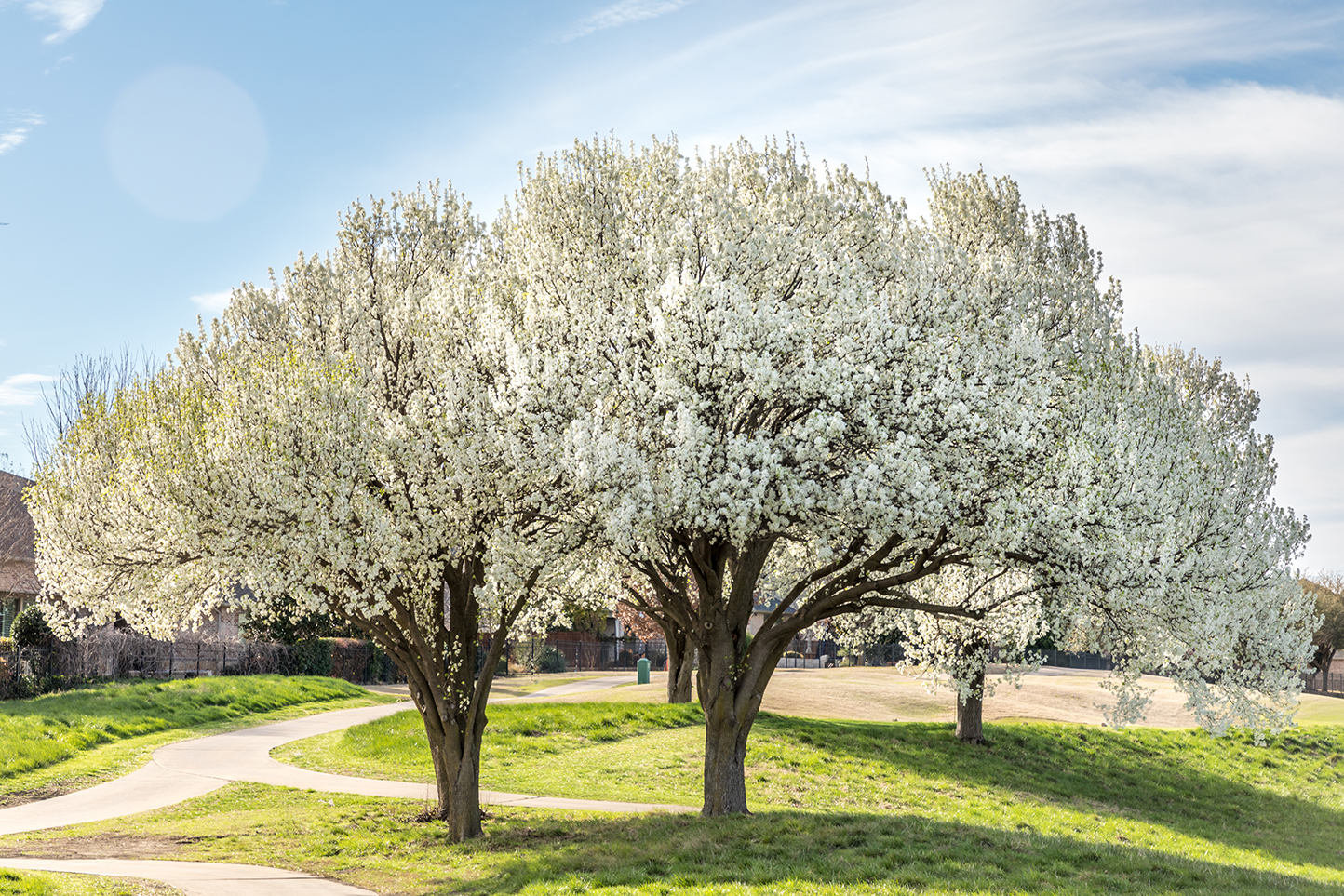
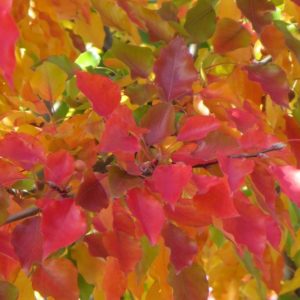
The Bradford Pear is an absolute showstopper in spring. Before a single leaf appears, the entire tree erupts in pure white blossoms—thousands of them—creating a cloud-like effect that stops traffic on Connecticut’s suburban streets every April. The flowers are small and delicate, held in clusters called panicles, and they emerge from dark branches in a way that makes you forget winter ever happened. Once the blooms fade, glossy, deep green foliage takes over, with leaves that are slightly smaller and more refined than many other ornamental trees. The branching structure is distinctly pyramidal when young, creating an almost formal, architectural silhouette. Come autumn, the leaves put on a show too—deep purples, reds, and oranges that can be quite dramatic, though the color varies year to year depending on weather conditions.

Growing it in your garden

The Bradford Pear isn’t finicky about soil, which is part of why it became so popular. It tolerates clay, loam, and even slightly acidic to slightly alkaline soils—basically, whatever Connecticut throws at it. What matters more is placement and structure. These trees thrive in full sun, meaning at least six hours of direct sunlight daily. They can handle partial shade, but they’ll be less floriferous and less densely branched. The real trick is storm preparedness. Bradford Pears have brittle wood and a dense canopy, which means heavy snow, ice, or wind can cause significant branch breakage. This is especially true of the original ‘Bradford’ cultivar; some of the newer selections like ‘Aristocrat’ and ‘Autumn Blaze’ have improved branching structure. If you choose a Bradford Pear, plan on regular pruning during the tree’s youth to establish a strong framework with wider branch angles. This investment of time early on pays dividends.

Through the seasons

Spring is the Bradford Pear’s moment of glory, with those magnificent white flowers arriving in mid to late April—typically around the same time as the magnolias. The bloom period lasts about two weeks, and the fragrance, while pleasant, is polarizing; some gardeners describe it as sweet, while others note a slightly unpleasant undertone (this is the tree’s way of attracting pollinators, after all). Summer brings lush, fine-textured foliage that creates dappled shade and looks neat and orderly. Fall transforms the tree into a burgundy or orange beacon, though the color show isn’t as prolonged as you’d get from a native Sugar Maple. Winter reveals the tree’s architectural bones—the pyramidal form is particularly evident when the tree is bare, which is lovely if you’ve pruned well. Just be aware that the dense branching collects snow and ice, so snow loads in Connecticut winters can stress unprepared trees.

Where it shines

A Bradford Pear earns its place in a landscape where you want a focal point, especially in spring. It’s excellent as a specimen tree in a front yard, where its form and flowers can be fully appreciated. Paired with understory plantings, it provides dappled shade for shade-loving perennials. Because it leafs out relatively early, it’s useful for creating privacy screens by mid-season. Just don’t count on it as your primary shade tree for summer entertaining—the branching, while attractive, isn’t dense enough to block intense sun the way a full-canopied native tree would.

Perfect companions

Underplant your Bradford Pear with shade-tolerant perennials like Hellebores, Brunnera, and Epimedium that will appreciate the dappled light and bloom while the tree is still leafing out. Hostas add textural contrast beneath. In the background, Oakleaf Hydrangeas create a beautiful foliage backdrop, and later-blooming ornamental shrubs like Buttonbush or Vitex prevent your garden from feeling spring-focused. Native deciduous shrubs like Serviceberry work well as companion plantings, grounding the somewhat formal Bradford with a more naturalistic feel.

Care tips

Pruning is non-negotiable with Bradford Pears, especially in the first five to seven years. Remove branches that form narrow angles with the main trunk, as these will eventually crack under snow load. Thin crossing or rubbing branches. Once established, light pruning to maintain shape is all that’s needed. Water regularly during the first two years to establish a deep root system, then rely on natural rainfall in most Connecticut seasons. Watch for fire blight, a bacterial disease that can affect Pyrus species, especially during wet springs. Prune out any blackened, withered branches immediately and sterilize your tools between cuts. While Bradford Pears don’t require feeding, they appreciate good soil structure.

Quick facts

  • Hardiness Zone: 5-9 (reliably hardy throughout Connecticut)
  • Mature Height & Spread: 40-50 feet tall, 25-35 feet wide
  • Bloom Season: Mid to late April
  • Light Requirements: Full sun to partial shade
  • Water Needs: Moderate; establishes drought tolerance once mature
  • Available at: Both our retail and wholesale locations
Bradford Pear

Category:

Notorious for their funky-smelling flowers, these blooming trees are a sign of spring in many places—but that’s not to say they’re welcomed with smiling faces

Trunk Diameter: 3-3.5″

Description

Bradford Pear

PYRUS CALLERYANA ‘BRADFORD’

Here’s the honest truth about Bradford Pear: it’s a beautiful mistake. When this cultivar was introduced in the 1960s, it promised everything a Connecticut gardener could want—rapid growth, gorgeous spring flowers, reliable fall color, and a tidy, ornamental form. And for a few decades, it delivered. But nurseries and designers fell so hard for its charms that Bradford Pears ended up everywhere, and Mother Nature had other plans. Still, if you understand what you’re getting into and you’re willing to give this tree the right home with proper care, it can be a stunning addition to your landscape.

What it looks like

The Bradford Pear is an absolute showstopper in spring. Before a single leaf appears, the entire tree erupts in pure white blossoms—thousands of them—creating a cloud-like effect that stops traffic on Connecticut’s suburban streets every April. The flowers are small and delicate, held in clusters called panicles, and they emerge from dark branches in a way that makes you forget winter ever happened. Once the blooms fade, glossy, deep green foliage takes over, with leaves that are slightly smaller and more refined than many other ornamental trees. The branching structure is distinctly pyramidal when young, creating an almost formal, architectural silhouette. Come autumn, the leaves put on a show too—deep purples, reds, and oranges that can be quite dramatic, though the color varies year to year depending on weather conditions.

Growing it in your garden

The Bradford Pear isn’t finicky about soil, which is part of why it became so popular. It tolerates clay, loam, and even slightly acidic to slightly alkaline soils—basically, whatever Connecticut throws at it. What matters more is placement and structure. These trees thrive in full sun, meaning at least six hours of direct sunlight daily. They can handle partial shade, but they’ll be less floriferous and less densely branched. The real trick is storm preparedness. Bradford Pears have brittle wood and a dense canopy, which means heavy snow, ice, or wind can cause significant branch breakage. This is especially true of the original ‘Bradford’ cultivar; some of the newer selections like ‘Aristocrat’ and ‘Autumn Blaze’ have improved branching structure. If you choose a Bradford Pear, plan on regular pruning during the tree’s youth to establish a strong framework with wider branch angles. This investment of time early on pays dividends.

Through the seasons

Spring is the Bradford Pear’s moment of glory, with those magnificent white flowers arriving in mid to late April—typically around the same time as the magnolias. The bloom period lasts about two weeks, and the fragrance, while pleasant, is polarizing; some gardeners describe it as sweet, while others note a slightly unpleasant undertone (this is the tree’s way of attracting pollinators, after all). Summer brings lush, fine-textured foliage that creates dappled shade and looks neat and orderly. Fall transforms the tree into a burgundy or orange beacon, though the color show isn’t as prolonged as you’d get from a native Sugar Maple. Winter reveals the tree’s architectural bones—the pyramidal form is particularly evident when the tree is bare, which is lovely if you’ve pruned well. Just be aware that the dense branching collects snow and ice, so snow loads in Connecticut winters can stress unprepared trees.

Where it shines

A Bradford Pear earns its place in a landscape where you want a focal point, especially in spring. It’s excellent as a specimen tree in a front yard, where its form and flowers can be fully appreciated. Paired with understory plantings, it provides dappled shade for shade-loving perennials. Because it leafs out relatively early, it’s useful for creating privacy screens by mid-season. Just don’t count on it as your primary shade tree for summer entertaining—the branching, while attractive, isn’t dense enough to block intense sun the way a full-canopied native tree would.

Perfect companions

Underplant your Bradford Pear with shade-tolerant perennials like Hellebores, Brunnera, and Epimedium that will appreciate the dappled light and bloom while the tree is still leafing out. Hostas add textural contrast beneath. In the background, Oakleaf Hydrangeas create a beautiful foliage backdrop, and later-blooming ornamental shrubs like Buttonbush or Vitex prevent your garden from feeling spring-focused. Native deciduous shrubs like Serviceberry work well as companion plantings, grounding the somewhat formal Bradford with a more naturalistic feel.

Care tips

Pruning is non-negotiable with Bradford Pears, especially in the first five to seven years. Remove branches that form narrow angles with the main trunk, as these will eventually crack under snow load. Thin crossing or rubbing branches. Once established, light pruning to maintain shape is all that’s needed. Water regularly during the first two years to establish a deep root system, then rely on natural rainfall in most Connecticut seasons. Watch for fire blight, a bacterial disease that can affect Pyrus species, especially during wet springs. Prune out any blackened, withered branches immediately and sterilize your tools between cuts. While Bradford Pears don’t require feeding, they appreciate good soil structure.

Quick facts

  • Hardiness Zone: 5-9 (reliably hardy throughout Connecticut)
  • Mature Height & Spread: 40-50 feet tall, 25-35 feet wide
  • Bloom Season: Mid to late April
  • Light Requirements: Full sun to partial shade
  • Water Needs: Moderate; establishes drought tolerance once mature
  • Available at: Both our retail and wholesale locations