
Description

VIBURNUM X BURKWOODII
If you’ve been searching for something that handles wet soil, deep shade, and Connecticut winters without complaint, while also delivering fragrance that’ll make your neighbors stop mid-jog to ask what that heavenly smell is—the Burkwood Viburnum is your answer. This is the plant that keeps on giving, season after season, asking remarkably little in return.
What it looks like
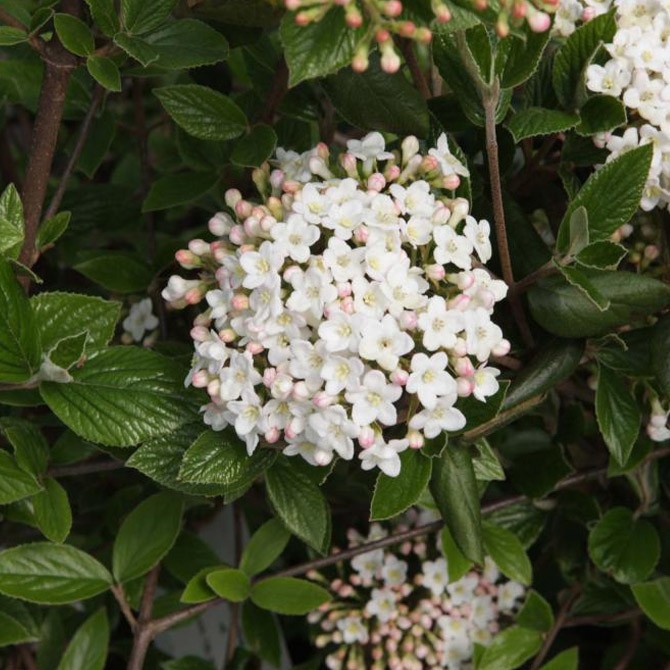
The Burkwood Viburnum is a handsome semi-evergreen shrub that grows into a graceful, upright form with an almost architectural quality to its branching. The foliage is dark green and glossy, with that perfect texture that makes you want to reach out and touch it as you walk past. In spring, before or just as the leaves fully emerge, the plant becomes absolutely smothered in small, intensely fragrant clusters of pink-tinged white flowers. These aren’t shy blooms—they announce themselves with a perfume so sweet and spicy that gardeners often plant this viburnum near windows and seating areas just to capture that magic.
Growing it in your garden
Here’s what makes the Burkwood Viburnum such a reliable performer in New England gardens: it’s genuinely tough. This hybrid VIBURNUM X BURKWOODII was developed specifically to handle the challenges we face in our region, and it shows. It thrives in full sun to partial shade, making it flexible enough to work in a range of garden situations. While it prefers well-draining soil, it’s far more forgiving of less-than-ideal conditions than many ornamentals. It handles Connecticut’s wet springs, our unpredictable freeze-thaw cycles, and the occasional severe winter with equanimity.
The plant naturally develops into a neat, dense mound without requiring constant pruning, though it responds beautifully to light shaping if you want to encourage a particular form. Unlike some viburnums, the Burkwood doesn’t get rangy or open as it matures—it just keeps getting fuller and more attractive.
Through the seasons
Spring is the Burkwood’s moment to shine, when those fragrant flower clusters transform the plant into a cloud of softness. The bloom period typically runs from April through May, depending on the weather, and the flowers last an impressive amount of time on the plant. As spring turns to summer, the foliage remains a rich, healthy green, providing a solid backdrop for other plantings.
In summer and early fall, you might notice small, oval red fruits forming if you have pollinators in your garden—these gradually turn black as fall progresses, adding subtle color and providing food for birds. The foliage may take on purplish tones as temperatures cool in late autumn. Because it’s semi-evergreen, the Burkwood retains much of its leaves through winter, giving you structure and texture in the garden even when most other plants have gone dormant. In milder Connecticut winters or protected microclimates, it may hold most of its foliage all year.
Where it shines
This viburnum is at home in mixed shrub borders, where its spring fragrance becomes part of the garden’s sensory experience. It works beautifully as a specimen plant in foundation plantings, where its compact size and neat form are appreciated. The Burkwood is also excellent for screening—plant it in groups to create a semi-evergreen privacy hedge that’s far more interesting than a typical evergreen foundation planting.
If you have a spot near a patio, seating area, or open window, this is exactly where you want to place the Burkwood. That fragrance isn’t an afterthought; it’s a feature to be savored. It’s also a magnet for pollinators, so if you’re trying to support bees and other beneficial insects in your garden, this plant earns its place on that list.
Perfect companions
The Burkwood pairs beautifully with spring bulbs like tulips and daffodils, which bloom right alongside it and extend the color story. Pair it with shade-tolerant hostas or hellebores at its base to create layers of interest. It looks stunning next to Japanese maples, where the viburnum’s solid dark green provides a calm backdrop for the delicate foliage of the maple. Later-blooming shrubs like HYDRANGEA PANICULATA varieties make good neighbors, carrying interest forward when the viburnum’s spring glory fades.
Care tips
Water regularly during the first growing season to establish a strong root system. After that, the Burkwood is quite drought-tolerant once established, though it’ll be happier if you water during extended dry spells. A light pruning right after flowering helps maintain shape without sacrificing next year’s blooms. Remove any dead or crossing branches in late winter. The plant rarely suffers from serious pest or disease problems in our region—one of the many reasons gardeners love it.
Quick facts
- Hardiness Zone: Zones 4-9 (thoroughly winter-hardy throughout Connecticut)
- Mature Height & Spread: 8-10 feet tall and wide
- Bloom Season: April to May
- Light Requirements: Full sun to partial shade
- Water Needs: Moderate; drought-tolerant once established
- Available at: Both our retail and wholesale locations.