Catmint

NEPETA X FAASSENII

If you’ve been searching for something that handles Connecticut’s unpredictable springs, summer droughts, and poor soil with equal grace while looking utterly charming in the process, Catmint is your answer. This is the plant that gardeners everywhere wish they’d discovered sooner—the one that asks for almost nothing yet delivers months of delicate, purple-blue flowers and that intoxicating herbal fragrance that makes you want to brush your hand across it every time you walk by.

What it looks like

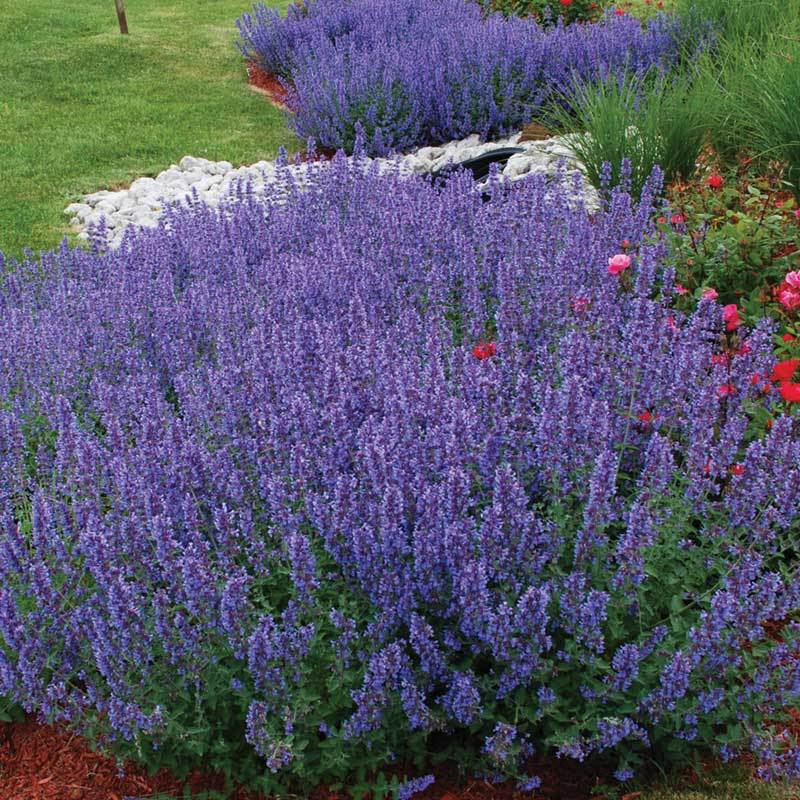
Catmint is a gently billowing herbaceous perennial with fine, gray-green foliage that forms a soft, airy mound. In mid-summer, it erupts into clouds of tiny, lavender-purple flowers that seem to hover above the leaves like a gentle haze. The delicate spikes emerge continuously from June right through September if you keep up with deadheading, though even without fussy maintenance, you’ll get weeks of stunning bloom. The overall effect is romantic without being fussy—this isn’t a plant that demands attention, but one that rewards observation. Bees and butterflies seem to think it’s the most important plant in your garden.

Growing it in your garden

Here’s what makes NEPETA X FAASSENII such a game-changer for Connecticut gardeners: it thrives in full sun to part sun, tolerates poor, sandy, or even rocky soil, and once established, shrugs off drought like it’s nothing. Unlike many perennials that struggle with our humid summers or our wet springs, Catmint simply doesn’t care about either. It prefers well-draining soil—heavy clay is its only real enemy—but even that’s manageable if you amend before planting. Space plants about 18 to 24 inches apart and watch as they knit together into a continuous border that looks both natural and intentional.

Through the seasons

Spring brings fresh, fine-textured growth that’s ornamental in its own right, even before flowers appear. By early summer, buds form at the tips of every stem, and by mid-June in most Connecticut gardens, you’re in peak bloom season. The flowers just keep coming if you deadhead spent spikes—this is where a little effort pays enormous dividends. As summer heat intensifies, your Catmint becomes increasingly valuable, flowering steadily when so many other perennials are exhausted. Come fall, you can either cut it back to the ground in late October or leave the dried stems for winter interest and to feed overwintering pollinators. Catmint is entirely winter-hardy in Connecticut and needs no special protection.

Where it shines

This is the plant for your sunny borders, cottage gardens, and pollinator beds. Use it along pathways where you can enjoy that herbal scent as you brush past. Catmint is phenomenal in containers where its trailing habit becomes even more pronounced. It’s equally at home in rock gardens, meadow plantings, and those hot, difficult corners where nothing else wants to grow. Plant it near your patio or seating areas—the fragrance and constant butterfly activity will make your outdoor space feel alive.

Perfect companions

Catmint plays beautifully with other sun-loving, low-maintenance perennials. Pair it with Russian Sage (PEROVSKIA ATRIPLICIFOLIA) for a monochromatic lavender dream, or contrast it with bright yellow Yarrow and coral-pink Phlox. It’s stunning with ornamental grasses like Feather Reed Grass or Fountain Grass, which echo its airy texture. In pollinator gardens, plant it generously with Coneflowers, Black-eyed Susans, and Monarda. The combination is a nectar bar that hums all summer long.

Care tips

Water regularly during establishment, but once your Catmint is settled—typically by its second season—it’s remarkably self-sufficient. Deadhead spent flower spikes frequently in summer to encourage continuous blooms; this simple step can extend flowering by four to six weeks. In late fall, cut back the dried stems to about 2 to 3 inches above the ground, or leave them standing for winter interest and to support beneficial insects. Catmint rarely needs fertilizing; in fact, too-rich soil can reduce flowering. If your plants get leggy by mid-summer, you can shear them lightly to encourage bushier growth and a second flush of flowers. Divide plants in spring every three to four years to maintain vigor and share the abundance with other gardeners.

Quick facts

  • Hardiness Zone: Zones 3–9 (thrives throughout Connecticut)
  • Mature Height & Spread: 18–24 inches tall and wide
  • Bloom Season: June through September with deadheading
  • Light Requirements: Full sun to part sun (6+ hours of sun ideal)
  • Water Needs: Low to moderate; drought tolerant once established
  • Available at: Both our retail and wholesale locations

Catmint

Nepeta Walker’s Low (Walker’s Low Catmint) is a robust variety with dark lavender-blue flowers in late spring and aromatic gray-green foliage.

Description

Catmint

NEPETA X FAASSENII

If you’ve been searching for something that handles Connecticut’s unpredictable springs, summer droughts, and poor soil with equal grace while looking utterly charming in the process, Catmint is your answer. This is the plant that gardeners everywhere wish they’d discovered sooner—the one that asks for almost nothing yet delivers months of delicate, purple-blue flowers and that intoxicating herbal fragrance that makes you want to brush your hand across it every time you walk by.

What it looks like

Catmint is a gently billowing herbaceous perennial with fine, gray-green foliage that forms a soft, airy mound. In mid-summer, it erupts into clouds of tiny, lavender-purple flowers that seem to hover above the leaves like a gentle haze. The delicate spikes emerge continuously from June right through September if you keep up with deadheading, though even without fussy maintenance, you’ll get weeks of stunning bloom. The overall effect is romantic without being fussy—this isn’t a plant that demands attention, but one that rewards observation. Bees and butterflies seem to think it’s the most important plant in your garden.

Growing it in your garden

Here’s what makes NEPETA X FAASSENII such a game-changer for Connecticut gardeners: it thrives in full sun to part sun, tolerates poor, sandy, or even rocky soil, and once established, shrugs off drought like it’s nothing. Unlike many perennials that struggle with our humid summers or our wet springs, Catmint simply doesn’t care about either. It prefers well-draining soil—heavy clay is its only real enemy—but even that’s manageable if you amend before planting. Space plants about 18 to 24 inches apart and watch as they knit together into a continuous border that looks both natural and intentional.

Through the seasons

Spring brings fresh, fine-textured growth that’s ornamental in its own right, even before flowers appear. By early summer, buds form at the tips of every stem, and by mid-June in most Connecticut gardens, you’re in peak bloom season. The flowers just keep coming if you deadhead spent spikes—this is where a little effort pays enormous dividends. As summer heat intensifies, your Catmint becomes increasingly valuable, flowering steadily when so many other perennials are exhausted. Come fall, you can either cut it back to the ground in late October or leave the dried stems for winter interest and to feed overwintering pollinators. Catmint is entirely winter-hardy in Connecticut and needs no special protection.

Where it shines

This is the plant for your sunny borders, cottage gardens, and pollinator beds. Use it along pathways where you can enjoy that herbal scent as you brush past. Catmint is phenomenal in containers where its trailing habit becomes even more pronounced. It’s equally at home in rock gardens, meadow plantings, and those hot, difficult corners where nothing else wants to grow. Plant it near your patio or seating areas—the fragrance and constant butterfly activity will make your outdoor space feel alive.

Perfect companions

Catmint plays beautifully with other sun-loving, low-maintenance perennials. Pair it with Russian Sage (PEROVSKIA ATRIPLICIFOLIA) for a monochromatic lavender dream, or contrast it with bright yellow Yarrow and coral-pink Phlox. It’s stunning with ornamental grasses like Feather Reed Grass or Fountain Grass, which echo its airy texture. In pollinator gardens, plant it generously with Coneflowers, Black-eyed Susans, and Monarda. The combination is a nectar bar that hums all summer long.

Care tips

Water regularly during establishment, but once your Catmint is settled—typically by its second season—it’s remarkably self-sufficient. Deadhead spent flower spikes frequently in summer to encourage continuous blooms; this simple step can extend flowering by four to six weeks. In late fall, cut back the dried stems to about 2 to 3 inches above the ground, or leave them standing for winter interest and to support beneficial insects. Catmint rarely needs fertilizing; in fact, too-rich soil can reduce flowering. If your plants get leggy by mid-summer, you can shear them lightly to encourage bushier growth and a second flush of flowers. Divide plants in spring every three to four years to maintain vigor and share the abundance with other gardeners.

Quick facts

  • Hardiness Zone: Zones 3–9 (thrives throughout Connecticut)
  • Mature Height & Spread: 18–24 inches tall and wide
  • Bloom Season: June through September with deadheading
  • Light Requirements: Full sun to part sun (6+ hours of sun ideal)
  • Water Needs: Low to moderate; drought tolerant once established
  • Available at: Both our retail and wholesale locations