
Description

ASTILBE CHINENSIS
What if you could fill those stubborn shady spots with feathery plumes of color that actually thrive there? Chinese Astilbe is the shade gardener’s secret weapon—a plant that doesn’t just tolerate partial to full shade, but positively flourishes in it. Unlike so many shade plants that look a bit apologetic about their location, this astilbe struts into dark corners with confidence, producing airy flower plumes that seem to glow from within. It’s a plant that makes you wonder why every shady Connecticut garden doesn’t have at least one.
What it looks like
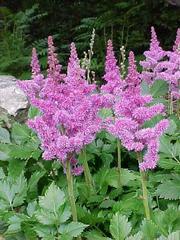
ASTILBE CHINENSIS is an herbaceous perennial with deeply cut, ferny foliage that forms a tidy mound of fine-textured leaves. The foliage alone is attractive—ranging from bronze-tinged green to a softer sage tone, depending on the variety—but it’s really the flowers that steal the show. Rising on sturdy stems above the leaves are delicate, bottlebrush-like plumes that may reach 2 to 3 feet tall. Colors typically range from soft pink and mauve to deep red and creamy white, with some varieties offering striking bicolor effects. The flower spikes have an almost ethereal quality; they seem light as air despite being surprisingly sturdy.
Growing it in your garden
Chinese Astilbe is wonderfully forgiving and adapts well to New England’s growing conditions. It prefers consistently moist soil—think woodland setting rather than drought-stressed bed—which makes it perfect for low-lying areas or anywhere that stays a bit damper than your typical garden spot. The good news? It’s not fussy about soil type. Whether your Connecticut garden has clay, loam, or sandy soil, ASTILBE CHINENSIS will grow as long as you amend with organic matter and keep it from drying out completely during hot stretches. Plant in spring or early fall, spacing plants 18 to 24 inches apart to give them room to mature.
Through the seasons
Spring brings fresh, copper-tinged foliage that gradually greens as temperatures warm. By early to mid-summer, the flower plumes emerge, creating weeks of delicate, long-lasting blooms. The dried plumes persist into fall and winter, adding architectural interest to your garden beds even after the flowers fade. This persistent structure is one of Chinese Astilbe’s hidden gifts—it looks good right through the gray Connecticut winter. Come early spring, you can cut back the old growth to make room for fresh new foliage.
Where it shines
This astilbe truly excels in partial to full shade, making it invaluable for under-tree plantings, north-facing borders, or those challenging spots where sunlight barely penetrates. Woodland gardens are its natural habitat—pair it with hostas, ferns, and hellebores for a lush, layered look. It’s also excellent in rain gardens and bioswales where moisture naturally collects. Near a water feature or in a shaded border where you want movement and airiness without the glare of direct sun, ASTILBE CHINENSIS performs beautifully. Because it handles our Connecticut humidity without getting mildewed or stressed, it’s more reliable here than in drier climates.
Perfect companions
Combine Chinese Astilbe with other shade lovers for maximum impact. Pair it with bold-leaved hostas for textural contrast, or set it beside the delicate fronds of shade ferns for a similarly feathery effect. The darker varieties look stunning with silvery-leaved plants like LAMIUM or BRUNNERA with its heart-shaped leaves. In a shaded border, let astilbe drift through plantings of HEUCHERA, HELLEBORUS, and Japanese anemones. The airy plumes are perfect for layering through a shade garden—they soften edges and create visual movement without being intrusive.
Care tips
Once established, ASTILBE CHINENSIS is quite low-maintenance. Keep soil consistently moist, especially during dry spells—a 2-inch layer of mulch helps retain moisture and keeps roots cool. In spring, add compost around the base of plants; astilbes appreciate rich soil. Deadheading spent flowers encourages tidiness, but leaving them is equally fine if you want the dried plumes for winter interest. Divide plants every 4 to 5 years if they become congested, doing this work in early spring before new growth emerges. In Connecticut, no special winter protection is needed—astilbes are entirely winter hardy.
Quick facts
- Hardiness Zone: 4–8 (completely winter hardy in Connecticut)
- Mature Height & Spread: 2–3 feet tall and 18–24 inches wide
- Bloom Season: Early to mid-summer
- Light Requirements: Partial to full shade
- Water Needs: Keep consistently moist; excellent for damp areas
- Available at: Both our retail and wholesale locations