Fringe tree

CHIONANTHUS VIRGINICUS

Here’s something magical: a tree that vanishes into white clouds every May, blooms for just a glorious two-week window, and then quietly becomes a beautiful green backdrop for the rest of the year. The Fringe Tree isn’t flashy or demanding—it’s elegant, refined, and utterly reliable in Connecticut gardens. It’s the kind of plant that makes visitors stop mid-conversation and ask, “What is that?”

What it looks like

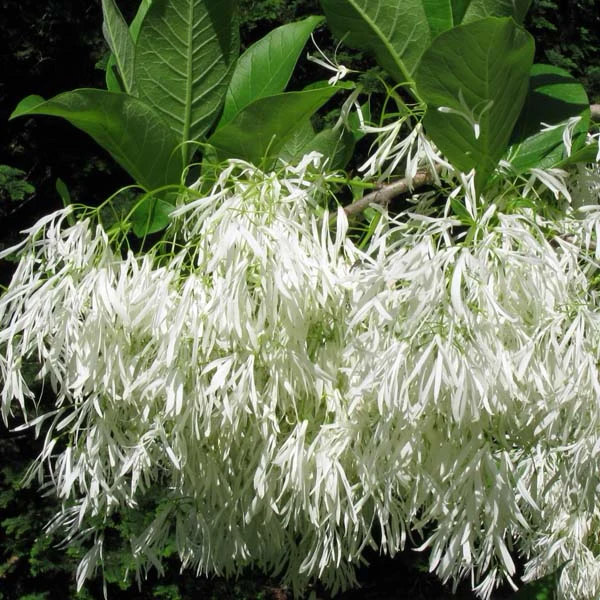
The Fringe Tree earned its common name honestly. In late spring, it produces delicate, feathery panicles of pure white flowers that look like someone dusted the entire canopy with snow or lace. These aren’t tight, formal blooms—they’re airy, almost cloud-like, giving the tree an ethereal quality that photographs never quite capture. The flowers have a subtle, sweet fragrance that adds another layer of appeal.

Before and after flowering season, the Fringe Tree is an attractive specimen with medium green, oval leaves that emerge relatively late in spring. In fall, those leaves turn a soft golden yellow before dropping. If you have a female tree and a male tree nearby, the female will produce small, blue-black fruit that birds adore—though you won’t always get fruit production, and that’s perfectly fine.

Growing it in your garden

The Fringe Tree is genuinely low-maintenance once established, which makes it perfect for Connecticut gardeners who want something beautiful without constant fussing. It prefers full sun to part shade and does best in well-draining soil, though it’s more adaptable than you might think. It doesn’t need rich soil or heavy feeding—in fact, overfertilizing can reduce flowering.

Plant in spring or early fall, giving it room to develop its naturally vase-shaped form. Space it where you can appreciate those spring blooms from your kitchen window or favorite seating area. The tree works equally well as a specimen planting or integrated into mixed borders.

Through the seasons

Spring is obviously the star show here. Those fringe flowers typically appear in mid-to-late May, transforming the tree into a focal point. Even after the flowers fade, the emerging foliage is a fresh, clean green.

Summer sees the tree settle into a supporting role—attractive but not demanding attention. It provides nice structure and foliage texture in the garden composition. Fall brings that yellow color, though it’s subtle enough not to compete with showier autumn specimens like maples.

Winter reveals the tree’s architecture beautifully. The branching structure is distinctive and interesting, making it worth planting where you can see it from a window during those bare months. It doesn’t have winter color in the traditional sense, but its form and texture hold their own.

Where it shines

The Fringe Tree is perfect as a specimen plant where its May performance can be fully appreciated. It’s ideal for smaller yards and gardens where you want something significant without overwhelming the space. Plant it near patios, decks, or windows so you can enjoy those flowers up close.

It also works beautifully in woodland gardens and naturalized settings. If you’re creating a native Connecticut landscape, this tree fits right in—it’s native to the southeastern U.S. and has never met a Connecticut gardener it didn’t work for.

Perfect companions

The Fringe Tree’s May bloom time and light, airy form make it a natural partner for mid-spring perennials and shrubs. Pair it with bleeding heart for shade underneath its canopy, or plant it near rhododendrons and azaleas that bloom at the same time. Its later leaf emergence means spring ephemeral bulbs have time to shine before the canopy fills in.

Because the tree is relatively open and transparent, you can layer things around it without creating a dense, dark mess. Hostas, ferns, and shade-tolerant groundcovers thrive beneath it.

Care tips

Pruning is rarely necessary—let the tree develop its natural form. If you do need to remove branches, do it right after flowering to avoid cutting next year’s buds. Water regularly the first couple of years to establish a deep root system, especially through Connecticut’s hot, dry summers. Once established, the tree is quite drought-tolerant.

Watch for any pest or disease issues, though the Fringe Tree is generally quite healthy. It’s not troubled by the usual New England culprits. If you want fruit production, you’ll need both male and female plants, but many gardeners are perfectly happy with just the flowers.

Quick facts

  • Hardiness Zone: 4-9 (perfect for Connecticut)
  • Mature Height & Spread: 12-20 feet tall, 12-15 feet wide
  • Bloom Season: Late May through early June
  • Light Requirements: Full sun to part shade
  • Water Needs: Moderate; drought-tolerant once established
  • Available at: Both our retail and wholesale locations

Fringe tree

Dark green leaves in summer. Height & spread 12-20’ round shape.

Zoning: 3-9
Mature Height and Spread: 12-20’
Pot Size (gallons), Height: 6-7’ , 7-8’

Description

Fringe tree

CHIONANTHUS VIRGINICUS

Here’s something magical: a tree that vanishes into white clouds every May, blooms for just a glorious two-week window, and then quietly becomes a beautiful green backdrop for the rest of the year. The Fringe Tree isn’t flashy or demanding—it’s elegant, refined, and utterly reliable in Connecticut gardens. It’s the kind of plant that makes visitors stop mid-conversation and ask, “What is that?”

What it looks like

The Fringe Tree earned its common name honestly. In late spring, it produces delicate, feathery panicles of pure white flowers that look like someone dusted the entire canopy with snow or lace. These aren’t tight, formal blooms—they’re airy, almost cloud-like, giving the tree an ethereal quality that photographs never quite capture. The flowers have a subtle, sweet fragrance that adds another layer of appeal.

Before and after flowering season, the Fringe Tree is an attractive specimen with medium green, oval leaves that emerge relatively late in spring. In fall, those leaves turn a soft golden yellow before dropping. If you have a female tree and a male tree nearby, the female will produce small, blue-black fruit that birds adore—though you won’t always get fruit production, and that’s perfectly fine.

Growing it in your garden

The Fringe Tree is genuinely low-maintenance once established, which makes it perfect for Connecticut gardeners who want something beautiful without constant fussing. It prefers full sun to part shade and does best in well-draining soil, though it’s more adaptable than you might think. It doesn’t need rich soil or heavy feeding—in fact, overfertilizing can reduce flowering.

Plant in spring or early fall, giving it room to develop its naturally vase-shaped form. Space it where you can appreciate those spring blooms from your kitchen window or favorite seating area. The tree works equally well as a specimen planting or integrated into mixed borders.

Through the seasons

Spring is obviously the star show here. Those fringe flowers typically appear in mid-to-late May, transforming the tree into a focal point. Even after the flowers fade, the emerging foliage is a fresh, clean green.

Summer sees the tree settle into a supporting role—attractive but not demanding attention. It provides nice structure and foliage texture in the garden composition. Fall brings that yellow color, though it’s subtle enough not to compete with showier autumn specimens like maples.

Winter reveals the tree’s architecture beautifully. The branching structure is distinctive and interesting, making it worth planting where you can see it from a window during those bare months. It doesn’t have winter color in the traditional sense, but its form and texture hold their own.

Where it shines

The Fringe Tree is perfect as a specimen plant where its May performance can be fully appreciated. It’s ideal for smaller yards and gardens where you want something significant without overwhelming the space. Plant it near patios, decks, or windows so you can enjoy those flowers up close.

It also works beautifully in woodland gardens and naturalized settings. If you’re creating a native Connecticut landscape, this tree fits right in—it’s native to the southeastern U.S. and has never met a Connecticut gardener it didn’t work for.

Perfect companions

The Fringe Tree’s May bloom time and light, airy form make it a natural partner for mid-spring perennials and shrubs. Pair it with bleeding heart for shade underneath its canopy, or plant it near rhododendrons and azaleas that bloom at the same time. Its later leaf emergence means spring ephemeral bulbs have time to shine before the canopy fills in.

Because the tree is relatively open and transparent, you can layer things around it without creating a dense, dark mess. Hostas, ferns, and shade-tolerant groundcovers thrive beneath it.

Care tips

Pruning is rarely necessary—let the tree develop its natural form. If you do need to remove branches, do it right after flowering to avoid cutting next year’s buds. Water regularly the first couple of years to establish a deep root system, especially through Connecticut’s hot, dry summers. Once established, the tree is quite drought-tolerant.

Watch for any pest or disease issues, though the Fringe Tree is generally quite healthy. It’s not troubled by the usual New England culprits. If you want fruit production, you’ll need both male and female plants, but many gardeners are perfectly happy with just the flowers.

Quick facts

  • Hardiness Zone: 4-9 (perfect for Connecticut)
  • Mature Height & Spread: 12-20 feet tall, 12-15 feet wide
  • Bloom Season: Late May through early June
  • Light Requirements: Full sun to part shade
  • Water Needs: Moderate; drought-tolerant once established
  • Available at: Both our retail and wholesale locations