CLEMATIS SPPV

Here’s the honest truth about clematis: it’s the vine that makes gardeners feel like they’ve finally figured out something sophisticated. There’s something undeniably elegant about a clematis-covered arbor or fence—it feels European, intentional, almost aspirational. But here’s what makes it even better than it looks: clematis is genuinely rewarding to grow in New England gardens. Once you understand what it wants, you’ll find yourself planting more varieties, experimenting with different combinations, and watching neighbors lean over the fence to ask what it is.

What it looks like

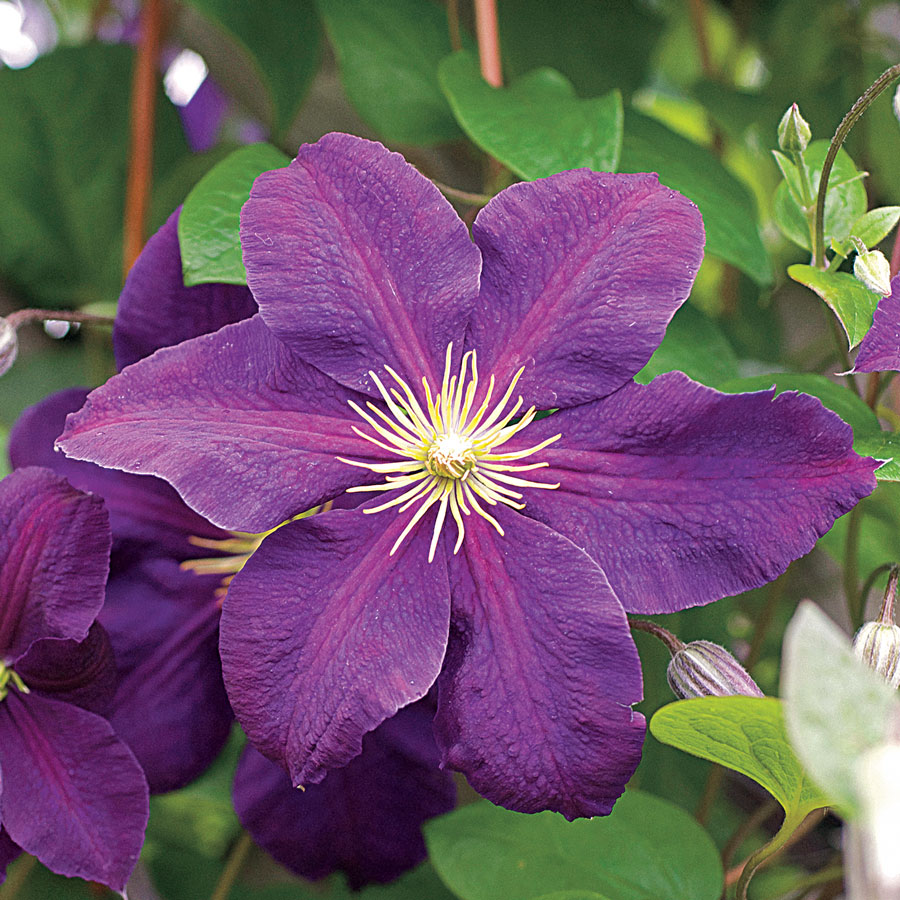
Clematis varieties are endlessly diverse, which is part of their magic. Some varieties like CLEMATIS ‘JACKMANII’ produce deep purple blooms with velvety petals that seem almost theatrical. Others, like CLEMATIS ‘HENRYI’, offer pristine white flowers with elegant simplicity. The more delicate varieties like CLEMATIS ‘HAGLEY HYBRID’ give you soft pink blooms with deep red centers—the kind of detail that makes you keep finding reasons to walk past the garden.

These are deciduous vines that climb by twining their leaf petioles around any nearby support. Most varieties grow as vigorous, sprawling climbers that can cover significant vertical space, typically reaching 8 to 12 feet or more depending on the type. The foliage is generally fine and refined, never heavy or overpowering, so clematis works beautifully without obscuring views completely—it’s more like drawing a lace curtain across your landscape.

Growing it in your garden

The key to clematis success in Connecticut is understanding that these plants love a curious combination: “heads in the sun, feet in the shade.” They want afternoon sun exposure on their foliage and flowers—at least six hours of direct light—but their roots appreciate cool, moist, shaded conditions. This isn’t complicated; it just means planting at the base near a structure or using low-growing perennials or mulch to keep the root zone cool while the vine climbs upward into sunlight.

Plant clematis in spring or fall when soil temperatures are cool and the plant can establish roots before extreme heat. Prepare a generous planting hole with compost-amended soil. These vines aren’t particularly fussy about soil pH, but they do appreciate well-draining conditions—standing water around the roots through a Connecticut winter creates problems. When planting, set the crown (where stems meet roots) slightly deeper than the soil line in the pot; this encourages new growth if winter damage occurs.

Clematis needs something to climb—an arbor, trellis, fence, or even a sturdy shrub works beautifully. Early in the season, you may need to gently guide new growth toward your support structure until the vine gets the idea.

Through the seasons

Spring brings the emergence of delicate foliage and the anticipation of blooms. Different varieties flower at different times, which is wonderful because you can stagger bloom seasons across your garden. Early varieties like CLEMATIS ‘NELLY MOSER’ appear in May and June with pink and white striped flowers. Mid-season varieties bloom through June and July, while late bloomers like CLEMATIS ‘JACKMANII’ carry you into August and September with their richest color.

Summer is when clematis truly earns its place in the garden. The vines are in full leaf, flowers appear in waves, and the entire structure becomes a focal point. In Connecticut’s sometimes unpredictable humidity, good air circulation around the foliage helps prevent fungal issues.

Fall finds most clematis varieties winding down, though late-season types extend color well into autumn. As temperatures cool, prepare to cut back dead growth. Winter reveals the architectural structure of your support system—often a welcome addition to the dormant season landscape.

Where it shines

Clematis truly shines on vertical surfaces where you want to create height and drama without bulk. Train it up a fence to soften its hard lines. Use it on an arbor to create a flowering gateway into a garden room. Let it climb a pergola to provide dappled shade while blooming overhead. Some gardeners even train clematis through other shrubs or small trees, creating a second layer of flowers that makes the landscape feel fuller and more sophisticated.

It’s also a star container player—choose compact varieties, plant in a deep container with good drainage, and train the vine up a tall obelisk or support for instant architecture on a patio.

Perfect companions

Plant shade-loving groundcovers or low perennials at the base to keep roots cool: creeping phlox, lady’s mantle, or coral bells work beautifully. Clematis pairs wonderfully with climbing roses on the same structure—stagger their bloom times for extended color. On arbors, consider underplanting with shade-tolerant spring bulbs that bloom before the clematis vine leafs out completely.

Care tips

Pruning is less mysterious than clematis reputation suggests. Early-flowering varieties (Group A) need minimal pruning—just remove dead wood in spring. Mid-season bloomers (Group B) get a light trim in early spring. Hard pruners like CLEMATIS ‘JACKMANII’ (Group C) should be cut back to 12 to 18 inches in early spring, which might seem drastic but encourages vigorous new growth.

Water deeply during establishment and through Connecticut’s drier stretches. Once established, most varieties are quite drought-tolerant, though consistent moisture produces the best blooms. Monitor for clematis wilt, a fungal disease that occasionally strikes in mid-Atlantic regions; remove affected stems immediately and water at the base rather than overhead.

Quick facts

  • Hardiness Zone: 3-4 (depending on variety)
  • Mature Height & Spread: 8-20 feet tall; spread depends on available support and pruning
  • Bloom Season: May through October (varies by variety)
  • Light Requirements: Full sun to part sun (at least 6 hours direct light)
  • Water Needs: Moderate; consistent moisture during growing season
  • Available at: Both our retail and wholesale locations

Clematis varieties

Category:

Call for Details

Description

CLEMATIS SPPV

Here’s the honest truth about clematis: it’s the vine that makes gardeners feel like they’ve finally figured out something sophisticated. There’s something undeniably elegant about a clematis-covered arbor or fence—it feels European, intentional, almost aspirational. But here’s what makes it even better than it looks: clematis is genuinely rewarding to grow in New England gardens. Once you understand what it wants, you’ll find yourself planting more varieties, experimenting with different combinations, and watching neighbors lean over the fence to ask what it is.

What it looks like

Clematis varieties are endlessly diverse, which is part of their magic. Some varieties like CLEMATIS ‘JACKMANII’ produce deep purple blooms with velvety petals that seem almost theatrical. Others, like CLEMATIS ‘HENRYI’, offer pristine white flowers with elegant simplicity. The more delicate varieties like CLEMATIS ‘HAGLEY HYBRID’ give you soft pink blooms with deep red centers—the kind of detail that makes you keep finding reasons to walk past the garden.

These are deciduous vines that climb by twining their leaf petioles around any nearby support. Most varieties grow as vigorous, sprawling climbers that can cover significant vertical space, typically reaching 8 to 12 feet or more depending on the type. The foliage is generally fine and refined, never heavy or overpowering, so clematis works beautifully without obscuring views completely—it’s more like drawing a lace curtain across your landscape.

Growing it in your garden

The key to clematis success in Connecticut is understanding that these plants love a curious combination: “heads in the sun, feet in the shade.” They want afternoon sun exposure on their foliage and flowers—at least six hours of direct light—but their roots appreciate cool, moist, shaded conditions. This isn’t complicated; it just means planting at the base near a structure or using low-growing perennials or mulch to keep the root zone cool while the vine climbs upward into sunlight.

Plant clematis in spring or fall when soil temperatures are cool and the plant can establish roots before extreme heat. Prepare a generous planting hole with compost-amended soil. These vines aren’t particularly fussy about soil pH, but they do appreciate well-draining conditions—standing water around the roots through a Connecticut winter creates problems. When planting, set the crown (where stems meet roots) slightly deeper than the soil line in the pot; this encourages new growth if winter damage occurs.

Clematis needs something to climb—an arbor, trellis, fence, or even a sturdy shrub works beautifully. Early in the season, you may need to gently guide new growth toward your support structure until the vine gets the idea.

Through the seasons

Spring brings the emergence of delicate foliage and the anticipation of blooms. Different varieties flower at different times, which is wonderful because you can stagger bloom seasons across your garden. Early varieties like CLEMATIS ‘NELLY MOSER’ appear in May and June with pink and white striped flowers. Mid-season varieties bloom through June and July, while late bloomers like CLEMATIS ‘JACKMANII’ carry you into August and September with their richest color.

Summer is when clematis truly earns its place in the garden. The vines are in full leaf, flowers appear in waves, and the entire structure becomes a focal point. In Connecticut’s sometimes unpredictable humidity, good air circulation around the foliage helps prevent fungal issues.

Fall finds most clematis varieties winding down, though late-season types extend color well into autumn. As temperatures cool, prepare to cut back dead growth. Winter reveals the architectural structure of your support system—often a welcome addition to the dormant season landscape.

Where it shines

Clematis truly shines on vertical surfaces where you want to create height and drama without bulk. Train it up a fence to soften its hard lines. Use it on an arbor to create a flowering gateway into a garden room. Let it climb a pergola to provide dappled shade while blooming overhead. Some gardeners even train clematis through other shrubs or small trees, creating a second layer of flowers that makes the landscape feel fuller and more sophisticated.

It’s also a star container player—choose compact varieties, plant in a deep container with good drainage, and train the vine up a tall obelisk or support for instant architecture on a patio.

Perfect companions

Plant shade-loving groundcovers or low perennials at the base to keep roots cool: creeping phlox, lady’s mantle, or coral bells work beautifully. Clematis pairs wonderfully with climbing roses on the same structure—stagger their bloom times for extended color. On arbors, consider underplanting with shade-tolerant spring bulbs that bloom before the clematis vine leafs out completely.

Care tips

Pruning is less mysterious than clematis reputation suggests. Early-flowering varieties (Group A) need minimal pruning—just remove dead wood in spring. Mid-season bloomers (Group B) get a light trim in early spring. Hard pruners like CLEMATIS ‘JACKMANII’ (Group C) should be cut back to 12 to 18 inches in early spring, which might seem drastic but encourages vigorous new growth.

Water deeply during establishment and through Connecticut’s drier stretches. Once established, most varieties are quite drought-tolerant, though consistent moisture produces the best blooms. Monitor for clematis wilt, a fungal disease that occasionally strikes in mid-Atlantic regions; remove affected stems immediately and water at the base rather than overhead.

Quick facts

  • Hardiness Zone: 3-4 (depending on variety)
  • Mature Height & Spread: 8-20 feet tall; spread depends on available support and pruning
  • Bloom Season: May through October (varies by variety)
  • Light Requirements: Full sun to part sun (at least 6 hours direct light)
  • Water Needs: Moderate; consistent moisture during growing season
  • Available at: Both our retail and wholesale locations