Coral Drift Rose

ROSA ‘MEICORAL’

If you’ve been searching for a rose that actually keeps its promises—endless blooms, disease resistance, and a growth habit that works with your landscape instead of against it—Coral Drift Rose is here to end your rose-growing doubts. This is the rose for people who love color but won’t tolerate fussiness, and honestly, that’s most of us.

What it looks like

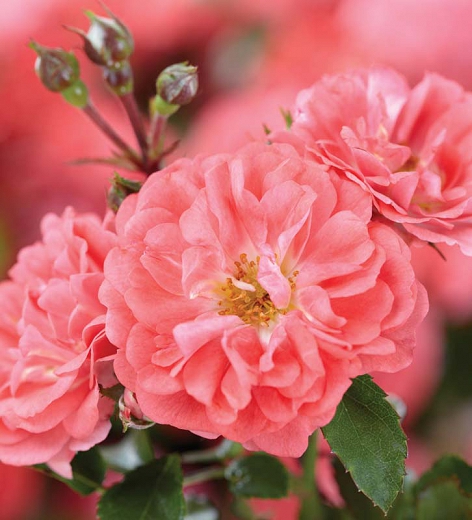
Coral Drift Rose is a masterpiece of modern breeding. Clusters of semi-double flowers in warm coral-salmon tones appear continuously from early summer straight through the first hard frost. Each blossom is modest in size—about two inches across—but they arrive in such generous profusion that individual stems seem to glow. The foliage is small, neat, and persistently glossy, creating a tidy mounded form that looks as polished in July as it does in September. Even the canes are attractive, displaying a deep burgundy tint that adds subtle winter interest.

Growing it in your garden

Here’s what makes Coral Drift Rose different from its fussy cousins: it’s genuinely easy to grow in Connecticut gardens. Plant it in full sun (at least six hours daily) and well-draining soil, give it room to sprawl slightly, and then step back. The plant naturally maintains a low, spreading habit—typically 18 to 24 inches tall—that works beautifully in foundation plantings, along borders, or spilling over raised beds. It doesn’t demand the fussy pruning of hybrid teas or the constant deadheading of other floribundas. In fact, it’s almost self-cleaning; old blooms naturally drop as new ones form.

Plant in spring for best establishment through New England’s unpredictable weather patterns. Space plants about three feet apart if you’re allowing them room to spread; closer if you want a more compact display. They’re excellent in containers too—we’ve seen them thrive in large pots on patios where they can perform like a living focal point all season long.

Through the seasons

Spring arrives and Coral Drift wakes up reliably hardy after Connecticut winters, pushing new growth from established canes. By late May or early June, the first coral clusters appear. Unlike many roses that have distinct bloom flushes with gaps between, Coral Drift operates on a continuous cycle—once it starts blooming, it barely stops. Summer heat never phases it; autumn cool actually seems to intensify the coral tones. We’ve watched these roses hold bloom color and vitality right up until November frost claims them.

Winter dormancy is complete and unproblematic. The burgundy canes add subtle color to the winter landscape, and the low form sheds snow without damage. Spring comes again and the cycle repeats—reliable, predictable, rewarding.

Where it shines

Coral Drift Rose is an absolute standout in the mixed border, where it provides long-season color without demanding special treatment. It’s exceptional in cottage garden settings, creating an informal, abundant feeling without the Victorian perfection requirement. Use it as a low-growing mass planting along driveways or pathways; the continuous bloom provides months of visual interest. In foundation plantings, it softens architecture while staying neatly proportioned. Gardeners with containers on patios or decks discover that a single well-grown Coral Drift Rose in a large pot becomes a conversation piece—visitors assume you have a magic touch.

It’s also wonderful for gardeners with limited time. If you travel in summer or struggle with plant maintenance, Coral Drift won’t sulk or quit on you. It’s genuinely forgiving.

Perfect companions

Coral Drift’s warm peachy tones pair beautifully with silver-foliaged plants like artemisia or dusty miller, creating a sophisticated color echo. Team it with purple coneflower (ECHINACEA) or Russian sage (PEROVSKIA) for complementary color contrast. Low-growing ornamental grasses—feather reed grass or blue fescue—create textural interest alongside the rose’s neater form. White or pale pink perennials like catmint (NEPETA) create a cooling effect that makes the coral pop. And don’t overlook the combination with other shrubs; low viburnums or dwarf conifers provide permanent structure when the rose is dormant.

Care tips

Plant in spring and mulch lightly with compost—roses appreciate the organic matter but hate wet feet, so ensure mulch doesn’t pile against canes. Water deeply and less frequently rather than shallow daily sprinkling; this encourages deep rooting and drought tolerance. Feed monthly during the growing season with a balanced rose fertilizer if you want maximum vigor, but honestly, Coral Drift performs acceptably even without supplemental feeding. Prune lightly in early spring—just remove any winter-damaged wood and cut back the previous season’s growth by about one-third. That’s genuinely all it needs. No complex pruning techniques, no fussy hybrid tea training.

Quick facts

  • Hardiness Zone: 5-11 (reliably winter-hardy throughout Connecticut)
  • Mature Height & Spread: 18-24 inches tall, 24-36 inches wide
  • Bloom Season: June through first frost
  • Light Requirements: Full sun (minimum 6 hours daily)
  • Water Needs: Moderate; water deeply, allow soil to dry slightly between waterings
  • Available at: Both our retail and wholesale locations

Coral Drift Rose

Bright coral-orange, semi-double blooms cover Coral Drift® Rose from mid-spring to mid-fall. The glossy dark green foliage has excellent disease resistance. Its compact, mounding habit is great where roses are desired but space is limited.

Pot Size (gallons), Height: #2

Description

Coral Drift Rose

ROSA ‘MEICORAL’

If you’ve been searching for a rose that actually keeps its promises—endless blooms, disease resistance, and a growth habit that works with your landscape instead of against it—Coral Drift Rose is here to end your rose-growing doubts. This is the rose for people who love color but won’t tolerate fussiness, and honestly, that’s most of us.

What it looks like

Coral Drift Rose is a masterpiece of modern breeding. Clusters of semi-double flowers in warm coral-salmon tones appear continuously from early summer straight through the first hard frost. Each blossom is modest in size—about two inches across—but they arrive in such generous profusion that individual stems seem to glow. The foliage is small, neat, and persistently glossy, creating a tidy mounded form that looks as polished in July as it does in September. Even the canes are attractive, displaying a deep burgundy tint that adds subtle winter interest.

Growing it in your garden

Here’s what makes Coral Drift Rose different from its fussy cousins: it’s genuinely easy to grow in Connecticut gardens. Plant it in full sun (at least six hours daily) and well-draining soil, give it room to sprawl slightly, and then step back. The plant naturally maintains a low, spreading habit—typically 18 to 24 inches tall—that works beautifully in foundation plantings, along borders, or spilling over raised beds. It doesn’t demand the fussy pruning of hybrid teas or the constant deadheading of other floribundas. In fact, it’s almost self-cleaning; old blooms naturally drop as new ones form.

Plant in spring for best establishment through New England’s unpredictable weather patterns. Space plants about three feet apart if you’re allowing them room to spread; closer if you want a more compact display. They’re excellent in containers too—we’ve seen them thrive in large pots on patios where they can perform like a living focal point all season long.

Through the seasons

Spring arrives and Coral Drift wakes up reliably hardy after Connecticut winters, pushing new growth from established canes. By late May or early June, the first coral clusters appear. Unlike many roses that have distinct bloom flushes with gaps between, Coral Drift operates on a continuous cycle—once it starts blooming, it barely stops. Summer heat never phases it; autumn cool actually seems to intensify the coral tones. We’ve watched these roses hold bloom color and vitality right up until November frost claims them.

Winter dormancy is complete and unproblematic. The burgundy canes add subtle color to the winter landscape, and the low form sheds snow without damage. Spring comes again and the cycle repeats—reliable, predictable, rewarding.

Where it shines

Coral Drift Rose is an absolute standout in the mixed border, where it provides long-season color without demanding special treatment. It’s exceptional in cottage garden settings, creating an informal, abundant feeling without the Victorian perfection requirement. Use it as a low-growing mass planting along driveways or pathways; the continuous bloom provides months of visual interest. In foundation plantings, it softens architecture while staying neatly proportioned. Gardeners with containers on patios or decks discover that a single well-grown Coral Drift Rose in a large pot becomes a conversation piece—visitors assume you have a magic touch.

It’s also wonderful for gardeners with limited time. If you travel in summer or struggle with plant maintenance, Coral Drift won’t sulk or quit on you. It’s genuinely forgiving.

Perfect companions

Coral Drift’s warm peachy tones pair beautifully with silver-foliaged plants like artemisia or dusty miller, creating a sophisticated color echo. Team it with purple coneflower (ECHINACEA) or Russian sage (PEROVSKIA) for complementary color contrast. Low-growing ornamental grasses—feather reed grass or blue fescue—create textural interest alongside the rose’s neater form. White or pale pink perennials like catmint (NEPETA) create a cooling effect that makes the coral pop. And don’t overlook the combination with other shrubs; low viburnums or dwarf conifers provide permanent structure when the rose is dormant.

Care tips

Plant in spring and mulch lightly with compost—roses appreciate the organic matter but hate wet feet, so ensure mulch doesn’t pile against canes. Water deeply and less frequently rather than shallow daily sprinkling; this encourages deep rooting and drought tolerance. Feed monthly during the growing season with a balanced rose fertilizer if you want maximum vigor, but honestly, Coral Drift performs acceptably even without supplemental feeding. Prune lightly in early spring—just remove any winter-damaged wood and cut back the previous season’s growth by about one-third. That’s genuinely all it needs. No complex pruning techniques, no fussy hybrid tea training.

Quick facts

  • Hardiness Zone: 5-11 (reliably winter-hardy throughout Connecticut)
  • Mature Height & Spread: 18-24 inches tall, 24-36 inches wide
  • Bloom Season: June through first frost
  • Light Requirements: Full sun (minimum 6 hours daily)
  • Water Needs: Moderate; water deeply, allow soil to dry slightly between waterings
  • Available at: Both our retail and wholesale locations