Crippsii

CHAMAECYPARIS OBTUSA ‘CRIPPSII’

What if one plant could deliver year-round visual drama without demanding constant attention? Meet Crippsii—a golden thread in the landscape that transforms with the seasons, glowing warmest when everything else in your Connecticut garden is fading to grey. This Japanese Hinoki cypress isn’t just another conifer; it’s a living sculpture that earns its place through sheer elegance and surprising resilience.

What it looks like

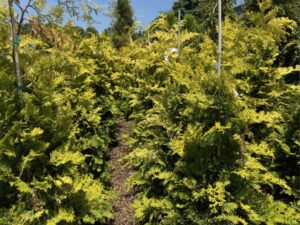
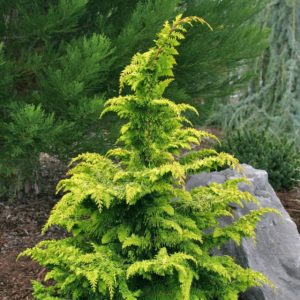
Crippsii is a study in refined restraint. Its feathery, fern-like foliage emerges in spring as a soft, buttery yellow-green, then deepens to a rich golden-yellow as temperatures cool. The color intensifies dramatically in fall and winter, becoming almost luminous on grey New England days when you need it most. The form is naturally columnar and narrow—never awkwardly gangly or requiring aggressive pruning to stay tidy. Soft, delicate sprays radiate outward, creating a texture so fine it invites you to run your fingers across it (go ahead; it won’t hurt). The foliage has an almost translucent quality when backlit by morning sun, making it glow like preserved honey.

Growing it in your garden

Crippsii is more forgiving than many assume. Yes, Hinoki cypress prefers consistent moisture and excellent drainage—they originated in cool, mountainous Japanese forests—but they adapt beautifully to Connecticut’s climate when given the right spot. Plant in afternoon shade if possible, especially during scorching summers. In full sun, the foliage can actually bleach slightly, losing some of that jewel-like quality. Avoid low-lying areas where water pools in spring; Crippsii abhors wet feet in winter. Instead, find a spot with good air circulation and slightly elevated drainage. New England’s cool nights are actually this plant’s friend, intensifying fall color in ways southern gardeners never experience.

Through the seasons

Spring brings soft chartreuse new growth that’s absolutely luminous. Summer sees the tree settle into its golden-yellow, providing subtle texture and color contrast without demanding attention. Fall is where Crippsii truly shines—the color deepens to warm mustard and bronze tones, creating stunning combinations with purple-leafed Japanese maples or burgundy heuchera. Winter? This is the secret weapon. When deciduous trees are bare and evergreen borders turn dull olive, Crippsii glows like a sunset captured in foliage. Snow clinging to its feathery branches creates sculptural beauty that photographs beautifully.

Where it shines

Crippsii is perfect for narrow spaces where you need vertical interest without spread. Tuck it into that awkward corner between shrub borders, use it as an accent in foundation plantings, or line a pathway with a staggered row for a subtle golden corridor. It’s equally stunning as a specimen plant where it can be appreciated from all angles. In containers on a terrace, it brings year-round color and structure. Its refined scale makes it ideal for smaller Connecticut properties where massive evergreens would overwhelm. It also works beautifully in Japanese-inspired gardens, though it’s equally at home in contemporary designs where its clean lines read as sophisticated simplicity.

Perfect companions

Crippsii’s golden tones pair beautifully with deep green conifers like emerald green arborvitae or dark blue-green junipers—the contrast is understated but striking. Pairing it with burgundy-leaved plants like ‘Bloodgood’ Japanese maple creates autumn magic. White-flowering shrubs like Korean spice viburnum or oakleaf hydrangea look elegant against the golden foliage. In shade gardens, surround it with variegated hostas or hellebores to play off texture. Silver-leafed artemisia or dusty miller planted at its base create a refined, cohesive border.

Care tips

Plant in spring or early fall to establish roots before stress periods. Water deeply at planting time and keep soil consistently moist (not wet) the first season. Once established, Crippsii is fairly self-sufficient, though deep watering during dry spells improves performance. Light shaping in late winter maintains the natural form, but this tree rarely needs aggressive pruning. Spider mites can occasionally trouble Crippsii in hot, dry years; spray with water to deter them. Most importantly: avoid hot, exposed wind tunnels and ensure good drainage. Mulch around the base with 2-3 inches of composted bark to maintain soil moisture and regulate temperature.

Quick facts

  • Hardiness Zone: 4–8
  • Mature Height & Spread: 20–30 feet tall, 3–5 feet wide
  • Bloom Season: Non-flowering; valued for foliage color
  • Light Requirements: Part shade to full sun (afternoon shade preferred in hot climates)
  • Water Needs: Moderate; prefers consistently moist, well-drained soil
  • Available at: Both our retail and wholesale locations
Crippsii

Cripps’ Hinoki Cypress is a top-rated evergreen, with spectacular golden foliage, that rapidly grows into a small tree ideal as a specimen, hedge or privacy screen.

Pot Size (gallons), Height: #7

Description

Crippsii

CHAMAECYPARIS OBTUSA ‘CRIPPSII’

What if one plant could deliver year-round visual drama without demanding constant attention? Meet Crippsii—a golden thread in the landscape that transforms with the seasons, glowing warmest when everything else in your Connecticut garden is fading to grey. This Japanese Hinoki cypress isn’t just another conifer; it’s a living sculpture that earns its place through sheer elegance and surprising resilience.

What it looks like

Crippsii is a study in refined restraint. Its feathery, fern-like foliage emerges in spring as a soft, buttery yellow-green, then deepens to a rich golden-yellow as temperatures cool. The color intensifies dramatically in fall and winter, becoming almost luminous on grey New England days when you need it most. The form is naturally columnar and narrow—never awkwardly gangly or requiring aggressive pruning to stay tidy. Soft, delicate sprays radiate outward, creating a texture so fine it invites you to run your fingers across it (go ahead; it won’t hurt). The foliage has an almost translucent quality when backlit by morning sun, making it glow like preserved honey.

Growing it in your garden

Crippsii is more forgiving than many assume. Yes, Hinoki cypress prefers consistent moisture and excellent drainage—they originated in cool, mountainous Japanese forests—but they adapt beautifully to Connecticut’s climate when given the right spot. Plant in afternoon shade if possible, especially during scorching summers. In full sun, the foliage can actually bleach slightly, losing some of that jewel-like quality. Avoid low-lying areas where water pools in spring; Crippsii abhors wet feet in winter. Instead, find a spot with good air circulation and slightly elevated drainage. New England’s cool nights are actually this plant’s friend, intensifying fall color in ways southern gardeners never experience.

Through the seasons

Spring brings soft chartreuse new growth that’s absolutely luminous. Summer sees the tree settle into its golden-yellow, providing subtle texture and color contrast without demanding attention. Fall is where Crippsii truly shines—the color deepens to warm mustard and bronze tones, creating stunning combinations with purple-leafed Japanese maples or burgundy heuchera. Winter? This is the secret weapon. When deciduous trees are bare and evergreen borders turn dull olive, Crippsii glows like a sunset captured in foliage. Snow clinging to its feathery branches creates sculptural beauty that photographs beautifully.

Where it shines

Crippsii is perfect for narrow spaces where you need vertical interest without spread. Tuck it into that awkward corner between shrub borders, use it as an accent in foundation plantings, or line a pathway with a staggered row for a subtle golden corridor. It’s equally stunning as a specimen plant where it can be appreciated from all angles. In containers on a terrace, it brings year-round color and structure. Its refined scale makes it ideal for smaller Connecticut properties where massive evergreens would overwhelm. It also works beautifully in Japanese-inspired gardens, though it’s equally at home in contemporary designs where its clean lines read as sophisticated simplicity.

Perfect companions

Crippsii’s golden tones pair beautifully with deep green conifers like emerald green arborvitae or dark blue-green junipers—the contrast is understated but striking. Pairing it with burgundy-leaved plants like ‘Bloodgood’ Japanese maple creates autumn magic. White-flowering shrubs like Korean spice viburnum or oakleaf hydrangea look elegant against the golden foliage. In shade gardens, surround it with variegated hostas or hellebores to play off texture. Silver-leafed artemisia or dusty miller planted at its base create a refined, cohesive border.

Care tips

Plant in spring or early fall to establish roots before stress periods. Water deeply at planting time and keep soil consistently moist (not wet) the first season. Once established, Crippsii is fairly self-sufficient, though deep watering during dry spells improves performance. Light shaping in late winter maintains the natural form, but this tree rarely needs aggressive pruning. Spider mites can occasionally trouble Crippsii in hot, dry years; spray with water to deter them. Most importantly: avoid hot, exposed wind tunnels and ensure good drainage. Mulch around the base with 2-3 inches of composted bark to maintain soil moisture and regulate temperature.

Quick facts

  • Hardiness Zone: 4–8
  • Mature Height & Spread: 20–30 feet tall, 3–5 feet wide
  • Bloom Season: Non-flowering; valued for foliage color
  • Light Requirements: Part shade to full sun (afternoon shade preferred in hot climates)
  • Water Needs: Moderate; prefers consistently moist, well-drained soil
  • Available at: Both our retail and wholesale locations