
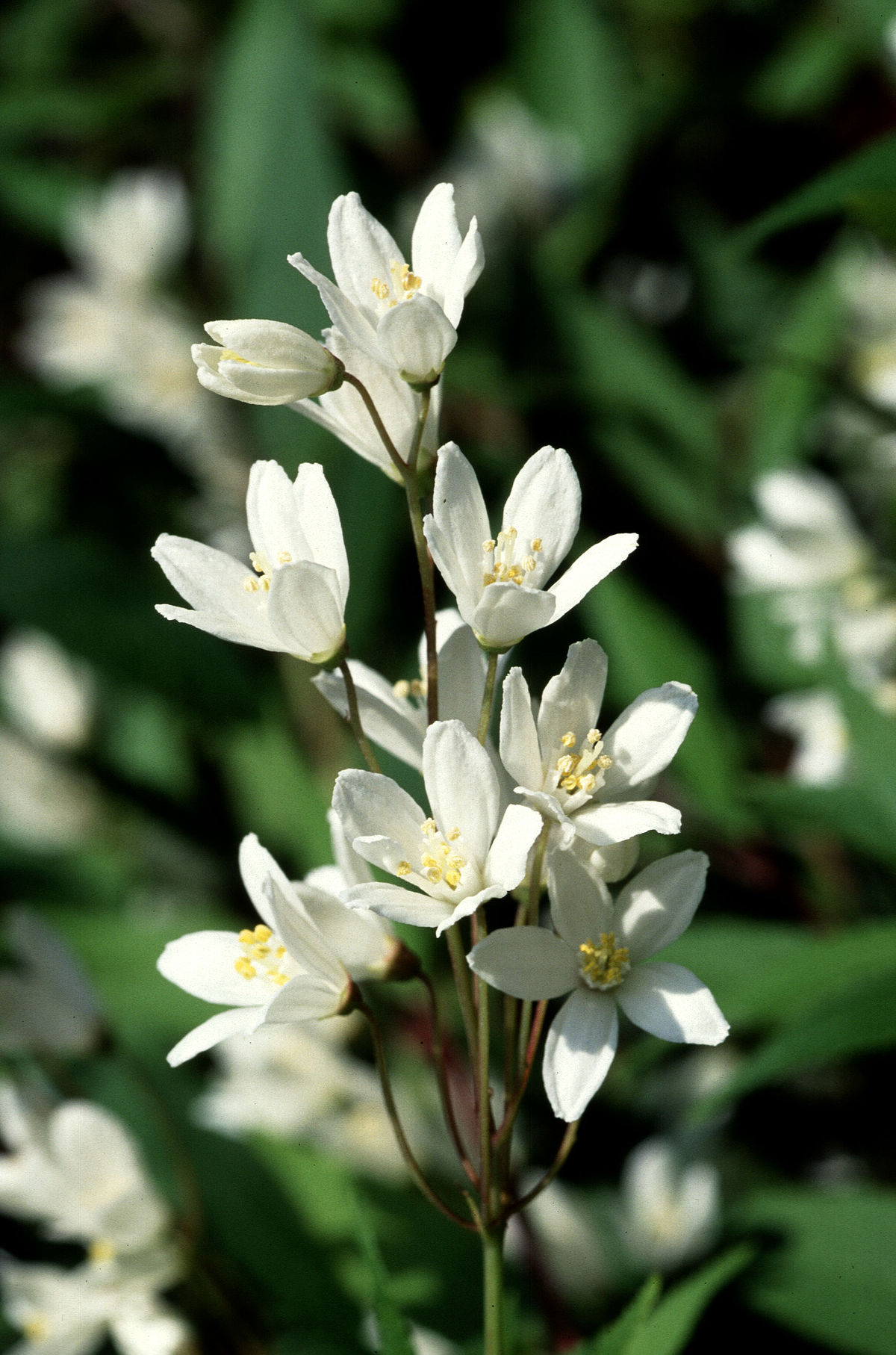
Description

DEUTZIA GRACILIS
What if one plant could deliver that delicate, old-fashioned charm your New England garden has been missing? Deutzia does exactly that—a spring-flowering shrub that seems almost too elegant for how easy it is to grow. Picture arching branches absolutely smothered in tiny, star-shaped flowers in shades of white and soft pink. It’s the kind of plant that makes you pause mid-morning coffee to admire it, and then makes you wonder why every garden doesn’t have one. The secret? Deutzia thrives in Connecticut’s climate without fussing, and it has a graceful, fountain-like habit that instantly elevates any garden’s aesthetic.
What it looks like
Deutzia is an airy, deciduous shrub with a naturally arching, fountain-like form that looks sophisticated even in winter when the delicate branching structure shows through. In spring, it becomes a cloud of bloom—tiny, delicate flowers clustered along the stems in pristine white or pale pink, depending on the variety. The flowers have that charming ruffled quality you see in vintage botanical illustrations. The foliage is fine and narrow, appearing almost feathery, and in autumn it transforms into warm bronze and purple tones before dropping. Even at full mature size, Deutzia maintains an airy, elegant silhouette rather than becoming a heavy, solid mass. It’s the kind of shrub that photographs beautifully and always looks intentional in the landscape.
Growing it in your garden
Deutzia is refreshingly low-maintenance and adaptable to the variety of conditions typical in Connecticut gardens. It prefers full sun to part shade—the more sun it gets, the more prolifically it blooms, though it still performs well in dappled afternoon shade, especially in hotter microclimates. It’s not fussy about soil type and actually prefers moderate moisture rather than rich, heavily amended soil. Well-draining conditions are important, particularly in winter, but it’s quite tolerant of the clay soils common throughout New England. Plant it in spring or fall, spacing it to accommodate its mature width. Deutzia establishes quickly and doesn’t require coddling or special care to settle in. This is a plant that appreciates being planted, watered in during its first season, and then left to its own devices to flourish.
Through the seasons
Spring is when Deutzia steals the show—typically May in Connecticut—when the entire shrub becomes a cascade of delicate, sweetly-scented flowers. These blooms last several weeks, providing a welcome show after the heavier spring bulbs fade. Summer brings soft, fine-textured foliage that creates a lovely feathery texture in the garden without the visual weight of heavier evergreens. The plant offers a cooling, airy quality to surrounding plantings. By fall, the foliage gradually transforms into burnished bronzes and purples, adding warmth to the season before dropping in early November. Winter reveals the elegant branching structure—the skeletal form of mature stems and twigs has its own quiet beauty, and the plant asks nothing of you during the dormant months.
Where it shines
Deutzia is perfect as a spring focal point in a mixed shrub border, where its delicate flowers draw the eye while not overwhelming more substantial plantings. It’s an excellent choice for the transitional edge of a woodland garden, where it receives morning sun and afternoon dappling. Because of its graceful, arching form, it works beautifully as a specimen shrub where it can spread naturally without crowding. It’s also valuable for adding height and spring interest to perennial gardens without the density of larger shrubs. Along a fence line or property border, Deutzia provides privacy with elegance rather than heavy screening. In smaller gardens, compact varieties offer all the charm in a tighter footprint.
Perfect companions
Deutzia pairs beautifully with spring bulbs—plant it behind daffodils, tulips, or Spanish bluebells to add vertical dimension to spring displays. It’s an excellent neighbor for other spring-flowering shrubs like VIBURNUM and FORSYTHIA, extending the season’s bloom time. The delicate texture of Deutzia complements the bolder foliage of hostas and hellebores planted at its base. Shade-tolerant perennials like ASTILBE and PULMONARIA work well around its root zone. Later-blooming hydrangeas appreciate the afternoon shade Deutzia can provide while remaining subtle enough not to compete for visual attention. Its fine texture makes it an ideal foil for plants with heavier foliage like NANDINA or larger-leaved shrubs.
Care tips
Deutzia requires minimal pruning—in fact, that’s part of its charm. Remove any dead or damaged wood in early spring. If you need to control its size or shape, prune immediately after flowering ends in late spring, as DEUTZIA GRACILIS sets its flower buds for next year soon after blooming finishes. Never prune in late summer or fall, as this removes developing flower buds. Water regularly during the first growing season and during any extended dry spells; once established, Deutzia is quite drought-tolerant. A light mulch keeps roots cool and helps retain moisture without promoting rot. Every three to five years, you can rejuvenate an older shrub by removing one-third of the oldest canes at ground level, encouraging fresh new growth.
Quick facts
- Hardiness Zone: Zones 4-8 (thrives throughout Connecticut)
- Mature Height & Spread: 3-6 feet tall and wide, depending on variety
- Bloom Season: May (spring)
- Light Requirements: Full sun to part shade
- Water Needs: Moderate; prefers consistent moisture but tolerates drought once established
- Available at: Both our retail and wholesale locations