
Description

CALLICARPA DICHOTOMA ‘EARLY AMETHYST’
If you’ve been searching for something that bridges the gap between summer color and fall drama, Early Amethyst Beautyberry is exactly what you’ve been missing. This Connecticut-friendly shrub does the work of three plants: it blooms with delicate flowers when most gardens are settling into green monotony, then produces absolutely stunning violet-purple berries that persist for weeks—sometimes into early winter. And unlike its more temperamental cousins, this cultivar actually handles our New England winters with grace.
What it looks like
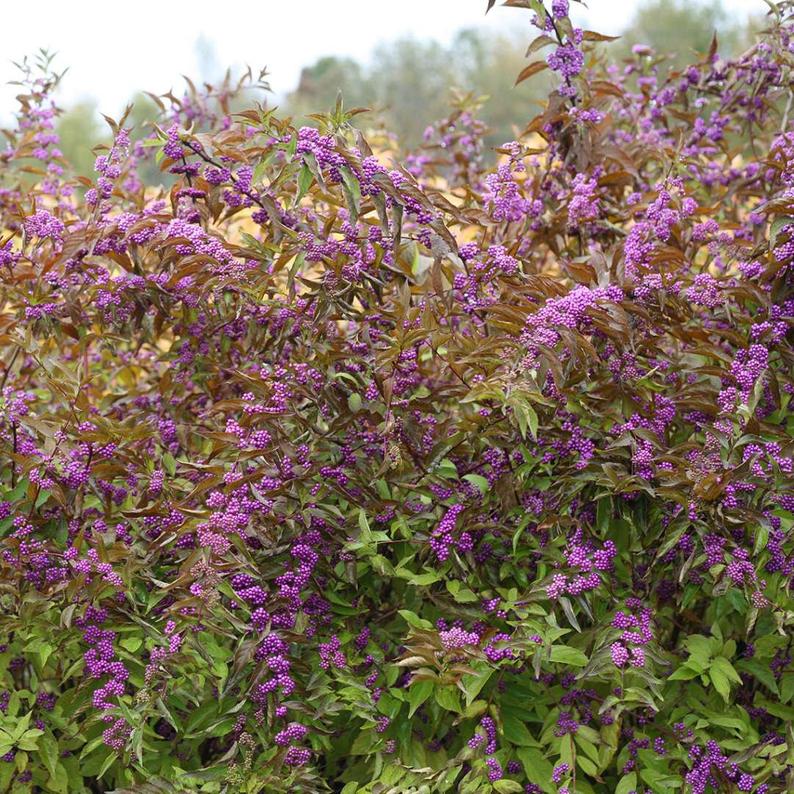
Early Amethyst is a deciduous shrub with a naturally graceful, slightly arching form. The foliage is soft and fine-textured, with narrow green leaves that create an almost airy quality in the garden. But here’s where it gets exciting: starting in mid-summer, tiny pale pink to lavender flowers appear in small clusters along the stems. These are charming enough, but they’re really just the opening act. As soon as the flowers fade, the real magic happens. Dozens of small, jewel-like berries emerge, gradually ripening to a stunning amethyst-purple. Against the green summer foliage, these berries are absolutely arresting—the kind of feature that stops people mid-stroll through your garden.
Growing it in your garden
Here’s the honest truth: Early Amethyst Beautyberry is more forgiving than standard Beautyberry varieties, which is why we’re excited to recommend it for Connecticut gardens. It’s not finicky about soil—it actually prefers slightly moist, well-draining conditions, but it’s adaptable. Plant it in full sun to part shade; it’ll berry better with more sun, but it won’t sulk in lighter shade. The cultivar name ‘Early Amethyst’ refers to both the jewel tone and the fact that it produces fruit earlier in the season than typical beautyberries, giving you maximum berry display before frost arrives.
Give it room to reach its mature size without crowding. This isn’t a plant that loves being sheared into a box—it’s much happier developing its natural form. Space it where it has air circulation, which helps prevent fungal issues during our humid New England summers.
Through the seasons
Spring arrives quietly with soft new foliage emerging as green, ferny growth. By early summer, the plant is fully leafed out and looking fresh and fine-textured. Mid to late summer brings those delicate flowers—subtle but pretty, attracting pollinators. Then comes the spectacular berry production in late summer through fall. The berries often persist into November or even December in sheltered locations, providing unexpected color when most berries have already fallen. Once winter arrives and the leaves drop, the bare stems develop an interesting tan coloration, offering another subtle season of interest before spring returns.
Where it shines
This is a plant that earns its place in mixed shrub borders where you want September through November impact. It’s perfect for gardens that have consistent moisture—rain gardens, areas near downspouts, or low spots in your landscape where water naturally collects. Use it as a background shrub where its berries can be silhouetted against a darker backdrop, or as a specimen where you can appreciate it from multiple angles. It also does beautifully in containers on a patio, where those jewel-toned berries are right at eye level.
Perfect companions
Pair Early Amethyst with tall ornamental grasses like PANICUM VIRGATUM ‘SHENANDOAH’ for late-season harmony. It works wonderfully with September-blooming perennials like ASTERS and LIATRIS. Try it next to plants with burgundy foliage—HEUCHERA ‘OBSIDIAN’ or ILEX VERTICILLATA—for color contrast. And for spring interest around its feet, plant PULMONARIA or shade-tolerant groundcovers that won’t compete for moisture. Late-season bloomers like SEDUM and RUDBECKIA pick up on the color story beautifully.
Care tips
Once established, Early Amethyst is remarkably low-maintenance. Water regularly during its first season to help the root system develop. In subsequent years, it prefers consistent moisture but isn’t drought-tolerant—our Connecticut summers can be dry, so plan to water during extended dry spells. Fertilizer isn’t necessary; a light application of balanced, slow-release fertilizer in spring is plenty. Pruning is minimal; if you need to shape it, do so in early spring before growth begins. Resist the urge to cut it back hard—this plant’s appeal lies in its natural form and branch structure. The branches should be allowed to develop naturally so the berries have plenty of places to cluster. Birds love these berries, but there are usually plenty to go around.
Quick facts
- Hardiness Zone: Zones 5-8 (perfect for Connecticut)
- Mature Height & Spread: 3-5 feet tall and wide
- Bloom Season: Mid to late summer flowers; berries August through November
- Light Requirements: Full sun to part shade (full sun for best berry production)
- Water Needs: Moderate; prefers consistent moisture
- Available at: Both our retail and wholesale locations.