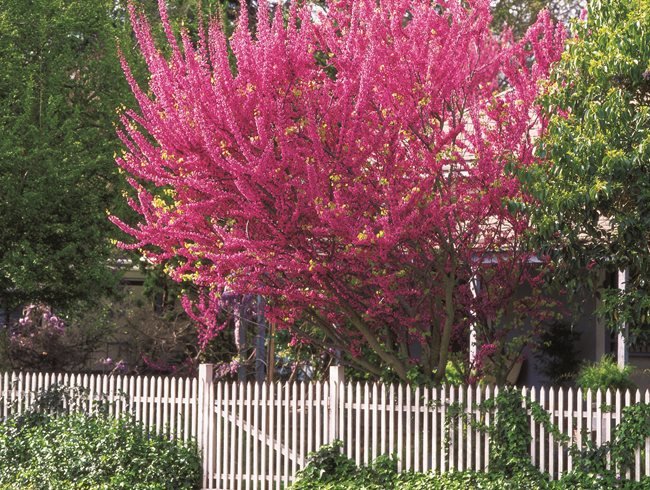
Eastern Redbud
Eastern Redbud

Eastern Redbud
Eastern Redbud

Eastern Redbud

Cercis canadensis

Description

Nothing says we’ve made it to spring quite like the Redbuds.

I mean that.

You can feel it when they bloom. You don’t even need to know the name—you just see that color breaking through the gray of winter and think, “Alright… here we go.”

My grandmother, Arbron, planted one of these back in 1943. And you should see it today.

I couldn’t tell you the exact color—not in technical terms. It’s somewhere between pink, purple, magenta… but none of that really captures it.

It’s vibrant in a way that feels alive.

Like nature saying:
“Hey. I’m back.”

And that’s what makes the Eastern Redbud one of the most beloved flowering trees in Connecticut, New York, and the Northeast.

If you’ve ever searched “redbuds near me”, there’s a good reason—people don’t just want this tree… they remember it.


Size & Growth Habit

  • Mature height: 20–30 feet
  • Spread: 25–35 feet wide
  • Growth rate: moderate-growing ornamental tree

This is a small to medium flowering tree with a naturally graceful, spreading canopy.

It often develops a slightly irregular shape, which is exactly what gives it character. It doesn’t feel manufactured—it feels natural, established, and rooted in place.

Perfect for:

  • residential landscapes in Norwalk CT, Monroe CT, and Oxford CT
  • front yard specimen trees
  • under story planting beneath larger trees

Foliage & Seasonal Interest

This is a four-season ornamental tree, but let’s be honest—the spring bloom is what makes it unforgettable:

  • Brilliant pink to magenta flowers that bloom directly on branches (even the trunk)
  • One of the earliest spring flowering trees in the Northeast
  • Heart-shaped green leaves emerge after flowering
  • Leaves turn soft yellow in fall
  • Interesting branching structure adds winter character

The way it blooms—before the leaves even come out—creates that burst of color against bare branches that stops people in their tracks.


Light Requirements

Performs best in:

  • Full sun to partial shade

More sun provides:

  • Heavier flowering
  • Fuller
  • Stronger branching

This makes it an excellent choice for:

  • Connecticut residential landscapes
  • suburban and estate plantings
  • naturalized garden designs

Soil & Water Needs

Prefers:

  • Well-drained soil
  • Adaptable to a range of soil types
  • Tolerates slightly acidic to neutral conditions

Care guidelines:

  • Water regularly during establishment
  • Mulch to protect roots
  • Avoid overly wet or compacted soils

Once established, it’s a low-maintenance flowering tree for Northeast climates.


Best Uses in the Landscape

The Eastern Redbud is one of the most versatile ornamental trees for landscape design:

  • Front yard focal point tree
  • Accent tree near patios and walkways
  • Naturalized planting in woodland edges
  • Layered landscape designs with shrubs and evergreens
  • Spring color anchor for larger properties

If you’re trying to create a property that feels alive, welcoming, and seasonal, this is one of the best trees you can plant.


Design Insight (Why People Fall in Love With It)

I’ve seen this over and over again.

People don’t ask about Redbuds in a technical way.

They don’t say, “What cultivar is that?”

They say:
👉 “What is THAT tree?”

Because it hits you emotionally before it hits you intellectually.

It’s not just color.
It’s timing.
It’s relief after winter.

It’s the kind of tree that reminds you why you planted anything in the first place.


Care & Maintenance

  • Low maintenance ornamental tree
  • Minimal pruning required
  • Remove dead or crossing branches as needed
  • Benefits from mulching and seasonal care

It’s a tree that grows into its character—just like the one my grandmother planted.

And if you give it time, it becomes part of the property’s story.


Why People Choose Eastern Redbud

  • One of the most recognizable spring flowering trees
  • Strong emotional and seasonal impact
  • Ideal size for residential properties
  • Works in both formal and natural landscapes
  • High demand—people are actively searching “redbuds near me” every spring

Why Buy From Courville Nurseries

Here’s something worth thinking about:

Courville Nurseries supplies trees like this to other garden centers and landscapers—who then mark them up and sell them at a higher price.

So if you’re searching:

  • redbud trees for sale in Connecticut
  • Eastern Redbud near me
  • flowering trees in Norwalk CT, Monroe CT, Oxford CT
  • high-quality nursery trees direct from the grower

Then why not go directly to the source?

👉 Courville Nurseries offers premium, field-grown trees
👉 Local expertise for Connecticut and Northeast landscapes
👉 Better value than traditional retail garden centers

Give them a call. It’s worth it.

Join the Conversation

I’d really like to hear this one from people.

Do you have a Redbud in your yard?
Did someone plant one years ago that’s still standing strong?

👉 Share your photos on Facebook and Instagram
👉 Tag Courville Nurseries
👉 Tell us your Redbud story

Because if there’s one tree people connect with—it’s this one.


Source

General horticultural characteristics consistent with university extension systems and nursery production standards, including UConn Plant Database references and regional growing expertise for the Northeast United States.

Eastern Redbud

The horizontal branching pattern of the redbud adds architectural interest and makes an attractive canopy for spring bulbs.

Pot Size (gallons), Height: 8-10′

Description

Eastern Redbud
Eastern Redbud

Eastern Redbud
Eastern Redbud

Eastern Redbud

Cercis canadensis

Description

Nothing says we’ve made it to spring quite like the Redbuds.

I mean that.

You can feel it when they bloom. You don’t even need to know the name—you just see that color breaking through the gray of winter and think, “Alright… here we go.”

My grandmother, Arbron, planted one of these back in 1943. And you should see it today.

I couldn’t tell you the exact color—not in technical terms. It’s somewhere between pink, purple, magenta… but none of that really captures it.

It’s vibrant in a way that feels alive.

Like nature saying:
“Hey. I’m back.”

And that’s what makes the Eastern Redbud one of the most beloved flowering trees in Connecticut, New York, and the Northeast.

If you’ve ever searched “redbuds near me”, there’s a good reason—people don’t just want this tree… they remember it.


Size & Growth Habit

  • Mature height: 20–30 feet
  • Spread: 25–35 feet wide
  • Growth rate: moderate-growing ornamental tree

This is a small to medium flowering tree with a naturally graceful, spreading canopy.

It often develops a slightly irregular shape, which is exactly what gives it character. It doesn’t feel manufactured—it feels natural, established, and rooted in place.

Perfect for:

  • residential landscapes in Norwalk CT, Monroe CT, and Oxford CT
  • front yard specimen trees
  • under story planting beneath larger trees

Foliage & Seasonal Interest

This is a four-season ornamental tree, but let’s be honest—the spring bloom is what makes it unforgettable:

  • Brilliant pink to magenta flowers that bloom directly on branches (even the trunk)
  • One of the earliest spring flowering trees in the Northeast
  • Heart-shaped green leaves emerge after flowering
  • Leaves turn soft yellow in fall
  • Interesting branching structure adds winter character

The way it blooms—before the leaves even come out—creates that burst of color against bare branches that stops people in their tracks.


Light Requirements

Performs best in:

  • Full sun to partial shade

More sun provides:

  • Heavier flowering
  • Fuller
  • Stronger branching

This makes it an excellent choice for:

  • Connecticut residential landscapes
  • suburban and estate plantings
  • naturalized garden designs

Soil & Water Needs

Prefers:

  • Well-drained soil
  • Adaptable to a range of soil types
  • Tolerates slightly acidic to neutral conditions

Care guidelines:

  • Water regularly during establishment
  • Mulch to protect roots
  • Avoid overly wet or compacted soils

Once established, it’s a low-maintenance flowering tree for Northeast climates.


Best Uses in the Landscape

The Eastern Redbud is one of the most versatile ornamental trees for landscape design:

  • Front yard focal point tree
  • Accent tree near patios and walkways
  • Naturalized planting in woodland edges
  • Layered landscape designs with shrubs and evergreens
  • Spring color anchor for larger properties

If you’re trying to create a property that feels alive, welcoming, and seasonal, this is one of the best trees you can plant.


Design Insight (Why People Fall in Love With It)

I’ve seen this over and over again.

People don’t ask about Redbuds in a technical way.

They don’t say, “What cultivar is that?”

They say:
👉 “What is THAT tree?”

Because it hits you emotionally before it hits you intellectually.

It’s not just color.
It’s timing.
It’s relief after winter.

It’s the kind of tree that reminds you why you planted anything in the first place.


Care & Maintenance

  • Low maintenance ornamental tree
  • Minimal pruning required
  • Remove dead or crossing branches as needed
  • Benefits from mulching and seasonal care

It’s a tree that grows into its character—just like the one my grandmother planted.

And if you give it time, it becomes part of the property’s story.


Why People Choose Eastern Redbud

  • One of the most recognizable spring flowering trees
  • Strong emotional and seasonal impact
  • Ideal size for residential properties
  • Works in both formal and natural landscapes
  • High demand—people are actively searching “redbuds near me” every spring

Why Buy From Courville Nurseries

Here’s something worth thinking about:

Courville Nurseries supplies trees like this to other garden centers and landscapers—who then mark them up and sell them at a higher price.

So if you’re searching:

  • redbud trees for sale in Connecticut
  • Eastern Redbud near me
  • flowering trees in Norwalk CT, Monroe CT, Oxford CT
  • high-quality nursery trees direct from the grower

Then why not go directly to the source?

👉 Courville Nurseries offers premium, field-grown trees
👉 Local expertise for Connecticut and Northeast landscapes
👉 Better value than traditional retail garden centers

Give them a call. It’s worth it.

Join the Conversation

I’d really like to hear this one from people.

Do you have a Redbud in your yard?
Did someone plant one years ago that’s still standing strong?

👉 Share your photos on Facebook and Instagram
👉 Tag Courville Nurseries
👉 Tell us your Redbud story

Because if there’s one tree people connect with—it’s this one.


Source

General horticultural characteristics consistent with university extension systems and nursery production standards, including UConn Plant Database references and regional growing expertise for the Northeast United States.