
Description
PINUS STROBUS
When you stand beneath a mature Eastern White Pine on a breezy Connecticut afternoon, you understand why early colonists called it the “King of the Forest.” This towering evergreen is the tallest tree in the Northeast, reaching skyward with an almost spiritual grace. Its feathery, soft needles catch the light like green silk, and its presence brings an immediate sense of permanence and majesty to any landscape. Whether you’re planting for privacy, windbreaks, or simply because you love the way light filters through those delicate branches, the Eastern White Pine delivers on every level.
What it looks like
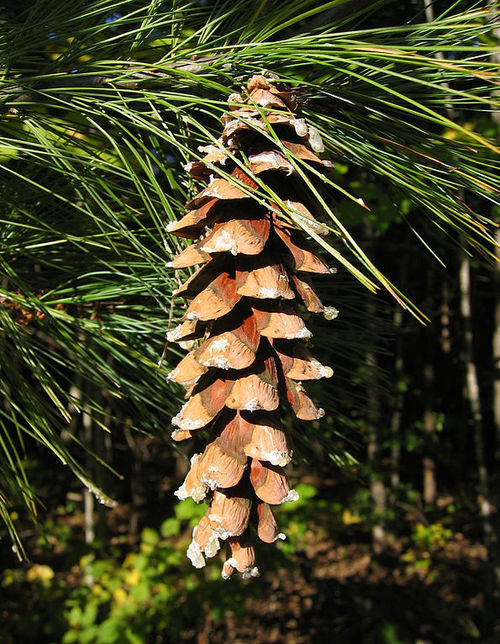
The Eastern White Pine is instantly recognizable by its pyramidal form and the distinctive bundles of five long, slender needles—remember “five letters in white” and you’ve got it. Young trees are appealingly conical and dense; as they mature, they develop a more open, elegant silhouette with horizontal branching that becomes increasingly picturesque with age. The bark starts smooth and greenish on young growth, deepening to a rich gray-brown on mature specimens. Come winter, the tree maintains its needles, providing year-round color and structure. The cones are delightfully long and slender, dangling gracefully from branch tips by late summer.
Growing it in your garden
Eastern White Pines are surprisingly adaptable and forgiving, which is partly why they’ve thrived in Connecticut forests for thousands of years. They prefer well-draining soil and plenty of space to stretch their roots—these aren’t shrinking violets. Plant yours where it has room to develop its natural form without constant pruning. They’ll tolerate sandy, loamy, or slightly acidic soils and even perform respectably in less-than-perfect conditions once established. The key is giving them good air circulation, which helps prevent fungal issues that can plague stressed trees in our humid New England summers. Unlike some pines that resent our winters, PINUS STROBUS is absolutely unfazed by Connecticut cold.
Through the seasons
Spring brings fresh growth with that characteristic bright, lime-green color at the branch tips—it’s one of the most hopeful sights in the season. By early summer, the tree settles into its deep green, providing excellent shade and shelter. Late summer and early fall reveal the delicate cones, which add architectural interest through the cooler months. Winter is where the Eastern White Pine truly proves its worth; while deciduous trees stand bare, your PINUS STROBUS remains a steadfast green presence, providing privacy, windbreak protection, and a sense of vitality when the rest of the landscape feels dormant.
Where it shines
Use Eastern White Pines as a stately specimen tree in a large landscape, where its mature form becomes a focal point. They’re unmatched for creating natural privacy screens and windbreaks—plant a few in a line and watch them work year-round. They’re perfect for the back of properties where they have room to reach their full potential without crowding neighbors or interfering with power lines. If you have a slope or challenging grade, PINUS STROBUS helps stabilize soil while adding dramatic vertical interest. They’re also wonderful for creating that classic New England forest edge aesthetic around the perimeter of your property.
Perfect companions
Eastern White Pines look magnificent underplanted with shade-tolerant understory plants like Christmas fern, autumn fern, and various hostas. At the same height and slightly offset, native flowering dogwoods create a beautiful layered effect. Pairing them with fellow evergreens like Eastern Red Cedar or Canadian Hemlock creates visual depth. For deciduous companions with complementary forms, consider birches or sugar maples that share that vertical aspiration and light-dappled shade quality.
Care tips
Once established, Eastern White Pines require minimal care beyond occasional removal of dead branches. Water regularly during the first two to three growing seasons to help establish a deep root system, particularly important given our sometimes-dry Connecticut springs and summers. Prune only to remove damaged growth or competing leaders when the tree is young; mature trees rarely need intervention. Watch for white pine weevil damage on younger trees—this causes branch crook, but it’s rarely fatal. Proper spacing and air circulation prevent most disease issues. Resist the urge to prune into the canopy, as new growth won’t fill in the gaps.
Quick facts
- Hardiness Zone: 3-8 (thrives throughout Connecticut)
- Mature Height & Spread: 50-80 feet tall, 20-40 feet wide
- Bloom Season: Cones mature late summer through fall
- Light Requirements: Full sun (minimum 6 hours)
- Water Needs: Moderate; prefers well-draining soil; drought-tolerant once established
- Available at: Both our retail and wholesale locations