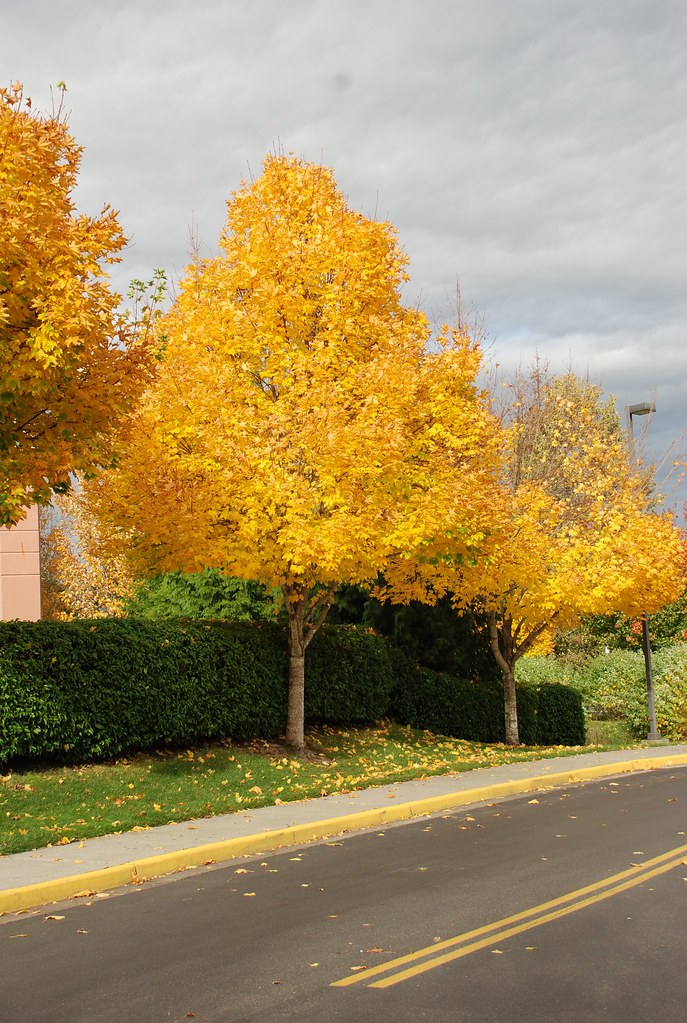
Emerald Queen Norway Maple

ACER PLATANOIDES ‘EMERALD QUEEN’

The Emerald Queen Norway Maple is Connecticut’s answer to the gardener who wants everything: reliable growth, year-round beauty, and a tree that actually improves with age. This cultivar has earned its reputation as one of the finest shade trees for New England, and once you understand why, you’ll see it everywhere you look in established neighborhoods throughout the region.

What it looks like

Imagine a tree so symmetrical, so perfectly proportioned, that it looks like it was designed by someone who actually understood what homeowners need. The Emerald Queen develops a distinctly upright, pyramidal form—tight and orderly when young, eventually maturing into a broad, rounded crown that’s almost stately in its composure. The leaves are a deep, lustrous green that seems to glow in summer sunlight, deeply lobed in that classic maple way that makes them instantly recognizable. They’re substantial leaves, too—not delicate, not prone to shredding in our Connecticut winds—which means the canopy maintains its fullness and presence throughout the growing season.

In spring, before those emerald leaves fully emerge, small yellowish-green flowers appear in clusters. They’re not showy, but they’re charming in their understated way, and they signal the start of something good. Come autumn, the foliage transforms into burnished golds and reds, offering that New England fall color we all crave, though the display tends to be more subtle and refined than the flashier Japanese maples.

Growing it in your garden

Here’s what makes the Emerald Queen such a workhorse: it’s genuinely unfussy. This is a tree that adapts to different soil types—clay, loam, sandy—without melodrama. It prefers slightly acidic conditions, which, happily, is what most of Connecticut naturally offers. While it loves full sun and performs best with six or more hours of direct light, it’s forgiving enough to tolerate partial shade, though you’ll get the fullest canopy and best form in brighter locations.

Establish it with regular watering during its first two growing seasons, particularly during hot, dry spells. After that, the Emerald Queen becomes quite drought-tolerant, which is an increasingly valuable trait as our New England summers become less predictable. It’s not fussy about moisture once established—not boggy-soil fussy, but not so particular that a normal rainfall year leaves you anxious.

Through the seasons

Spring arrives with that flush of new growth and those modest flowers that bees appreciate more than we do. Summer is when the Emerald Queen truly shines: the canopy fills in densely, creating substantial, usable shade that actually cools your landscape. This is the tree you plant to walk under on a muggy July afternoon. Fall brings that elegant color transition, and unlike some maples that drop their leaves all at once and leave you sweeping for weeks, the Emerald Queen is relatively tidy. Winter reveals a strong branch structure—nothing sculptural or ornamental, just honest, functional architecture that speaks to the tree’s inherent strength.

Where it shines

The Emerald Queen is your go-to for creating a strong focal point in a large landscape. Plant it as a specimen tree where you want it to be noticed, or use multiples to create formal avenues that define spaces. It works beautifully as a street tree—many Connecticut towns have planted them along residential streets, and they mature into handsome, predictable forms that don’t interfere with wires or create maintenance headaches. It’s also excellent for providing shade over seating areas, patios, and gathering spaces, because that dense canopy really delivers.

Perfect companions

Beneath the high, broad canopy of an Emerald Queen, plant shade-tolerant understory plants like hostas, hellebores, or Japanese painted ferns. At the tree’s base, spring bulbs—daffodils and early tulips—bloom before the canopy fully leafs out. Smaller ornamental trees like serviceberry or redbud work beautifully nearby, their delicate forms complementing the Emerald Queen’s bold presence. Even shrubs like oakleaf hydrangea or viburnum fit comfortably in the surrounding landscape.

Care tips

Once established, the Emerald Queen needs minimal intervention. Prune in winter to maintain its form, removing any crossing or damaged branches. Don’t top the tree—its natural shape is one of its glories. Watch for aphids in early summer (they occasionally secrete honeydew, but it’s rarely serious in New England). A light feeding with balanced fertilizer in spring supports vigorous growth, though mature trees don’t require it.

Quick facts

  • Hardiness Zone: 3–7
  • Mature Height & Spread: 50–60 feet tall, 40–50 feet wide
  • Bloom Season: Spring
  • Light Requirements: Full sun to partial shade
  • Water Needs: Moderate; drought-tolerant once established
  • Available at: Both our retail and wholesale locations

Emerald Queen Norway Maple

Acer platanoides ‘ Emerald Queen ‘

Pot Size (gallons), Height: 8-10′

Description

Emerald Queen Norway Maple

ACER PLATANOIDES ‘EMERALD QUEEN’

The Emerald Queen Norway Maple is Connecticut’s answer to the gardener who wants everything: reliable growth, year-round beauty, and a tree that actually improves with age. This cultivar has earned its reputation as one of the finest shade trees for New England, and once you understand why, you’ll see it everywhere you look in established neighborhoods throughout the region.

What it looks like

Imagine a tree so symmetrical, so perfectly proportioned, that it looks like it was designed by someone who actually understood what homeowners need. The Emerald Queen develops a distinctly upright, pyramidal form—tight and orderly when young, eventually maturing into a broad, rounded crown that’s almost stately in its composure. The leaves are a deep, lustrous green that seems to glow in summer sunlight, deeply lobed in that classic maple way that makes them instantly recognizable. They’re substantial leaves, too—not delicate, not prone to shredding in our Connecticut winds—which means the canopy maintains its fullness and presence throughout the growing season.

In spring, before those emerald leaves fully emerge, small yellowish-green flowers appear in clusters. They’re not showy, but they’re charming in their understated way, and they signal the start of something good. Come autumn, the foliage transforms into burnished golds and reds, offering that New England fall color we all crave, though the display tends to be more subtle and refined than the flashier Japanese maples.

Growing it in your garden

Here’s what makes the Emerald Queen such a workhorse: it’s genuinely unfussy. This is a tree that adapts to different soil types—clay, loam, sandy—without melodrama. It prefers slightly acidic conditions, which, happily, is what most of Connecticut naturally offers. While it loves full sun and performs best with six or more hours of direct light, it’s forgiving enough to tolerate partial shade, though you’ll get the fullest canopy and best form in brighter locations.

Establish it with regular watering during its first two growing seasons, particularly during hot, dry spells. After that, the Emerald Queen becomes quite drought-tolerant, which is an increasingly valuable trait as our New England summers become less predictable. It’s not fussy about moisture once established—not boggy-soil fussy, but not so particular that a normal rainfall year leaves you anxious.

Through the seasons

Spring arrives with that flush of new growth and those modest flowers that bees appreciate more than we do. Summer is when the Emerald Queen truly shines: the canopy fills in densely, creating substantial, usable shade that actually cools your landscape. This is the tree you plant to walk under on a muggy July afternoon. Fall brings that elegant color transition, and unlike some maples that drop their leaves all at once and leave you sweeping for weeks, the Emerald Queen is relatively tidy. Winter reveals a strong branch structure—nothing sculptural or ornamental, just honest, functional architecture that speaks to the tree’s inherent strength.

Where it shines

The Emerald Queen is your go-to for creating a strong focal point in a large landscape. Plant it as a specimen tree where you want it to be noticed, or use multiples to create formal avenues that define spaces. It works beautifully as a street tree—many Connecticut towns have planted them along residential streets, and they mature into handsome, predictable forms that don’t interfere with wires or create maintenance headaches. It’s also excellent for providing shade over seating areas, patios, and gathering spaces, because that dense canopy really delivers.

Perfect companions

Beneath the high, broad canopy of an Emerald Queen, plant shade-tolerant understory plants like hostas, hellebores, or Japanese painted ferns. At the tree’s base, spring bulbs—daffodils and early tulips—bloom before the canopy fully leafs out. Smaller ornamental trees like serviceberry or redbud work beautifully nearby, their delicate forms complementing the Emerald Queen’s bold presence. Even shrubs like oakleaf hydrangea or viburnum fit comfortably in the surrounding landscape.

Care tips

Once established, the Emerald Queen needs minimal intervention. Prune in winter to maintain its form, removing any crossing or damaged branches. Don’t top the tree—its natural shape is one of its glories. Watch for aphids in early summer (they occasionally secrete honeydew, but it’s rarely serious in New England). A light feeding with balanced fertilizer in spring supports vigorous growth, though mature trees don’t require it.

Quick facts

  • Hardiness Zone: 3–7
  • Mature Height & Spread: 50–60 feet tall, 40–50 feet wide
  • Bloom Season: Spring
  • Light Requirements: Full sun to partial shade
  • Water Needs: Moderate; drought-tolerant once established
  • Available at: Both our retail and wholesale locations