False Spirea

FALSE SPIREA (ASTILBE × ARENDSII)

If you’ve been searching for something that handles wet soil, deep shade, and Connecticut winters without complaint, while still delivering pure garden magic, False Spirea might be exactly what you’ve been looking for. This woodland workhorse transforms shady corners into feathery, romantic spaces that seem to glow from within—and here’s the best part: it actually thrives in the exact conditions that challenge most plants.

What it looks like

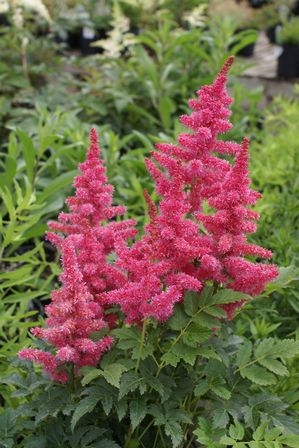
False Spirea is a study in delicate contrast. Its finely cut, fern-like foliage emerges in spring with bronze or copper undertones before deepening to rich green, creating texture that’s interesting even before a single flower appears. Then come the plumes—airy, feathery flower spires that rise above the foliage like fireworks frozen mid-burst. Depending on the variety, these can be soft pink, coral, red, white, or even cream. The whole plant has an almost ethereal quality, with a loose, informal habit that feels natural in any garden setting.

Growing it in your garden

False Spirea is the shade garden’s reliable friend. While it technically can tolerate part sun, it genuinely prefers afternoon shade—especially important here in Connecticut where our hot summers benefit from a little protection. It’s not fussy about soil type, but it does love moisture. If you have boggy areas, damp low spots, or that awkward shady corner where nothing else seems happy, this is your answer. The plant’s shallow root system means it won’t compete aggressively with nearby trees and shrubs, making it an excellent companion choice for woodland edges and established gardens.

Through the seasons

Spring arrives with emerging foliage in shades of bronze and burgundy that deepen as temperatures rise. By early to midsummer, depending on the cultivar, flower plumes begin their show—lasting for several weeks in peak bloom. Fall brings a graceful fade; many gardeners leave the dried seed heads standing through winter, where they catch frost and look architectural against the snow. It’s fully dormant by deep winter, which means it’s completely winter-hardy throughout Connecticut and won’t require coddling in our coldest seasons.

Where it shines

False Spirea is at home in shaded woodland gardens, along stream banks and pond edges, and in those difficult dry-shade spots under mature trees once established (though it prefers consistent moisture). It’s stunning planted in drifts along a shaded walkway or in containers on a north-facing porch. In mixed borders, it adds height, texture, and an ethereal quality that plays beautifully against broader-leaved hostas and heucheras. It’s also a sophisticated choice for rain gardens and bioswales where you want something that handles excess moisture without looking utilitarian.

Perfect companions

Pair False Spirea with shade-lovers that complement its airy texture: Japanese Painted Ferns add silvery tones, while Hostas provide contrasting foliage structure. Coral Bells (Heuchera) offer colorful foliage echoes in burgundy varieties, and shade-tolerant perennials like Liriope add vertical interest at a different height. In moist situations, try it alongside Cinnamon Ferns or Japanese Forest Grass. For late-season interest, pair it with Autumn Fern or Autumn Sedge to extend the garden’s color show.

Care tips

Plant False Spirea in spring or early fall, spacing plants based on their mature width—typically 18-36 inches depending on variety. They’ll establish faster with consistent moisture during their first season, but once settled, they’re remarkably low-maintenance. Add compost or aged manure at planting time and again each spring to maintain the organic matter they love. In hot, dry Connecticut summers, mulch around the base to help retain moisture. Cut back in late fall or early spring before new growth emerges. Divide overcrowded clumps in early spring if desired, though they’re not aggressive spreaders and won’t need frequent division. There are virtually no pest or disease issues—this is truly a worry-free plant.

Quick facts

  • Hardiness Zone: 3-9 (fully hardy throughout Connecticut)
  • Mature Height & Spread: 18-48 inches tall, 18-36 inches wide (varies by cultivar)
  • Bloom Season: Early to midsummer (June-July in Connecticut)
  • Light Requirements: Part to full shade (afternoon shade preferred in our region)
  • Water Needs: Consistently moist; thrives in wet soils where many plants struggle
  • Available at: Both our retail and wholesale locations.

False Spirea

Very floriferous, Astilbe ‘Younique Carmine’ is an outstanding garden plant which features fluffy, carmine-red flower plumes atop numerous panicles neatly held in tidy, eye-catching bouquet

Pot Size (gallons), Height: #1

Description

False Spirea

FALSE SPIREA (ASTILBE × ARENDSII)

If you’ve been searching for something that handles wet soil, deep shade, and Connecticut winters without complaint, while still delivering pure garden magic, False Spirea might be exactly what you’ve been looking for. This woodland workhorse transforms shady corners into feathery, romantic spaces that seem to glow from within—and here’s the best part: it actually thrives in the exact conditions that challenge most plants.

What it looks like

False Spirea is a study in delicate contrast. Its finely cut, fern-like foliage emerges in spring with bronze or copper undertones before deepening to rich green, creating texture that’s interesting even before a single flower appears. Then come the plumes—airy, feathery flower spires that rise above the foliage like fireworks frozen mid-burst. Depending on the variety, these can be soft pink, coral, red, white, or even cream. The whole plant has an almost ethereal quality, with a loose, informal habit that feels natural in any garden setting.

Growing it in your garden

False Spirea is the shade garden’s reliable friend. While it technically can tolerate part sun, it genuinely prefers afternoon shade—especially important here in Connecticut where our hot summers benefit from a little protection. It’s not fussy about soil type, but it does love moisture. If you have boggy areas, damp low spots, or that awkward shady corner where nothing else seems happy, this is your answer. The plant’s shallow root system means it won’t compete aggressively with nearby trees and shrubs, making it an excellent companion choice for woodland edges and established gardens.

Through the seasons

Spring arrives with emerging foliage in shades of bronze and burgundy that deepen as temperatures rise. By early to midsummer, depending on the cultivar, flower plumes begin their show—lasting for several weeks in peak bloom. Fall brings a graceful fade; many gardeners leave the dried seed heads standing through winter, where they catch frost and look architectural against the snow. It’s fully dormant by deep winter, which means it’s completely winter-hardy throughout Connecticut and won’t require coddling in our coldest seasons.

Where it shines

False Spirea is at home in shaded woodland gardens, along stream banks and pond edges, and in those difficult dry-shade spots under mature trees once established (though it prefers consistent moisture). It’s stunning planted in drifts along a shaded walkway or in containers on a north-facing porch. In mixed borders, it adds height, texture, and an ethereal quality that plays beautifully against broader-leaved hostas and heucheras. It’s also a sophisticated choice for rain gardens and bioswales where you want something that handles excess moisture without looking utilitarian.

Perfect companions

Pair False Spirea with shade-lovers that complement its airy texture: Japanese Painted Ferns add silvery tones, while Hostas provide contrasting foliage structure. Coral Bells (Heuchera) offer colorful foliage echoes in burgundy varieties, and shade-tolerant perennials like Liriope add vertical interest at a different height. In moist situations, try it alongside Cinnamon Ferns or Japanese Forest Grass. For late-season interest, pair it with Autumn Fern or Autumn Sedge to extend the garden’s color show.

Care tips

Plant False Spirea in spring or early fall, spacing plants based on their mature width—typically 18-36 inches depending on variety. They’ll establish faster with consistent moisture during their first season, but once settled, they’re remarkably low-maintenance. Add compost or aged manure at planting time and again each spring to maintain the organic matter they love. In hot, dry Connecticut summers, mulch around the base to help retain moisture. Cut back in late fall or early spring before new growth emerges. Divide overcrowded clumps in early spring if desired, though they’re not aggressive spreaders and won’t need frequent division. There are virtually no pest or disease issues—this is truly a worry-free plant.

Quick facts

  • Hardiness Zone: 3-9 (fully hardy throughout Connecticut)
  • Mature Height & Spread: 18-48 inches tall, 18-36 inches wide (varies by cultivar)
  • Bloom Season: Early to midsummer (June-July in Connecticut)
  • Light Requirements: Part to full shade (afternoon shade preferred in our region)
  • Water Needs: Consistently moist; thrives in wet soils where many plants struggle
  • Available at: Both our retail and wholesale locations.