Foam Flower

TIARELLA POLYPHYLLA

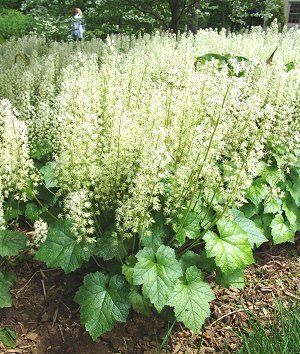
If you’ve been searching for something that handles wet soil, deep shade, and Connecticut winters without complaint, while also looking absolutely charming doing it—Foam Flower is your answer. This delicate woodland native brings an unexpected elegance to shaded gardens, with airy flower clusters that genuinely live up to their name. The flowers look like tiny foam bubbles floating just above ferny foliage, creating a cloud-like effect that makes you wonder why every shaded corner doesn’t have one.

What it looks like

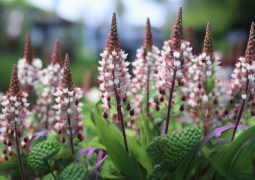
Foam Flower is a low-growing perennial with deeply lobed, maple-like foliage that forms neat, attractive mounds throughout the growing season. The leaves are a soft, medium green with delicate veining, and many varieties develop burgundy or bronze tinting—especially beautiful in spring and fall. But the real star is the flowers: delicate, cream or pale pink spikes that appear in late spring and early summer. They’re genuinely unique—each tiny flower is so light and airy that the entire inflorescence has that characteristic “foamy” appearance. The flowers are beloved by bees and other pollinators, adding movement and life to quiet garden spaces.

Growing it in your garden

Here’s what makes Foam Flower particularly valuable for New England gardens: it thrives in partial to full shade and actually prefers it. In our Connecticut climate, afternoon shade is essential—this is a plant that wants protection from intense heat and dry afternoon sun. It loves consistently moist soil, making it perfect for boggy areas, along stream banks, or in those tricky spots where other plants refuse to cooperate. Plant in organically rich, well-draining soil amended with compost. Space plants about 12 inches apart; they’ll slowly spread and fill in over time. Unlike many shade plants, Foam Flower doesn’t mind competing with tree roots once established, making it an excellent choice for woodland gardens and shaded borders.

Through the seasons

Spring brings fresh new growth with that characteristic bronze or burgundy tinting in the emerging leaves—a subtle color show many gardeners overlook. Late May through June, the delicate flower spikes appear, creating weeks of airy, romantic blooms that seem to float above the foliage. Summer sees the foliage maintain its neat, textural presence, providing consistent greenery in shade where other plants might look thin or sparse. In fall, the leaves often develop warm burgundy tones, extending interest into autumn. Even in winter, the evergreen or semi-evergreen foliage maintains structure and presence in the garden—something valuable when so much else has retreated underground in Connecticut.

Where it shines

Foam Flower is essentially designed for the challenges of Connecticut shade gardening. Plant it along woodland borders, beneath deciduous trees, or in those north-facing beds that see minimal direct sun. It’s excellent for naturalizing in boggy areas or rain gardens—places where moisture collects and stays. Use it as a textural groundcover in shade, where its delicate foliage provides visual interest without being aggressive. In containers, it brings woodland charm to shaded patios or porches. It’s also surprisingly lovely for cut flowers—the delicate spikes are surprisingly long-lasting and add an ethereal quality to shade-loving bouquets.

Perfect companions

Pair Foam Flower with other shade lovers that appreciate moisture: Astilbe for stronger vertical interest, Hosta for contrasting foliage texture, or Hellebore for color variation. Ferns are natural companions—the delicate, frothy flower spikes play beautifully against fern foliage. Add seasonal interest with Bleeding Heart, Coral Bells, or woodland groundcovers like Ajuga. In wetter sites, combine with Cardinal Flower, Bee Balm, or Swamp Milkweed. In containers, try pairing with hostas, ivies, or trailing sedums for a sophisticated shade display.

Care tips

Foam Flower is remarkably low-maintenance once established. Keep soil consistently moist—not waterlogged, but never completely dry. A 2-3 inch layer of mulch helps retain moisture and keeps roots cool in summer. In spring, apply a balanced fertilizer or work in compost for nutrition; this is not a heavy feeder, so you don’t need much. After flowering, you can deadhead spent spikes to encourage tidiness, though this isn’t necessary. Cut back old foliage in late winter as new growth emerges. Foam Flower rarely has pest or disease problems in proper conditions—it’s genuinely one of the easier shade plants to grow successfully in Connecticut.

Quick facts

  • Hardiness Zone: 3-8 (perfectly hardy throughout Connecticut)
  • Mature Height & Spread: 8-12 inches tall, 12-18 inches wide
  • Bloom Season: Late spring to early summer (May-June)
  • Light Requirements: Partial to full shade
  • Water Needs: Consistently moist; tolerates wet soils
  • Available at: Both our retail and wholesale locations

Foam Flower

Brandywine’ Foamflower has beautiful light green leaves with distinct red center blotches. The flowers are lovely white spires held above the ground-hugging foliage, and they persist for up to 8 weeks in April and May. Tiarella cordifolia ‘Brandywine’ sends out short runners in both spring and fall, so it makes a good shade groundcover.

Pot Size (gallons), Height: #1

Description

Foam Flower

TIARELLA POLYPHYLLA

If you’ve been searching for something that handles wet soil, deep shade, and Connecticut winters without complaint, while also looking absolutely charming doing it—Foam Flower is your answer. This delicate woodland native brings an unexpected elegance to shaded gardens, with airy flower clusters that genuinely live up to their name. The flowers look like tiny foam bubbles floating just above ferny foliage, creating a cloud-like effect that makes you wonder why every shaded corner doesn’t have one.

What it looks like

Foam Flower is a low-growing perennial with deeply lobed, maple-like foliage that forms neat, attractive mounds throughout the growing season. The leaves are a soft, medium green with delicate veining, and many varieties develop burgundy or bronze tinting—especially beautiful in spring and fall. But the real star is the flowers: delicate, cream or pale pink spikes that appear in late spring and early summer. They’re genuinely unique—each tiny flower is so light and airy that the entire inflorescence has that characteristic “foamy” appearance. The flowers are beloved by bees and other pollinators, adding movement and life to quiet garden spaces.

Growing it in your garden

Here’s what makes Foam Flower particularly valuable for New England gardens: it thrives in partial to full shade and actually prefers it. In our Connecticut climate, afternoon shade is essential—this is a plant that wants protection from intense heat and dry afternoon sun. It loves consistently moist soil, making it perfect for boggy areas, along stream banks, or in those tricky spots where other plants refuse to cooperate. Plant in organically rich, well-draining soil amended with compost. Space plants about 12 inches apart; they’ll slowly spread and fill in over time. Unlike many shade plants, Foam Flower doesn’t mind competing with tree roots once established, making it an excellent choice for woodland gardens and shaded borders.

Through the seasons

Spring brings fresh new growth with that characteristic bronze or burgundy tinting in the emerging leaves—a subtle color show many gardeners overlook. Late May through June, the delicate flower spikes appear, creating weeks of airy, romantic blooms that seem to float above the foliage. Summer sees the foliage maintain its neat, textural presence, providing consistent greenery in shade where other plants might look thin or sparse. In fall, the leaves often develop warm burgundy tones, extending interest into autumn. Even in winter, the evergreen or semi-evergreen foliage maintains structure and presence in the garden—something valuable when so much else has retreated underground in Connecticut.

Where it shines

Foam Flower is essentially designed for the challenges of Connecticut shade gardening. Plant it along woodland borders, beneath deciduous trees, or in those north-facing beds that see minimal direct sun. It’s excellent for naturalizing in boggy areas or rain gardens—places where moisture collects and stays. Use it as a textural groundcover in shade, where its delicate foliage provides visual interest without being aggressive. In containers, it brings woodland charm to shaded patios or porches. It’s also surprisingly lovely for cut flowers—the delicate spikes are surprisingly long-lasting and add an ethereal quality to shade-loving bouquets.

Perfect companions

Pair Foam Flower with other shade lovers that appreciate moisture: Astilbe for stronger vertical interest, Hosta for contrasting foliage texture, or Hellebore for color variation. Ferns are natural companions—the delicate, frothy flower spikes play beautifully against fern foliage. Add seasonal interest with Bleeding Heart, Coral Bells, or woodland groundcovers like Ajuga. In wetter sites, combine with Cardinal Flower, Bee Balm, or Swamp Milkweed. In containers, try pairing with hostas, ivies, or trailing sedums for a sophisticated shade display.

Care tips

Foam Flower is remarkably low-maintenance once established. Keep soil consistently moist—not waterlogged, but never completely dry. A 2-3 inch layer of mulch helps retain moisture and keeps roots cool in summer. In spring, apply a balanced fertilizer or work in compost for nutrition; this is not a heavy feeder, so you don’t need much. After flowering, you can deadhead spent spikes to encourage tidiness, though this isn’t necessary. Cut back old foliage in late winter as new growth emerges. Foam Flower rarely has pest or disease problems in proper conditions—it’s genuinely one of the easier shade plants to grow successfully in Connecticut.

Quick facts

  • Hardiness Zone: 3-8 (perfectly hardy throughout Connecticut)
  • Mature Height & Spread: 8-12 inches tall, 12-18 inches wide
  • Bloom Season: Late spring to early summer (May-June)
  • Light Requirements: Partial to full shade
  • Water Needs: Consistently moist; tolerates wet soils
  • Available at: Both our retail and wholesale locations