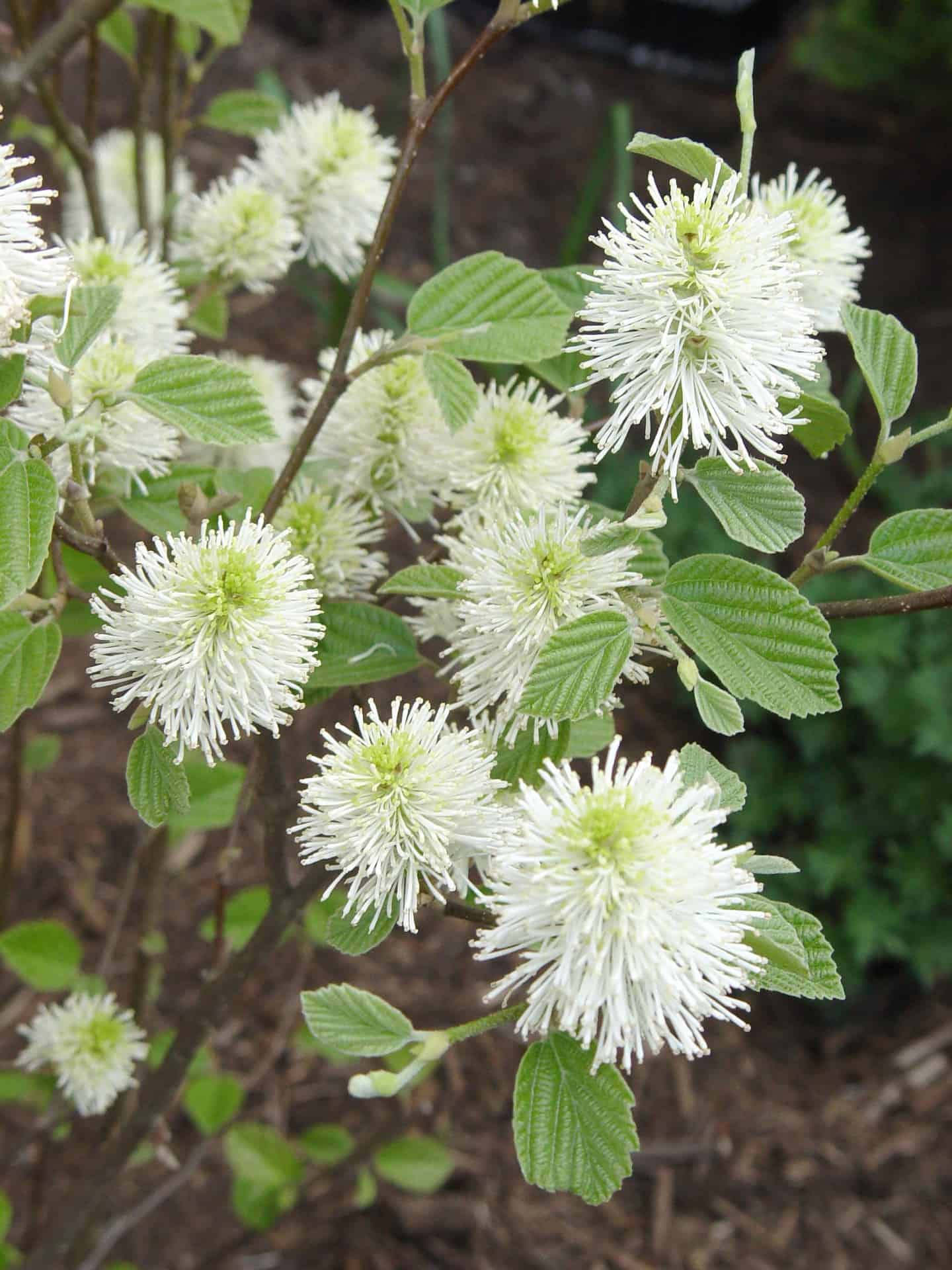
FOTHERGILLA MAJOR

If you’ve been searching for something that handles wet soil, deep shade, and Connecticut winters without complaint, while still delivering four seasons of visual magic, Witch Alder might be the answer you’ve been waiting for. This is a plant that refuses to be ordinary or one-note. It’s the kind of shrub that makes you stop and look twice in spring, summer, fall, and even winter—a rare gift in the garden.

What it looks like

Witch Alder is a deciduous shrub with an upright, somewhat irregular form that feels natural and unforced in the landscape. What makes it truly distinctive are those magnificent flower spikes—imagine bottlebrush flowers in the most delicate cream or white, sometimes blushed with soft yellow undertones. These fragrant flowers appear before the foliage emerges in spring, creating an ethereal effect. The leaves that follow are handsome oval-shaped foliage in a rich medium green that turns absolutely stunning in autumn, shifting through shades of gold, orange, and crimson. Even the bare branches in winter have an elegant architecture worth celebrating.

Growing it in your garden

Here’s what makes Witch Alder such a reliable performer: it’s incredibly adaptable. Unlike many ornamental shrubs that demand specific conditions, FOTHERGILLA MAJOR handles both wet and dry soils with grace. It thrives in partial shade to full sun, though in Connecticut’s hot summers, afternoon shade can prevent leaf scorch. It needs room to develop its natural form—give it space and it will reward you with a graceful, multi-stemmed silhouette. This is a shrub for New England gardeners who want something dependable without constant fussing.

Through the seasons

Spring arrives early for Witch Alder. Those creamy-white, wonderfully fragrant flower spikes appear in April and May, often before other shrubs have even leafed out. It’s a quiet, sophisticated show that draws you near—the fragrance is honey-sweet and slightly spicy. Summer brings that attractive foliage, holding its green color reliably even through dry stretches. Fall is when Witch Alder truly steals the show. The foliage transitions are not subtle; they’re genuinely brilliant, particularly in years with cool nights and sunny days. Winter reveals the plant’s structure and architectural bones, which are quite beautiful if you take a moment to appreciate them.

Where it shines

Witch Alder is an excellent choice for mixed shrub borders, where its spring bloom and fall color create anchor points through the season. It’s perfect near patios or entryways where you can enjoy the spring fragrance. Because it tolerates wet conditions better than most shrubs, it works beautifully in areas where water collects or where your Connecticut property has naturally moist soil. Plant it where you’ll walk past it in April—you’ll want to pause and breathe in that scent. It also works well in naturalized woodland settings, where its elegant form and seasonal interest feel right at home.

Perfect companions

Pair Witch Alder with other spring bloomers like AZALEA or RHODODENDRON for extended spring interest. Underplant it with shade-tolerant ferns and hellebores that will appreciate the dappled light it provides. Native dogwoods, viburnums, and serviceberries make excellent neighboring shrubs. In fall, plant ornamental grasses nearby to echo its golden tones, or add early-blooming perennials like hellebore or winter-flowering heather to pick up where Witch Alder’s foliage show ends.

Care tips

Plant Witch Alder in soil enriched with organic matter—compost or aged bark work beautifully. Water regularly the first season to establish a strong root system, then it becomes quite drought-tolerant. It rarely needs pruning beyond removing dead or damaged wood. No serious pests or diseases plague this shrub in Connecticut gardens. If you want to shape it, do any significant pruning right after flowering finishes in late spring, since it sets next year’s flower buds relatively early. A light mulch keeps the roots cool and moist in summer.

Quick facts

  • Hardiness Zone: 4–8
  • Mature Height & Spread: 6–10 feet tall and wide
  • Bloom Season: April–May
  • Light Requirements: Full sun to partial shade
  • Water Needs: Moderate; adapts to wet or dry conditions
  • Available at: Both our retail and wholesale locations

Witch Alder

Category:

Fragrant white flowers are present mid April. Shade tolerant.

Mature Height and Spread: 5-6’
Pot Size (gallons), Height: #3 18-24”BB

Description

FOTHERGILLA MAJOR

If you’ve been searching for something that handles wet soil, deep shade, and Connecticut winters without complaint, while still delivering four seasons of visual magic, Witch Alder might be the answer you’ve been waiting for. This is a plant that refuses to be ordinary or one-note. It’s the kind of shrub that makes you stop and look twice in spring, summer, fall, and even winter—a rare gift in the garden.

What it looks like

Witch Alder is a deciduous shrub with an upright, somewhat irregular form that feels natural and unforced in the landscape. What makes it truly distinctive are those magnificent flower spikes—imagine bottlebrush flowers in the most delicate cream or white, sometimes blushed with soft yellow undertones. These fragrant flowers appear before the foliage emerges in spring, creating an ethereal effect. The leaves that follow are handsome oval-shaped foliage in a rich medium green that turns absolutely stunning in autumn, shifting through shades of gold, orange, and crimson. Even the bare branches in winter have an elegant architecture worth celebrating.

Growing it in your garden

Here’s what makes Witch Alder such a reliable performer: it’s incredibly adaptable. Unlike many ornamental shrubs that demand specific conditions, FOTHERGILLA MAJOR handles both wet and dry soils with grace. It thrives in partial shade to full sun, though in Connecticut’s hot summers, afternoon shade can prevent leaf scorch. It needs room to develop its natural form—give it space and it will reward you with a graceful, multi-stemmed silhouette. This is a shrub for New England gardeners who want something dependable without constant fussing.

Through the seasons

Spring arrives early for Witch Alder. Those creamy-white, wonderfully fragrant flower spikes appear in April and May, often before other shrubs have even leafed out. It’s a quiet, sophisticated show that draws you near—the fragrance is honey-sweet and slightly spicy. Summer brings that attractive foliage, holding its green color reliably even through dry stretches. Fall is when Witch Alder truly steals the show. The foliage transitions are not subtle; they’re genuinely brilliant, particularly in years with cool nights and sunny days. Winter reveals the plant’s structure and architectural bones, which are quite beautiful if you take a moment to appreciate them.

Where it shines

Witch Alder is an excellent choice for mixed shrub borders, where its spring bloom and fall color create anchor points through the season. It’s perfect near patios or entryways where you can enjoy the spring fragrance. Because it tolerates wet conditions better than most shrubs, it works beautifully in areas where water collects or where your Connecticut property has naturally moist soil. Plant it where you’ll walk past it in April—you’ll want to pause and breathe in that scent. It also works well in naturalized woodland settings, where its elegant form and seasonal interest feel right at home.

Perfect companions

Pair Witch Alder with other spring bloomers like AZALEA or RHODODENDRON for extended spring interest. Underplant it with shade-tolerant ferns and hellebores that will appreciate the dappled light it provides. Native dogwoods, viburnums, and serviceberries make excellent neighboring shrubs. In fall, plant ornamental grasses nearby to echo its golden tones, or add early-blooming perennials like hellebore or winter-flowering heather to pick up where Witch Alder’s foliage show ends.

Care tips

Plant Witch Alder in soil enriched with organic matter—compost or aged bark work beautifully. Water regularly the first season to establish a strong root system, then it becomes quite drought-tolerant. It rarely needs pruning beyond removing dead or damaged wood. No serious pests or diseases plague this shrub in Connecticut gardens. If you want to shape it, do any significant pruning right after flowering finishes in late spring, since it sets next year’s flower buds relatively early. A light mulch keeps the roots cool and moist in summer.

Quick facts

  • Hardiness Zone: 4–8
  • Mature Height & Spread: 6–10 feet tall and wide
  • Bloom Season: April–May
  • Light Requirements: Full sun to partial shade
  • Water Needs: Moderate; adapts to wet or dry conditions
  • Available at: Both our retail and wholesale locations