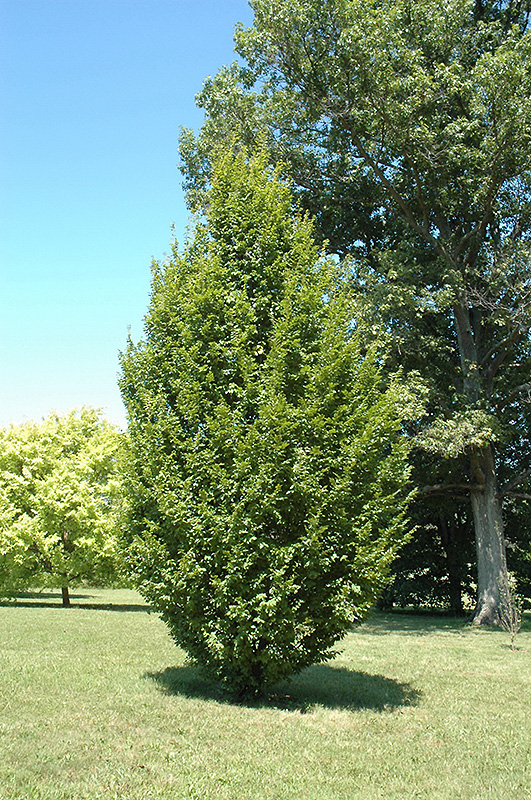
Frans Fontaine Hornbeam

Oh, if you’re looking for a columnar tree that’s going to give your Connecticut garden some serious vertical pizzazz without taking up a ton of space, let me introduce you to Frans Fontaine Hornbeam (CARPINUS BETULUS ‘Frans Fontaine’). This European native is like the sophisticated, well-mannered cousin of our native American hornbeam, and I absolutely love it for New England gardens. It’s narrow, elegant, and surprisingly tough—exactly what we need in our unpredictable Connecticut climate. Whether you’re designing a screening solution, creating a formal accent, or just want a tree that looks stunning year-round without sprawling all over the place, this beauty deserves a spot on your wish list.

What it looks like

Frans Fontaine Hornbeam is a deciduous tree with a distinctly columnar, almost fastigiate form that makes it look almost architectural in the landscape. At maturity, you’re looking at a tree that’s notably taller than it is wide—think of it as nature’s living pencil! The foliage is a soft, medium green throughout the growing season, with leaves that are finely textured and slightly wrinkled, giving the whole canopy a refined appearance. Come fall, here in Connecticut, this tree puts on a golden-bronze show that’s absolutely worth waiting for. Even in winter, the branching structure is attractive and somewhat refined, with a dark, slightly furrowed bark that adds visual interest during those long New England dormant months. You’ll also notice distinctive papery seed clusters in late summer and fall that dangle charmingly from the branches—they look a bit like little hops, and they’re quite ornamental in their own right.

Growing it in your garden

Here’s what I love about Frans Fontaine Hornbeam in our Connecticut gardens: it’s remarkably adaptable and not fussy about what you throw at it. This tree prefers full sun to partial shade—ideally, you’ll give it at least six hours of direct sunlight to keep that form tight and columnar and encourage the best fall color. It’s not terribly particular about soil type either, which is fantastic because we’ve got such varied soil conditions across Connecticut. It can handle clay, loam, or slightly sandy soils, and while it prefers soil that stays somewhat evenly moist, established trees have good drought tolerance, which is increasingly valuable as our summers get less predictable. When you’re planting, dig a hole just as deep as the root ball and about two to three times as wide. Don’t bury the trunk flare—that’s a common mistake that can lead to problems down the road. In our Zone 5b and 6a Connecticut climate, this tree is perfectly hardy and has proven itself reliable through our winter swings and spring frosts.

Through the seasons

Spring arrives, and Frans Fontaine Hornbeam bursts forth with fresh green foliage that’s almost luminous in April. You might notice small, inconspicuous flowers, but honestly, they’re not the showstopper here—it’s that emerging canopy that’s gorgeous. As summer settles in, the tree maintains that beautiful columnar shape with minimal pruning required, which is a huge plus in my book. The foliage stays a lovely deep green and provides excellent structure in the garden even as other plants are putting on their flowers-and-fragrance show. Late summer and early fall is when things get really exciting: those seed clusters mature and hang down decoratively, and then comes the color transformation. October in Connecticut becomes special when your Frans Fontaine Hornbeam turns into shades of golden yellow and warm bronze—it’s a standout moment. By November, the leaves drop, leaving behind that handsome branch structure that keeps the tree interesting through winter. In a tough New England winter with ice or heavy snow, the columnar form actually sheds weight better than spreading trees do.

Where it shines

I think Frans Fontaine Hornbeam absolutely shines in situations where you need a vertical accent without the width of a traditional shade tree. It’s phenomenal as a screen or living fence along property lines—plant several in a row, and you’ve created a sophisticated privacy solution that’s far more interesting than a fence. It works beautifully in narrow spaces between houses or along driveways where you need height but not sprawl. In formal gardens, this columnar form is just right, lending an almost European sensibility to your landscape. It’s also perfect as a specimen tree in an island bed where you want people to notice it, or at the end of a sight line where its vertical form can anchor a view. In smaller Connecticut suburban lots where space is at a premium, this tree lets you have your shade and structure without overwhelming your garden.

Perfect companions

Frans Fontaine Hornbeam is an excellent tree for layering with other plantings because its fine texture and upright form don’t compete aggressively. Underplant it with shade-tolerant herbaceous perennials like coral bells, hellebores, or epimediums for a sophisticated look. It pairs beautifully with spring bulbs—daffodils and tulips love the dappled shade it provides once leafed out. If you’re creating a screen, combine it with evergreens like boxwoods or yews at the base for year-round presence, or with lower-growing deciduous shrubs like serviceberry or viburnum. The refined texture of Frans Fontaine also looks stunning against the bold architectural foliage of hostas or Japanese forest grass in nearby plantings. For a formal aesthetic, pair it with topiary, clipped boxwood, or other structured elements that echo its refined character.

Care tips

Here’s the great news: Frans Fontaine Hornbeam is low-maintenance once established, which is exactly what we want in our busy lives. Water regularly during the first growing season to establish a deep root system—by year two or three, it’s quite self-sufficient in our Connecticut rainfall. Pruning is minimal because the tree naturally grows in that tight columnar form, but you can remove lower branches if you want to create a standards look, or gently shape the sides in early spring if needed. Watch for the occasional branch that might grow out of line and cause imbalance, and remove those. This tree isn’t typically bothered by major pests or diseases in our region, which is another reason I’m such a fan. In a very harsh winter, you might occasionally see some branch dieback, but it recovers beautifully. No need for annual fertilizing—it’s pretty low-demand in that department. A layer of mulch out to about three feet from the trunk when young helps retain moisture and keeps the weeds down while it’s establishing.

Quick facts

  • Hardiness Zone: 5-7
  • Mature Height & Spread: 40 feet tall by 8-12 feet wide
  • Bloom Season: Spring (inconspicuous flowers); ornamental seed clusters in late summer and fall
  • Light Requirements: Full sun to partial shade
  • Water Needs: Moderate; prefers evenly moist soil but tolerates some drought once established
  • Available at: Both our retail and wholesale locations

Frans Fontaine Hornbeam

A stately specimen of a tree with excellent form and few troubles; narrow habit makes it great for smaller landscapes; takes pruning very well and can make a fantastic hedge

Pot Size (gallons), Height: 2.5-3″

Description

Frans Fontaine Hornbeam

Oh, if you’re looking for a columnar tree that’s going to give your Connecticut garden some serious vertical pizzazz without taking up a ton of space, let me introduce you to Frans Fontaine Hornbeam (CARPINUS BETULUS ‘Frans Fontaine’). This European native is like the sophisticated, well-mannered cousin of our native American hornbeam, and I absolutely love it for New England gardens. It’s narrow, elegant, and surprisingly tough—exactly what we need in our unpredictable Connecticut climate. Whether you’re designing a screening solution, creating a formal accent, or just want a tree that looks stunning year-round without sprawling all over the place, this beauty deserves a spot on your wish list.

What it looks like

Frans Fontaine Hornbeam is a deciduous tree with a distinctly columnar, almost fastigiate form that makes it look almost architectural in the landscape. At maturity, you’re looking at a tree that’s notably taller than it is wide—think of it as nature’s living pencil! The foliage is a soft, medium green throughout the growing season, with leaves that are finely textured and slightly wrinkled, giving the whole canopy a refined appearance. Come fall, here in Connecticut, this tree puts on a golden-bronze show that’s absolutely worth waiting for. Even in winter, the branching structure is attractive and somewhat refined, with a dark, slightly furrowed bark that adds visual interest during those long New England dormant months. You’ll also notice distinctive papery seed clusters in late summer and fall that dangle charmingly from the branches—they look a bit like little hops, and they’re quite ornamental in their own right.

Growing it in your garden

Here’s what I love about Frans Fontaine Hornbeam in our Connecticut gardens: it’s remarkably adaptable and not fussy about what you throw at it. This tree prefers full sun to partial shade—ideally, you’ll give it at least six hours of direct sunlight to keep that form tight and columnar and encourage the best fall color. It’s not terribly particular about soil type either, which is fantastic because we’ve got such varied soil conditions across Connecticut. It can handle clay, loam, or slightly sandy soils, and while it prefers soil that stays somewhat evenly moist, established trees have good drought tolerance, which is increasingly valuable as our summers get less predictable. When you’re planting, dig a hole just as deep as the root ball and about two to three times as wide. Don’t bury the trunk flare—that’s a common mistake that can lead to problems down the road. In our Zone 5b and 6a Connecticut climate, this tree is perfectly hardy and has proven itself reliable through our winter swings and spring frosts.

Through the seasons

Spring arrives, and Frans Fontaine Hornbeam bursts forth with fresh green foliage that’s almost luminous in April. You might notice small, inconspicuous flowers, but honestly, they’re not the showstopper here—it’s that emerging canopy that’s gorgeous. As summer settles in, the tree maintains that beautiful columnar shape with minimal pruning required, which is a huge plus in my book. The foliage stays a lovely deep green and provides excellent structure in the garden even as other plants are putting on their flowers-and-fragrance show. Late summer and early fall is when things get really exciting: those seed clusters mature and hang down decoratively, and then comes the color transformation. October in Connecticut becomes special when your Frans Fontaine Hornbeam turns into shades of golden yellow and warm bronze—it’s a standout moment. By November, the leaves drop, leaving behind that handsome branch structure that keeps the tree interesting through winter. In a tough New England winter with ice or heavy snow, the columnar form actually sheds weight better than spreading trees do.

Where it shines

I think Frans Fontaine Hornbeam absolutely shines in situations where you need a vertical accent without the width of a traditional shade tree. It’s phenomenal as a screen or living fence along property lines—plant several in a row, and you’ve created a sophisticated privacy solution that’s far more interesting than a fence. It works beautifully in narrow spaces between houses or along driveways where you need height but not sprawl. In formal gardens, this columnar form is just right, lending an almost European sensibility to your landscape. It’s also perfect as a specimen tree in an island bed where you want people to notice it, or at the end of a sight line where its vertical form can anchor a view. In smaller Connecticut suburban lots where space is at a premium, this tree lets you have your shade and structure without overwhelming your garden.

Perfect companions

Frans Fontaine Hornbeam is an excellent tree for layering with other plantings because its fine texture and upright form don’t compete aggressively. Underplant it with shade-tolerant herbaceous perennials like coral bells, hellebores, or epimediums for a sophisticated look. It pairs beautifully with spring bulbs—daffodils and tulips love the dappled shade it provides once leafed out. If you’re creating a screen, combine it with evergreens like boxwoods or yews at the base for year-round presence, or with lower-growing deciduous shrubs like serviceberry or viburnum. The refined texture of Frans Fontaine also looks stunning against the bold architectural foliage of hostas or Japanese forest grass in nearby plantings. For a formal aesthetic, pair it with topiary, clipped boxwood, or other structured elements that echo its refined character.

Care tips

Here’s the great news: Frans Fontaine Hornbeam is low-maintenance once established, which is exactly what we want in our busy lives. Water regularly during the first growing season to establish a deep root system—by year two or three, it’s quite self-sufficient in our Connecticut rainfall. Pruning is minimal because the tree naturally grows in that tight columnar form, but you can remove lower branches if you want to create a standards look, or gently shape the sides in early spring if needed. Watch for the occasional branch that might grow out of line and cause imbalance, and remove those. This tree isn’t typically bothered by major pests or diseases in our region, which is another reason I’m such a fan. In a very harsh winter, you might occasionally see some branch dieback, but it recovers beautifully. No need for annual fertilizing—it’s pretty low-demand in that department. A layer of mulch out to about three feet from the trunk when young helps retain moisture and keeps the weeds down while it’s establishing.

Quick facts

  • Hardiness Zone: 5-7
  • Mature Height & Spread: 40 feet tall by 8-12 feet wide
  • Bloom Season: Spring (inconspicuous flowers); ornamental seed clusters in late summer and fall
  • Light Requirements: Full sun to partial shade
  • Water Needs: Moderate; prefers evenly moist soil but tolerates some drought once established
  • Available at: Both our retail and wholesale locations