ROBINIA PSEUDOACACIA ‘SHADEMASTER’

Here’s the honest truth about Black Locust: it’s one of those plants that gardeners either love passionately or avoid entirely. But ‘ShadeMaster’ might just change the minds of the skeptics. This cultivar takes all the best qualities of its species—the elegant, fine-textured foliage, the fragrant spring blooms, the ability to thrive in poor soil where nothing else wants to grow—and dials down the aggressive self-seeding that makes wild locusts problematic. If you’ve got a challenging Connecticut corner that’s been waiting for a tree with real character and staying power, ‘ShadeMaster’ deserves your attention.

What it looks like

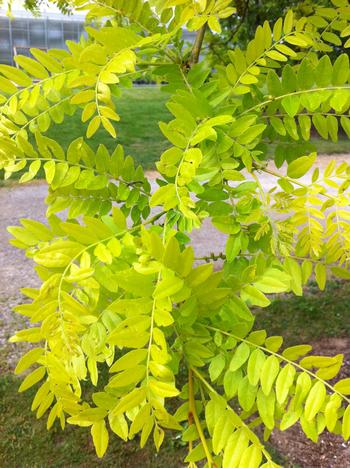
‘ShadeMaster’ is a sophisticated tree with an airy, open habit that feels almost cloud-like in the landscape. The compound, fern-like leaves are bright green and finely divided, creating a dappled, delicate shade that’s quite different from the heavy, dense canopy of many other shade trees. Come late spring, fragrant white flower clusters emerge—they’re modest in size but utterly charming, with that classic sweet pea scent that makes you stop what you’re doing and breathe deeply. The flowers fade to interesting seed pods in fall, adding another layer of visual interest. Even bare branches have character, with warm gray-brown bark and a naturally sculptural branching pattern.

Growing it in your garden

This is where ‘ShadeMaster’ earns its reputation. Black Locust thrives in conditions that would defeat most ornamental trees. Infertile soil? No problem. Rocky, compacted ground? Bring it on. Poor drainage and drought? This tree can handle both. ROBINIA PSEUDOACACIA ‘SHADEMASTER’ is nitrogen-fixing, meaning it actually improves the soil around it over time—a real asset if you’re working with challenging Connecticut clay or sandy soils. It’s a vigorous grower that establishes quickly, which means you’ll see results faster than with many shade trees. The tree does have some sprouting tendency, but it’s far less aggressive than the species, especially if you avoid wounding the trunk. One thing to note: this is a deciduous tree, so you’re getting full light and open branching in winter, which some gardeners love for the architectural interest it provides.

Through the seasons

Spring brings those wonderfully fragrant white flowers, followed by the soft unfurling of that beautiful fern-like foliage. Summer is when ‘ShadeMaster’ truly shines—the filtered, dappled shade it creates is perfect for sitting underneath on hot days, and the fine texture of the leaves catches light beautifully. The airy canopy means you can underplant successfully, something you can’t do under denser shade trees. Fall brings a soft yellow-gold color—nothing dramatic, but lovely and understated. Winter reveals the tree’s architectural bones, with an interesting gray-brown bark and naturally sculptural branching that adds structure to the winter landscape.

Where it shines

Use ‘ShadeMaster’ for tough sites where you need shade but conventional choices would struggle. It’s perfect for urban gardens and streetside plantings, where soil compaction and drought stress are constant challenges. Plant it where you want dappled afternoon shade for a seating area or outdoor entertaining space. It’s excellent as a specimen tree in a landscape where its open habit and delicate foliage can be appreciated. Because it’s nitrogen-fixing, it’s a good choice for areas where you’re trying to improve depleted soil. And because the filtered shade is permeable, you can actually grow shade-tolerant plants underneath—try native ferns, hellebores, and woodland perennials.

Perfect companions

The dappled shade beneath ‘ShadeMaster’ is ideal for shade-loving Connecticut natives and shade perennials. Try AQUILEGIA (Columbine), HEUCHERA (Coral Bells), POLYSTICHUM (Christmas Fern), or HOSTA varieties. Early spring bulbs like ERYTHRONIUM (Trout Lily) perform beautifully beneath the canopy. For evergreen structure, plant ILEX verticillata (Winterberry Holly) nearby—the contrast of deciduous and evergreen is striking. In larger spaces, pair it with other tough trees like Eastern Red Cedar for year-round interest.

Care tips

Water regularly during the first year to establish a deep root system, but once established, ‘ShadeMaster’ is remarkably drought-tolerant. It doesn’t need fertilizing—the whole point is that it thrives in poor soil. Prune in late winter if needed to shape the canopy or remove any crossing branches. The tree is resistant to most pests and diseases that plague other ornamentals. If sprouts appear at the base (which is rare with this cultivar), remove them promptly. Sunscald can occasionally be an issue in harsh Connecticut winters, but it’s not common and not typically a serious problem.

Quick facts

  • Hardiness Zone: 4-9
  • Mature Height & Spread: 50-70 feet tall, 30-40 feet wide
  • Bloom Season: Late May through June
  • Light Requirements: Full sun to part shade
  • Water Needs: Low once established; drought-tolerant
  • Available at: Both our retail and wholesale locations.

Locust ‘ShadeMaster’

Upright, foliage is dark green.

Zoning: 4-8
Mature Height and Spread: 30-50’ & 30-40’
Trunk Diameter: 2-2.5”, 3”

Description

ROBINIA PSEUDOACACIA ‘SHADEMASTER’

Here’s the honest truth about Black Locust: it’s one of those plants that gardeners either love passionately or avoid entirely. But ‘ShadeMaster’ might just change the minds of the skeptics. This cultivar takes all the best qualities of its species—the elegant, fine-textured foliage, the fragrant spring blooms, the ability to thrive in poor soil where nothing else wants to grow—and dials down the aggressive self-seeding that makes wild locusts problematic. If you’ve got a challenging Connecticut corner that’s been waiting for a tree with real character and staying power, ‘ShadeMaster’ deserves your attention.

What it looks like

‘ShadeMaster’ is a sophisticated tree with an airy, open habit that feels almost cloud-like in the landscape. The compound, fern-like leaves are bright green and finely divided, creating a dappled, delicate shade that’s quite different from the heavy, dense canopy of many other shade trees. Come late spring, fragrant white flower clusters emerge—they’re modest in size but utterly charming, with that classic sweet pea scent that makes you stop what you’re doing and breathe deeply. The flowers fade to interesting seed pods in fall, adding another layer of visual interest. Even bare branches have character, with warm gray-brown bark and a naturally sculptural branching pattern.

Growing it in your garden

This is where ‘ShadeMaster’ earns its reputation. Black Locust thrives in conditions that would defeat most ornamental trees. Infertile soil? No problem. Rocky, compacted ground? Bring it on. Poor drainage and drought? This tree can handle both. ROBINIA PSEUDOACACIA ‘SHADEMASTER’ is nitrogen-fixing, meaning it actually improves the soil around it over time—a real asset if you’re working with challenging Connecticut clay or sandy soils. It’s a vigorous grower that establishes quickly, which means you’ll see results faster than with many shade trees. The tree does have some sprouting tendency, but it’s far less aggressive than the species, especially if you avoid wounding the trunk. One thing to note: this is a deciduous tree, so you’re getting full light and open branching in winter, which some gardeners love for the architectural interest it provides.

Through the seasons

Spring brings those wonderfully fragrant white flowers, followed by the soft unfurling of that beautiful fern-like foliage. Summer is when ‘ShadeMaster’ truly shines—the filtered, dappled shade it creates is perfect for sitting underneath on hot days, and the fine texture of the leaves catches light beautifully. The airy canopy means you can underplant successfully, something you can’t do under denser shade trees. Fall brings a soft yellow-gold color—nothing dramatic, but lovely and understated. Winter reveals the tree’s architectural bones, with an interesting gray-brown bark and naturally sculptural branching that adds structure to the winter landscape.

Where it shines

Use ‘ShadeMaster’ for tough sites where you need shade but conventional choices would struggle. It’s perfect for urban gardens and streetside plantings, where soil compaction and drought stress are constant challenges. Plant it where you want dappled afternoon shade for a seating area or outdoor entertaining space. It’s excellent as a specimen tree in a landscape where its open habit and delicate foliage can be appreciated. Because it’s nitrogen-fixing, it’s a good choice for areas where you’re trying to improve depleted soil. And because the filtered shade is permeable, you can actually grow shade-tolerant plants underneath—try native ferns, hellebores, and woodland perennials.

Perfect companions

The dappled shade beneath ‘ShadeMaster’ is ideal for shade-loving Connecticut natives and shade perennials. Try AQUILEGIA (Columbine), HEUCHERA (Coral Bells), POLYSTICHUM (Christmas Fern), or HOSTA varieties. Early spring bulbs like ERYTHRONIUM (Trout Lily) perform beautifully beneath the canopy. For evergreen structure, plant ILEX verticillata (Winterberry Holly) nearby—the contrast of deciduous and evergreen is striking. In larger spaces, pair it with other tough trees like Eastern Red Cedar for year-round interest.

Care tips

Water regularly during the first year to establish a deep root system, but once established, ‘ShadeMaster’ is remarkably drought-tolerant. It doesn’t need fertilizing—the whole point is that it thrives in poor soil. Prune in late winter if needed to shape the canopy or remove any crossing branches. The tree is resistant to most pests and diseases that plague other ornamentals. If sprouts appear at the base (which is rare with this cultivar), remove them promptly. Sunscald can occasionally be an issue in harsh Connecticut winters, but it’s not common and not typically a serious problem.

Quick facts

  • Hardiness Zone: 4-9
  • Mature Height & Spread: 50-70 feet tall, 30-40 feet wide
  • Bloom Season: Late May through June
  • Light Requirements: Full sun to part shade
  • Water Needs: Low once established; drought-tolerant
  • Available at: Both our retail and wholesale locations.