Description
ABELIA × GRANDIFLORA
If you’ve been searching for something that handles wet soil, deep shade, and Connecticut winters without complaint, while also offering weeks of fragrant flowers and elegant bronze-tinged foliage, Glossy Abelia deserves a permanent spot on your wish list. This semi-evergreen shrub is one of those rare plants that doesn’t just survive in New England gardens—it absolutely thrives, rewarding you with graceful arching stems and a sophisticated presence from late spring through the first hard frost.
What it looks like
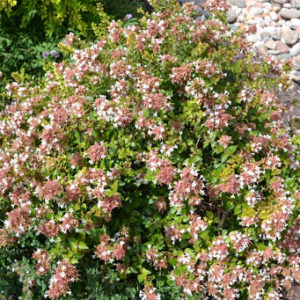
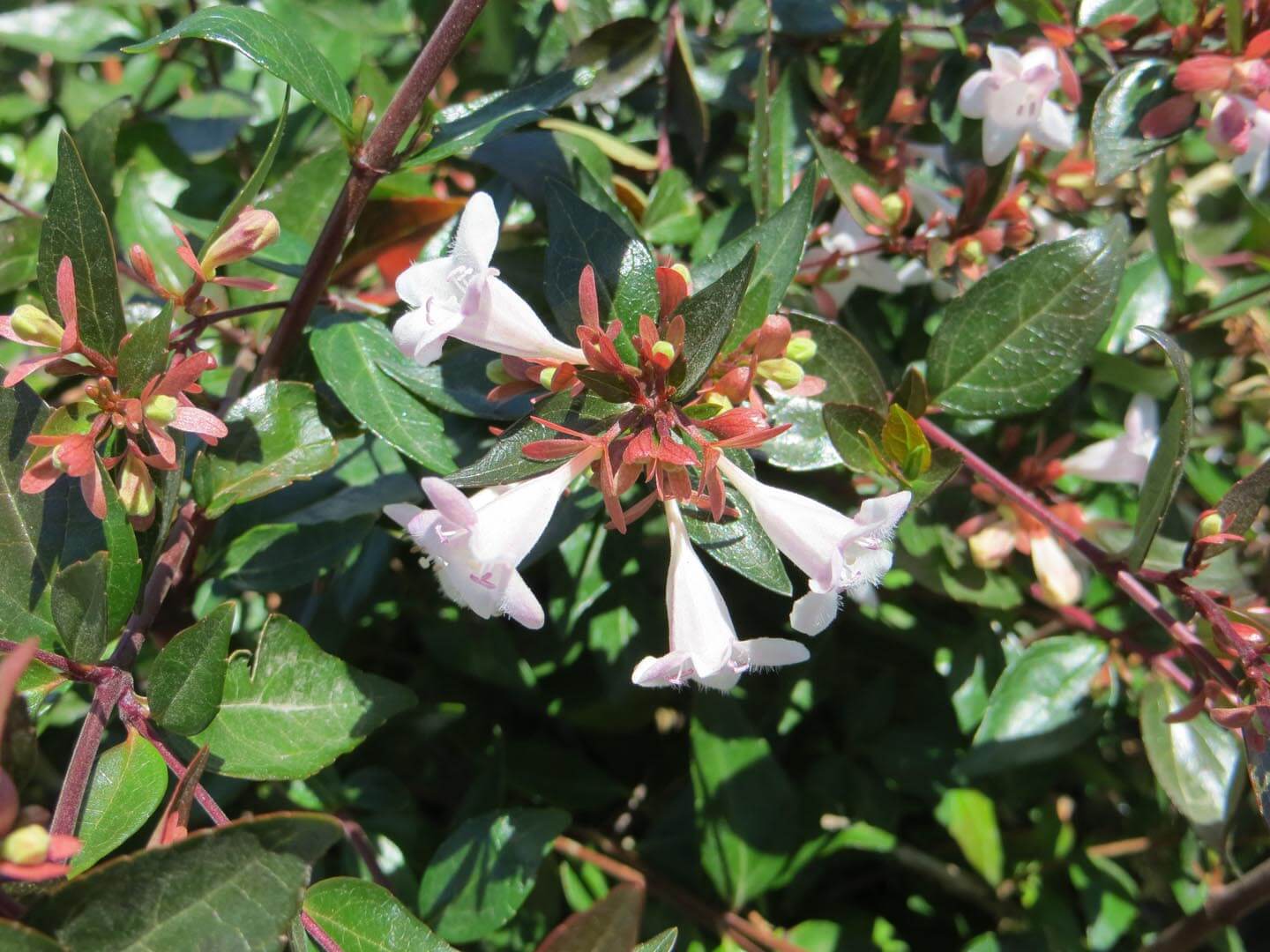
Glossy Abelia is a picture of refined elegance. The small, glossy, dark green leaves create an almost ferny texture along arching branches, and as temperatures cool in fall, the foliage takes on warm bronze and burgundy tones that persist well into winter. The real show comes in summer, when delicate, tubular flowers in soft white tinged with pink appear along the stems. These aren’t showy blooms demanding attention—they’re subtle and sophisticated, held in clusters that seem to float above the foliage. What they lack in showiness, they make up for tenfold in fragrance. On a warm July evening, the scent is absolutely intoxicating, drawing pollinators and admirers alike.
Growing it in your garden
Glossy Abelia is remarkably adaptable, which is exactly what you want in a Connecticut plant. It’s not fussy about soil conditions—it’ll grow in average, well-draining soil but honestly doesn’t mind clay or slightly compacted earth. It prefers full sun to partial shade; give it at least four hours of direct sunlight for the best flowering and richest fall color. The semi-evergreen nature means it may drop some or most of its leaves during harsh New England winters, particularly in the northern parts of the region, but it always comes back reliably. This is a plant that gets more beautiful as it matures, developing character and presence over time.
Through the seasons
Spring brings fresh new growth and that wonderful bronzy-tinged flush of emerging foliage. Early summer shows the first delicate flowers appearing, and by mid-to-late summer, the blooming really hits its stride—expect continuous flowers right through September and often into October. Fall is when Glossy Abelia truly earns its place in the landscape. The foliage deepens into warm bronze and wine tones that can steal the show from nearby fall bloomers. Winter is quieter; if leaves persist, they add subtle structure and color. Come spring, the whole cycle begins again with fresh vigor.
Where it shines
Plant Glossy Abelia where you’ll walk past it regularly in summer—near a patio, along a pathway, or beside a seating area where you can enjoy those fragrant flowers. It works beautifully as a specimen shrub, in mixed borders, or massed for a larger screen. Because it blooms over such a long season, it’s invaluable in late-summer gardens when many other shrubs have finished their show. The graceful, arching form makes it elegant enough for more formal settings, yet it’s casual enough for cottage gardens. It’s also a wonderful choice for gardeners wanting to add fragrance to their landscape without relying on finicky old-fashioned roses.
Perfect companions
Pair Glossy Abelia with ornamental grasses like Miscanthus or Panicum for textural contrast—the airy flowers look stunning against feathery plumes. It’s beautiful alongside other late bloomers like Limelight Hydrangea or Buddleia. For a more romantic feel, underplant it with shade-tolerant perennials like Liriope or Helleborus. Its bronze fall foliage looks striking next to golden or purple-leaved plants, and its long blooming season bridges the gap between summer performers and fall mums beautifully.
Care tips
Glossy Abelia is refreshingly low-maintenance. Prune in early spring to shape and remove any winter-damaged growth—it responds beautifully to pruning and regrows vigorously. You can keep it compact or allow it to reach its natural arching form; both approaches work equally well. Once established, it’s quite drought-tolerant, though regular watering during its first growing season helps establish a strong root system. No serious pests or diseases bother it in Connecticut gardens. If you want to encourage denser growth and more flowers, a light feeding in early spring with a balanced fertilizer is appreciated, but honestly, this plant is forgiving about fertility levels.
Quick facts
- Hardiness Zone: Zones 5-9 (reliable throughout Connecticut)
- Mature Height & Spread: 4-6 feet tall and wide, depending on conditions and pruning
- Bloom Season: July through October
- Light Requirements: Full sun to partial shade (at least 4 hours direct sun)
- Water Needs: Moderate; drought-tolerant once established
- Available at: Both our retail and wholesale locations