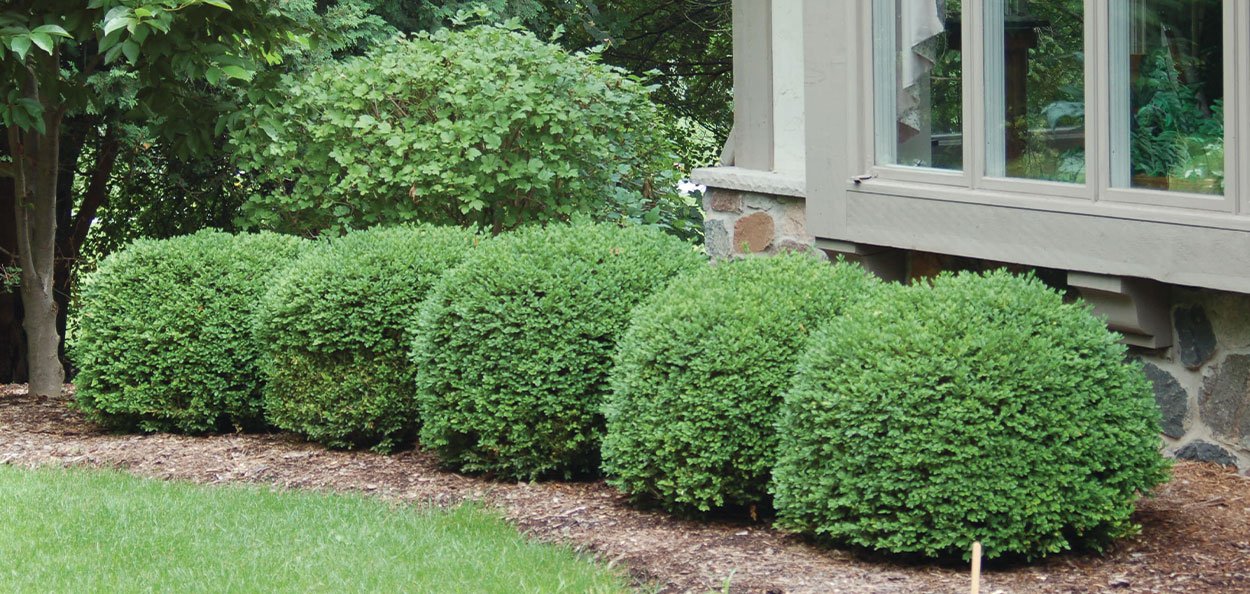
Green Velvet Boxwood

BUXUS MICROPHYLLA ‘GREEN VELVET’

If you’ve ever run your hand along a perfectly manicured hedge and thought, “Now that’s what I want in my garden,” Green Velvet Boxwood is your answer. This cultivar has a reputation among Connecticut gardeners as one of the most reliable, foolproof boxwoods for our challenging New England climate. Unlike some of its finicky cousins, ‘Green Velvet’ was specifically bred to laugh in the face of our harsh winters, late freezes, and unpredictable spring weather. Plant it once, and it’ll reward you with decades of dense, glossy foliage that stays that vibrant forest-green color all year long—even when snow is piled high.

What it looks like

Green Velvet Boxwood lives up to its name beautifully. The foliage has a subtle sheen that catches light like velvet fabric, creating an almost jewel-like quality in the garden. The leaves are small and tightly packed on upright, branching stems, creating a naturally dense, compact form. Left unpruned, it grows into a broad mound, but it’s equally responsive to shearing if you prefer a more formal shape. Whether you want flowing, organic curves or crisp, architectural lines, this boxwood adapts gracefully. The color is a true forest green with no hint of bronze or discoloration—a quality that becomes especially valuable during Connecticut’s long winters when many evergreens take on tired, dull tones.

Growing it in your garden

‘Green Velvet’ is remarkably adaptable, which is a major part of its appeal. It tolerates everything from full sun to partial shade, though it performs best with at least four hours of direct sunlight daily. The key to success is well-draining soil—this plant won’t sit in soggy conditions—but it’s not fussy about soil pH or fertility. In fact, overly rich soil can make it grow too fast and become leggy. This is a plant that thrives on benign neglect rather than constant fussing. Once established, it’s incredibly low-maintenance, and that’s not just marketing speak. Gardeners across Connecticut have been growing this cultivar for years with excellent results.

Through the seasons

Spring brings fresh growth in that same rich green—no new leaf flush discoloration here. Summer is when Green Velvet really earns its keep, staying perfectly colored while less reliable boxwoods sometimes bronze or yellow in the heat. Fall? Completely unaffected. The foliage doesn’t change, which means your garden maintains visual continuity and structure when deciduous plants around it are dropping leaves. Winter is where ‘Green Velvet’ truly distinguishes itself from other boxwood selections. While English Boxwoods struggle with our temperature swings and some Asian varieties bronze unpredictably, ‘Green Velvet’ stays true to its name, remaining a vibrant, fresh green even through Connecticut’s coldest months and brightest winter sunshine. You’ll never find yourself staring at a sad, discolored plant through the long season.

Where it shines

This is the workhorse of formal hedges and foundation plantings. Green Velvet Boxwood is equally at home defining property lines, edging perennial beds, or anchoring corners. Its reliability makes it perfect for the gardener who wants beautiful structure without fussy aftercare. Use it in rows for a traditional hedge, mass it in groups for screening, or plant single specimens as architectural accents. It’s particularly valuable in shaded areas under mature trees where many plants struggle—place it in dappled light and it’ll fill that space with good color and form. Because it responds beautifully to pruning without ever looking sheared, it works for both formal and cottage-style gardens.

Perfect companions

Green Velvet Boxwood is the ultimate supporting player. Pair it with shade-loving perennials like Hellebores and Epimediums, or let it frame the showier blooms of flowering shrubs like Oakleaf Hydrangeas. It looks stunning with spring bulbs—imagine drifts of white tulips underplanted along a Green Velvet hedge. Its dense form and neutral color make it an excellent backdrop for colorful foliage plants like Japanese Maples or Coral Bells. In formal gardens, combine it with stone elements and architectural details for a timeless, classic feel.

Care tips

Water regularly during the first growing season to establish a deep root system, then it’s quite drought-tolerant. If you’re pruning for shape, do it in late spring after the last frost danger passes. Avoid pruning in late summer, as new tender growth won’t have time to harden off before winter. Boxwoods can sometimes attract spider mites indoors when brought to greenhouses, so always inspect plants at delivery, but established landscape plants rarely have issues. The occasional deep watering during severe drought is appreciated but not essential once established.

Quick facts

  • Hardiness Zone: 4–9
  • Mature Height & Spread: 3–4 feet tall and wide (depending on pruning)
  • Bloom Season: Non-flowering; grown for foliage
  • Light Requirements: Full sun to partial shade (4+ hours sun preferred)
  • Water Needs: Moderate; prefers consistent moisture but tolerates drought once established
  • Available at: Both our retail and wholesale locations

Green Velvet Boxwood

Category:

reen Velvet Boxwood is a broadleaf evergreen that requires little care. If left alone, it will assume a pleasing, 3 foot rounded shape and maintain its color year-round. They will grow in a wide range of soils. They do prefer moist, well drained soils and supplemental moisture as needed.

Pot Size (gallons), Height: #3

Description

Green Velvet Boxwood

BUXUS MICROPHYLLA ‘GREEN VELVET’

If you’ve ever run your hand along a perfectly manicured hedge and thought, “Now that’s what I want in my garden,” Green Velvet Boxwood is your answer. This cultivar has a reputation among Connecticut gardeners as one of the most reliable, foolproof boxwoods for our challenging New England climate. Unlike some of its finicky cousins, ‘Green Velvet’ was specifically bred to laugh in the face of our harsh winters, late freezes, and unpredictable spring weather. Plant it once, and it’ll reward you with decades of dense, glossy foliage that stays that vibrant forest-green color all year long—even when snow is piled high.

What it looks like

Green Velvet Boxwood lives up to its name beautifully. The foliage has a subtle sheen that catches light like velvet fabric, creating an almost jewel-like quality in the garden. The leaves are small and tightly packed on upright, branching stems, creating a naturally dense, compact form. Left unpruned, it grows into a broad mound, but it’s equally responsive to shearing if you prefer a more formal shape. Whether you want flowing, organic curves or crisp, architectural lines, this boxwood adapts gracefully. The color is a true forest green with no hint of bronze or discoloration—a quality that becomes especially valuable during Connecticut’s long winters when many evergreens take on tired, dull tones.

Growing it in your garden

‘Green Velvet’ is remarkably adaptable, which is a major part of its appeal. It tolerates everything from full sun to partial shade, though it performs best with at least four hours of direct sunlight daily. The key to success is well-draining soil—this plant won’t sit in soggy conditions—but it’s not fussy about soil pH or fertility. In fact, overly rich soil can make it grow too fast and become leggy. This is a plant that thrives on benign neglect rather than constant fussing. Once established, it’s incredibly low-maintenance, and that’s not just marketing speak. Gardeners across Connecticut have been growing this cultivar for years with excellent results.

Through the seasons

Spring brings fresh growth in that same rich green—no new leaf flush discoloration here. Summer is when Green Velvet really earns its keep, staying perfectly colored while less reliable boxwoods sometimes bronze or yellow in the heat. Fall? Completely unaffected. The foliage doesn’t change, which means your garden maintains visual continuity and structure when deciduous plants around it are dropping leaves. Winter is where ‘Green Velvet’ truly distinguishes itself from other boxwood selections. While English Boxwoods struggle with our temperature swings and some Asian varieties bronze unpredictably, ‘Green Velvet’ stays true to its name, remaining a vibrant, fresh green even through Connecticut’s coldest months and brightest winter sunshine. You’ll never find yourself staring at a sad, discolored plant through the long season.

Where it shines

This is the workhorse of formal hedges and foundation plantings. Green Velvet Boxwood is equally at home defining property lines, edging perennial beds, or anchoring corners. Its reliability makes it perfect for the gardener who wants beautiful structure without fussy aftercare. Use it in rows for a traditional hedge, mass it in groups for screening, or plant single specimens as architectural accents. It’s particularly valuable in shaded areas under mature trees where many plants struggle—place it in dappled light and it’ll fill that space with good color and form. Because it responds beautifully to pruning without ever looking sheared, it works for both formal and cottage-style gardens.

Perfect companions

Green Velvet Boxwood is the ultimate supporting player. Pair it with shade-loving perennials like Hellebores and Epimediums, or let it frame the showier blooms of flowering shrubs like Oakleaf Hydrangeas. It looks stunning with spring bulbs—imagine drifts of white tulips underplanted along a Green Velvet hedge. Its dense form and neutral color make it an excellent backdrop for colorful foliage plants like Japanese Maples or Coral Bells. In formal gardens, combine it with stone elements and architectural details for a timeless, classic feel.

Care tips

Water regularly during the first growing season to establish a deep root system, then it’s quite drought-tolerant. If you’re pruning for shape, do it in late spring after the last frost danger passes. Avoid pruning in late summer, as new tender growth won’t have time to harden off before winter. Boxwoods can sometimes attract spider mites indoors when brought to greenhouses, so always inspect plants at delivery, but established landscape plants rarely have issues. The occasional deep watering during severe drought is appreciated but not essential once established.

Quick facts

  • Hardiness Zone: 4–9
  • Mature Height & Spread: 3–4 feet tall and wide (depending on pruning)
  • Bloom Season: Non-flowering; grown for foliage
  • Light Requirements: Full sun to partial shade (4+ hours sun preferred)
  • Water Needs: Moderate; prefers consistent moisture but tolerates drought once established
  • Available at: Both our retail and wholesale locations