Description

JUNIPERUS SCOPULORUM ‘GREY OWL’
What if one plant could solve multiple problems at once? Grey Owl Juniper does exactly that. It’s a silvery-blue evergreen that brings year-round color and structure to Connecticut gardens, thrives in poor soil where other plants sulk, and requires virtually no coddling once established. This isn’t a high-maintenance prima donna—it’s the reliable workhorse every garden needs.
What it looks like
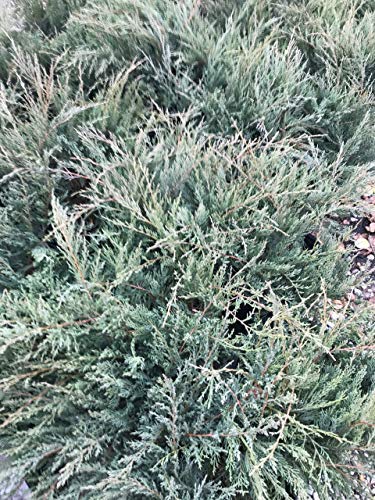
Grey Owl is absolutely stunning. Its feathery, fine-textured foliage displays a soft, smoky-blue-grey color that remains consistent throughout the year, never turning that rusty brown that plagues some junipers in winter. The growth habit is broadly spreading and low, creating a natural mounding form that looks elegant without demanding constant pruning. Unlike many junipers that feel stiff or geometric, Grey Owl has an almost weeping quality to its branching, giving it a refined, architectural presence. New growth emerges with slightly more silvery tones, creating subtle depth and movement in the canopy.
Growing it in your garden
Here’s where Grey Owl truly earns its reputation. This is a juniper that actually prefers the challenging spots. Poor, sandy, or rocky soil? Perfect. Full sun in an exposed location where wind would knock over lesser plants? Bring it on. Once established, Grey Owl is remarkably drought-tolerant and doesn’t sulk through Connecticut’s dry summers. It actually performs better in lean conditions than in rich, heavily amended soil. Plant it in full sun for the best color development and most compact growth. While it tolerates partial shade, you’ll see the most vibrant blue-grey tones in maximum sunlight.
Through the seasons
What makes Grey Owl special is its consistency. Spring through fall, you get that beautiful soft blue-grey foliage that stands out against the greens of neighboring plants. Unlike deciduous plants that disappear for half the year, Grey Owl remains a visual anchor in your garden from January through December. Even in the depths of a Connecticut winter, when everything else is brown and bare, this juniper maintains its color and form. There’s real comfort in that reliability. It doesn’t demand anything from you—no seasonal pruning requirements, no protecting from harsh weather, no anxiety about whether it will survive the winter.
Where it shines
Grey Owl is phenomenally versatile. Use it as a low-growing anchor in foundation plantings, where it won’t outgrow its space or block windows. It’s excellent as a groundcover or mass planting on sunny banks or slopes, particularly where erosion control matters. The spreading habit makes it perfect for softening hardscapes—pathways, driveways, patios—where you want color and texture without vertical intrusion. It’s equally at home in contemporary designs, cottage gardens, or naturalistic landscapes. In containers on a patio or deck, Grey Owl brings structure and color to outdoor living spaces. It’s also outstanding as a specimen plant where you want to showcase its graceful form.
Perfect companions
Grey Owl pairs beautifully with ornamental grasses—the fine texture of feathery Miscanthus or Panicum creates a lovely contrast. Black-eyed Susan and Coreopsis complement it wonderfully in sunny borders, their warm yellows singing against that cool blue-grey. Consider pairing it with purple-leaved plants like Weigela ‘Wine and Roses’ for stunning color contrast. In shade-tolerant combinations, the silvery tones of Grey Owl brighten darker corners alongside shade perennials. It also works nicely with other broadleaf evergreens like boxwood or holly, creating interesting textural interplay.
Care tips
This is refreshingly straightforward. Water regularly during the first growing season to establish a deep root system, then sit back and relax. Once established—typically by year two—Grey Owl is genuinely drought-tolerant and won’t need supplemental watering except during severe dry spells. No fertilizer necessary; in fact, rich soil encourages loose, floppy growth. Pruning is minimal. Light shaping in spring maintains form, but Grey Owl naturally grows in an attractive, compact mound. This isn’t a plant that needs aggressive annual cutbacks. Watch for spider mites in very hot, dry conditions (though this is rare in New England), and ensure excellent drainage to prevent any root issues. That’s honestly it.
Quick facts
- Hardiness Zone: Zones 3-7 (perfect for Connecticut)
- Mature Height & Spread: 3-4 feet tall by 5-6 feet wide
- Bloom Season: Evergreen; ornamental foliage year-round
- Light Requirements: Full sun for best color development
- Water Needs: Low once established; drought-tolerant
- Available at: Both our retail and wholesale locations