SALIX INTEGRA ‘HAKURO-NISHIKI’

If you want a plant that looks like it was painted by an impressionist artist—soft, dreamy, and utterly captivating—Dappled Willow is your answer. This deciduous shrub transforms ordinary garden space into something extraordinary with its fine-textured foliage that emerges cream and pink in spring, matures to green and white variegation by summer, and finishes with subtle rose tones as temperatures cool. It’s the kind of plant that makes people stop mid-conversation and ask, “What *is* that?” And then you get to explain that yes, it’s actually quite easy to grow, and no, you’re not overcomplicating your garden design.

What it looks like

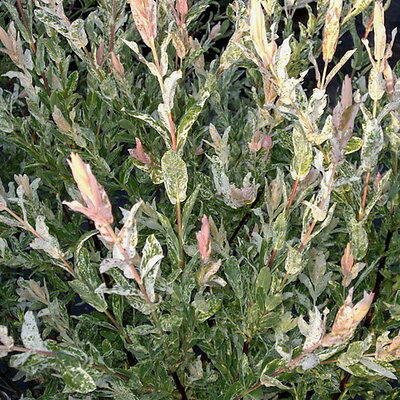
Dappled Willow is an open, upright shrub with an airy, fine-textured presence that feels more delicate than its actual resilience suggests. New growth emerges in soft creams and pinks—sometimes so pink you’ll swear you’re imagining the color intensity—gradually maturing into a sophisticated palette of green leaves heavily dappled with white and cream variegation. The stems themselves are reddish, creating additional visual interest even when foliage is sparse. The overall effect is ethereal: this isn’t a bold statement plant, but rather a whisper of elegance that pulls together more assertive plantings around it.

Growing it in your garden

Here’s where Dappled Willow proves its worth: it’s genuinely unfussy. Plant it in full sun to part shade—though you’ll get the most vibrant coloring with good light—and give it consistently moist soil. It adapts well to Connecticut’s variable conditions, tolerating both our wet spring seasons and drier summers once established. Unlike some variegated plants that sulk in our New England climate, this one settles in like it was born here. It’s responsive to pruning, which means you can shape it into a loose, natural form or keep it more structured depending on your design vision.

Through the seasons

Spring is when Dappled Willow truly announces itself. As growth breaks in April and May, those cream and pink tones create an almost blushing appearance that pairs beautifully with emerging spring bulbs and fresh-leafing shade trees. Summer brings steady green and white variegation—a cooling visual presence when the rest of the garden is full-throttle with color. As autumn approaches and temperatures drop, the foliage develops rosy undertones, creating a subtle transition before leaves drop. Winter reveals the attractive reddish stems, offering a hint of color during Connecticut’s gray months.

Where it shines

Dappled Willow is that rare plant that looks at home in multiple garden styles. In shade gardens, its variegated foliage provides brightness without being jarring. In mixed borders, it acts as a unifying element, its soft colors bridging stronger hues. Near water features—and willows do love moisture—it’s perfect. In woodland settings, it catches dappled light and seems to glow. Container plantings benefit from its fine texture and upright form. And in confined spaces where you want vertical interest without heaviness, this is exactly what you’ve been looking for.

Perfect companions

Pair Dappled Willow with astilbes for a contrast of feathery textures and deeper colors. Shade-loving hostas create a bold-foliage contrast that makes the willow’s delicate variegation pop even more. Japanese maples are natural companions, their refined aesthetic aligning perfectly with this plant’s sensibility. For seasonal interest, try planting it near late-winter bloomers like hellebores or early spring ephemerals that will emerge just as the willow’s new growth appears. Evergreens in the background—perhaps a dark conifer like THUJA or ILEX—will make the variegated foliage seem to float forward visually.

Care tips

Dappled Willow responds beautifully to annual spring pruning. Don’t be timid—cut it back by about one-third to encourage new, vibrantly-colored growth. Water consistently during establishment and through dry spells; willows are water-lovers and prefer soil that doesn’t completely dry out. In spring, apply a balanced slow-release fertilizer if your soil is poor, but otherwise, this plant isn’t demanding. Watch for any branches that revert to solid green foliage and remove them promptly to maintain the variegation. This is a plant that rewards attention without requiring constant fussing.

Quick facts

  • Hardiness Zone: Zones 4-8 (perfectly hardy throughout Connecticut)
  • Mature Height & Spread: 4-6 feet tall and 4-6 feet wide (easily managed with pruning)
  • Bloom Season: Spring catkins (minor ornamental value; grown primarily for foliage)
  • Light Requirements: Full sun to part shade (best color in 4+ hours of daily sun)
  • Water Needs: Moderate to high; prefers consistently moist soil
  • Available at: Both our retail and wholesale locations

Dappled Willow

Banches display striking pink stems and buds, surrounded by foliage mottled with white, green and pink highlights. The brightly colored stems provide excellent winter interest.

Zoning: 4
Mature Height and Spread: 3-4’
Pot Size (gallons), Height: #3

Description

SALIX INTEGRA ‘HAKURO-NISHIKI’

If you want a plant that looks like it was painted by an impressionist artist—soft, dreamy, and utterly captivating—Dappled Willow is your answer. This deciduous shrub transforms ordinary garden space into something extraordinary with its fine-textured foliage that emerges cream and pink in spring, matures to green and white variegation by summer, and finishes with subtle rose tones as temperatures cool. It’s the kind of plant that makes people stop mid-conversation and ask, “What *is* that?” And then you get to explain that yes, it’s actually quite easy to grow, and no, you’re not overcomplicating your garden design.

What it looks like

Dappled Willow is an open, upright shrub with an airy, fine-textured presence that feels more delicate than its actual resilience suggests. New growth emerges in soft creams and pinks—sometimes so pink you’ll swear you’re imagining the color intensity—gradually maturing into a sophisticated palette of green leaves heavily dappled with white and cream variegation. The stems themselves are reddish, creating additional visual interest even when foliage is sparse. The overall effect is ethereal: this isn’t a bold statement plant, but rather a whisper of elegance that pulls together more assertive plantings around it.

Growing it in your garden

Here’s where Dappled Willow proves its worth: it’s genuinely unfussy. Plant it in full sun to part shade—though you’ll get the most vibrant coloring with good light—and give it consistently moist soil. It adapts well to Connecticut’s variable conditions, tolerating both our wet spring seasons and drier summers once established. Unlike some variegated plants that sulk in our New England climate, this one settles in like it was born here. It’s responsive to pruning, which means you can shape it into a loose, natural form or keep it more structured depending on your design vision.

Through the seasons

Spring is when Dappled Willow truly announces itself. As growth breaks in April and May, those cream and pink tones create an almost blushing appearance that pairs beautifully with emerging spring bulbs and fresh-leafing shade trees. Summer brings steady green and white variegation—a cooling visual presence when the rest of the garden is full-throttle with color. As autumn approaches and temperatures drop, the foliage develops rosy undertones, creating a subtle transition before leaves drop. Winter reveals the attractive reddish stems, offering a hint of color during Connecticut’s gray months.

Where it shines

Dappled Willow is that rare plant that looks at home in multiple garden styles. In shade gardens, its variegated foliage provides brightness without being jarring. In mixed borders, it acts as a unifying element, its soft colors bridging stronger hues. Near water features—and willows do love moisture—it’s perfect. In woodland settings, it catches dappled light and seems to glow. Container plantings benefit from its fine texture and upright form. And in confined spaces where you want vertical interest without heaviness, this is exactly what you’ve been looking for.

Perfect companions

Pair Dappled Willow with astilbes for a contrast of feathery textures and deeper colors. Shade-loving hostas create a bold-foliage contrast that makes the willow’s delicate variegation pop even more. Japanese maples are natural companions, their refined aesthetic aligning perfectly with this plant’s sensibility. For seasonal interest, try planting it near late-winter bloomers like hellebores or early spring ephemerals that will emerge just as the willow’s new growth appears. Evergreens in the background—perhaps a dark conifer like THUJA or ILEX—will make the variegated foliage seem to float forward visually.

Care tips

Dappled Willow responds beautifully to annual spring pruning. Don’t be timid—cut it back by about one-third to encourage new, vibrantly-colored growth. Water consistently during establishment and through dry spells; willows are water-lovers and prefer soil that doesn’t completely dry out. In spring, apply a balanced slow-release fertilizer if your soil is poor, but otherwise, this plant isn’t demanding. Watch for any branches that revert to solid green foliage and remove them promptly to maintain the variegation. This is a plant that rewards attention without requiring constant fussing.

Quick facts

  • Hardiness Zone: Zones 4-8 (perfectly hardy throughout Connecticut)
  • Mature Height & Spread: 4-6 feet tall and 4-6 feet wide (easily managed with pruning)
  • Bloom Season: Spring catkins (minor ornamental value; grown primarily for foliage)
  • Light Requirements: Full sun to part shade (best color in 4+ hours of daily sun)
  • Water Needs: Moderate to high; prefers consistently moist soil
  • Available at: Both our retail and wholesale locations