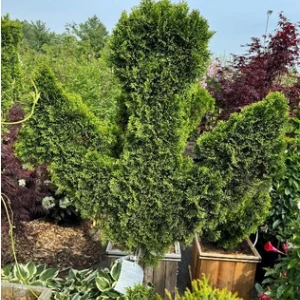
CHAMAECYPARIS OBTUSA

If you’ve ever walked through a Japanese garden and felt instantly calmed by the presence of a single, perfectly sculpted tree, you’ve likely encountered a Hinoki Cypress. This isn’t just another evergreen—it’s a living work of art that brings contemplative elegance and architectural interest to Connecticut gardens. With its soft, feathery foliage and naturally refined shape, the Hinoki Cypress transforms ordinary landscapes into something genuinely extraordinary.

What it looks like

The Hinoki Cypress is a study in sophistication. Its fine, scale-like foliage is soft to the touch (unlike the scratchy feel of many evergreens), arranged in delicate, flattened sprays that create an almost fern-like texture. The color is a rich, deep green that doesn’t fade through New England winters, and depending on the cultivar, you might find shades ranging from golden-green to silvery-blue. The overall form tends toward a graceful, pyramidal or columnar shape, though this varies by variety. This is the kind of tree that looks stunning as a specimen plant—it doesn’t need a crowd to shine.

Growing it in your garden

The Hinoki Cypress thrives in Connecticut’s climate when given the right conditions. It prefers well-draining soil—this is non-negotiable—and benefits from slightly acidic to neutral pH. Plant it in a location with good air circulation; these trees appreciate morning sun and afternoon shade, especially during our hot, humid Connecticut summers. Unlike some evergreens that tolerate anything, CHAMAECYPARIS OBTUSA performs best when conditions are just right. Think of it as a tree with standards, and when you meet them, the reward is a specimen that looks better year after year.

Through the seasons

Spring brings fresh new growth with an almost luminous quality—lighter in color and impossibly fine-textured. Summer is when the Hinoki Cypress truly showcases its form, maintaining that soft appearance even as heat presses down on your other plants. Fall and winter are where this tree earns its place in a New England garden. While deciduous trees are dropping their leaves, your Hinoki Cypress remains a constant presence, sometimes deepening in color slightly as cold temperatures arrive. It won’t turn brown or lose its refined appearance—it just becomes more essential to your winter landscape.

Where it shines

The Hinoki Cypress is perfect as a focal point in mixed borders, especially in Japanese-inspired gardens or contemporary landscapes that value clean lines and texture. It works beautifully in foundation plantings where you need height without bulk, along entryways, or as a specimen in an open area where it can be admired from all angles. Because of its moderate growth rate and manageable size, it’s ideal for gardeners who want impact without waiting decades. It also does well in containers, making it possible to move it to optimal light conditions if needed.

Perfect companions

The Hinoki Cypress pairs beautifully with shade-tolerant understory plants. Consider pairing it with Japanese Painted Ferns, which echo its delicate texture at ground level, or with hostas for contrast in form and leaf size. Evergreen groundcovers like creeping phlox or helxine soften the base. If you want to echo its refined aesthetic, companion plants like Dwarf Alberta Spruce or other fine-textured conifers work wonderfully. For seasonal color nearby, deciduous Japanese Maples planted nearby create a stunning combination without competing for visual attention.

Care tips

Water regularly during the first growing season to establish a deep root system. Once established, the Hinoki Cypress is fairly drought-tolerant, but Connecticut’s summer humidity can be challenging—ensure excellent drainage and avoid overhead watering. Prune only to shape or remove damaged growth; these trees naturally maintain their form beautifully. In spring, you can lightly thin interior growth to maintain the feathery appearance and improve air circulation, which helps prevent fungal issues in our humid climate. A light mulch keeps roots cool and helps retain moisture during dry spells, but keep it away from the trunk itself.

Quick facts

  • Hardiness Zone: 4-8 (perfect for Connecticut)
  • Mature Height & Spread: Varies by cultivar, typically 15-50 feet tall and 10-20 feet wide; many ornamental varieties stay much smaller
  • Bloom Season: Non-flowering; valued for foliage
  • Light Requirements: Full sun to partial shade (afternoon shade beneficial in hot climates)
  • Water Needs: Moderate; prefers consistent moisture and excellent drainage
  • Available at: Both our retail and wholesale locations.
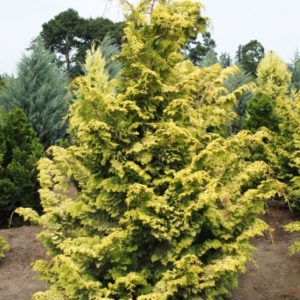
Hinoki Cypress

Description

CHAMAECYPARIS OBTUSA

If you’ve ever walked through a Japanese garden and felt instantly calmed by the presence of a single, perfectly sculpted tree, you’ve likely encountered a Hinoki Cypress. This isn’t just another evergreen—it’s a living work of art that brings contemplative elegance and architectural interest to Connecticut gardens. With its soft, feathery foliage and naturally refined shape, the Hinoki Cypress transforms ordinary landscapes into something genuinely extraordinary.

What it looks like

The Hinoki Cypress is a study in sophistication. Its fine, scale-like foliage is soft to the touch (unlike the scratchy feel of many evergreens), arranged in delicate, flattened sprays that create an almost fern-like texture. The color is a rich, deep green that doesn’t fade through New England winters, and depending on the cultivar, you might find shades ranging from golden-green to silvery-blue. The overall form tends toward a graceful, pyramidal or columnar shape, though this varies by variety. This is the kind of tree that looks stunning as a specimen plant—it doesn’t need a crowd to shine.

Growing it in your garden

The Hinoki Cypress thrives in Connecticut’s climate when given the right conditions. It prefers well-draining soil—this is non-negotiable—and benefits from slightly acidic to neutral pH. Plant it in a location with good air circulation; these trees appreciate morning sun and afternoon shade, especially during our hot, humid Connecticut summers. Unlike some evergreens that tolerate anything, CHAMAECYPARIS OBTUSA performs best when conditions are just right. Think of it as a tree with standards, and when you meet them, the reward is a specimen that looks better year after year.

Through the seasons

Spring brings fresh new growth with an almost luminous quality—lighter in color and impossibly fine-textured. Summer is when the Hinoki Cypress truly showcases its form, maintaining that soft appearance even as heat presses down on your other plants. Fall and winter are where this tree earns its place in a New England garden. While deciduous trees are dropping their leaves, your Hinoki Cypress remains a constant presence, sometimes deepening in color slightly as cold temperatures arrive. It won’t turn brown or lose its refined appearance—it just becomes more essential to your winter landscape.

Where it shines

The Hinoki Cypress is perfect as a focal point in mixed borders, especially in Japanese-inspired gardens or contemporary landscapes that value clean lines and texture. It works beautifully in foundation plantings where you need height without bulk, along entryways, or as a specimen in an open area where it can be admired from all angles. Because of its moderate growth rate and manageable size, it’s ideal for gardeners who want impact without waiting decades. It also does well in containers, making it possible to move it to optimal light conditions if needed.

Perfect companions

The Hinoki Cypress pairs beautifully with shade-tolerant understory plants. Consider pairing it with Japanese Painted Ferns, which echo its delicate texture at ground level, or with hostas for contrast in form and leaf size. Evergreen groundcovers like creeping phlox or helxine soften the base. If you want to echo its refined aesthetic, companion plants like Dwarf Alberta Spruce or other fine-textured conifers work wonderfully. For seasonal color nearby, deciduous Japanese Maples planted nearby create a stunning combination without competing for visual attention.

Care tips

Water regularly during the first growing season to establish a deep root system. Once established, the Hinoki Cypress is fairly drought-tolerant, but Connecticut’s summer humidity can be challenging—ensure excellent drainage and avoid overhead watering. Prune only to shape or remove damaged growth; these trees naturally maintain their form beautifully. In spring, you can lightly thin interior growth to maintain the feathery appearance and improve air circulation, which helps prevent fungal issues in our humid climate. A light mulch keeps roots cool and helps retain moisture during dry spells, but keep it away from the trunk itself.

Quick facts

  • Hardiness Zone: 4-8 (perfect for Connecticut)
  • Mature Height & Spread: Varies by cultivar, typically 15-50 feet tall and 10-20 feet wide; many ornamental varieties stay much smaller
  • Bloom Season: Non-flowering; valued for foliage
  • Light Requirements: Full sun to partial shade (afternoon shade beneficial in hot climates)
  • Water Needs: Moderate; prefers consistent moisture and excellent drainage
  • Available at: Both our retail and wholesale locations.