POLYSTICHUM TSUS-SIMENSE

If you’ve been searching for something that handles the trickiest corners of your Connecticut garden—deep shade, moisture-loving roots, and year-round visual interest—Holly Fern might just be the answer you’ve been waiting for. This elegant Japanese native brings a refined sophistication to shaded spaces, with evergreen fronds that look almost sculpted, their dark green pinnae edged with a subtle sharpness that gives this fern its memorable common name. Unlike many ferns that fade into dormancy or lose their charm by winter, Holly Fern maintains its composure through all four New England seasons, standing at attention like a faithful garden sentinel.

What it looks like

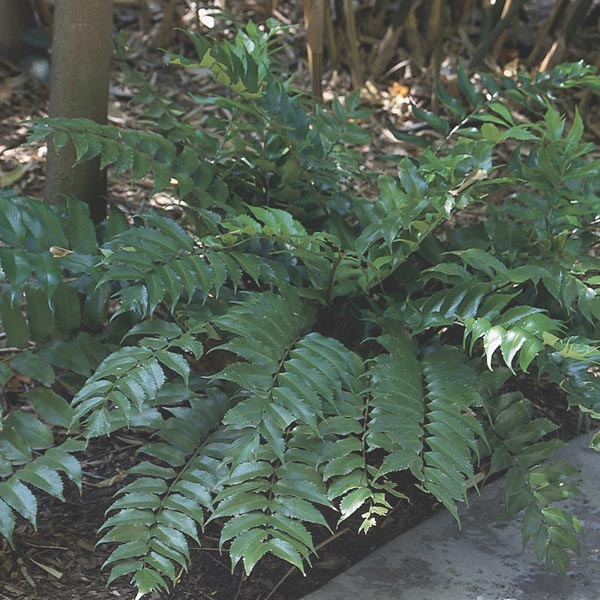
Holly Fern is a semi-evergreen to evergreen beauty that grows in a neat, upright habit with fronds that emerge in shades of bright chartreuse before deepening to a rich, glossy dark green. Each pinnule (the tiny leaflets along the frond) is sharp-edged and pointed, creating that distinctive holly-like appearance that inspired the common name. The fronds are finely divided and delicate-looking, yet surprisingly tough—they’ll persist through Connecticut’s winters with little fuss, adding texture and dimension to spaces where most plants simply wouldn’t survive. This is a fern that commands attention without demanding it; it’s striking in a whisper rather than a shout.

Growing it in your garden

Holly Fern truly thrives in the conditions that challenge many other plants. It loves moist, well-draining soil rich in organic matter—think of the forest floor where it naturally grows. Plant it in a shaded location where it receives dappled light or consistent filtered sun. While it prefers moisture, it doesn’t appreciate waterlogged conditions, so ensure your planting area has decent drainage. In Connecticut’s climate, Holly Fern performs best in zones 5-9, where our typical winter temperatures won’t push it beyond its limits. It’s an excellent choice for north-facing borders, woodland gardens, or those perpetually damp spots near downspouts where you’ve struggled to establish other plants.

Through the seasons

Spring brings fresh emergence, with tightly coiled fiddleheads unfurling into new fronds that brighten shaded spaces with their youthful color. Summer sees Holly Fern reaching its full height and spread, creating a lush, architectural presence in the garden. Unlike deciduous ferns that fade by midsummer, Holly Fern maintains its vitality and appearance throughout the growing season. Fall and winter are where this plant truly distinguishes itself—while other ferns collapse or disappear entirely, Holly Fern stands evergreen and composed, its dark fronds providing essential structure and interest when much of the garden has gone dormant. In harsh Connecticut winters, the foliage may become slightly bronzed or darkened, but this only adds to its rugged charm.

Where it shines

This is a fern for the places you’ve been neglecting because nothing else seemed to work. Woodland gardens, shaded foundation plantings, and those deep-shade areas beneath mature trees are Holly Fern’s domain. It’s particularly stunning alongside hostas, hellebores, and epimedium, where its vertical fronds contrast beautifully with broader-leaved companions. Use it in shaded perennial borders for fine-textured contrast, or mass plant it as a groundcover in areas where moisture and shade meet. It’s also excellent in containers placed on shaded patios or entryways, where its evergreen presence provides year-round visual interest.

Perfect companions

Holly Fern pairs beautifully with other shade-loving plants that appreciate similar growing conditions. Pair it with HELLEBORUS species (Winter Rose) for overlapping seasonal interest—while Holly Fern provides the dark foliage framework, hellebores offer winter blooms at foot level. Combine it with hostas for a textural partnership, or place it alongside CAREX sedges for color and form contrast. ASTILBE works wonderfully if you want to echo the feathery texture in a plant with more vibrant color. In damp shade, team it with ferns like ATHYRIUM (Japanese Painted Fern) for a layered, forest-like composition, or add foamflower (TIARELLA) to introduce lighter coloring and ground-level interest.

Care tips

Holly Fern is genuinely low-maintenance once established. Water regularly during the growing season to keep soil consistently moist but not waterlogged. Mulch around the base with shredded leaves or compost to maintain moisture and add organic matter as it breaks down. There’s no need to deadhead or fuss over this plant—just let it be its elegant self. In early spring, before new growth emerges, you can trim away any damaged or winter-scorched fronds. Hardy and reliable, it rarely succumbs to pests or diseases in Connecticut gardens. If it seems to be struggling, the issue is almost always either insufficient moisture or too much direct sun, both of which are easily corrected.

Quick facts

  • Hardiness Zone: 5-9
  • Mature Height & Spread: 18-24 inches tall and 12-18 inches wide
  • Bloom Season: Non-flowering; valued for foliage year-round
  • Light Requirements: Partial to full shade
  • Water Needs: Consistently moist soil; prefers humid conditions
  • Available at: Both our retail and wholesale locations

Holly Fern

Category:

Named for its serrated, sharp-tipped, holly-like leaves, is one of the few plants that will grow happily in the dark corners of your garden.

Description

POLYSTICHUM TSUS-SIMENSE

If you’ve been searching for something that handles the trickiest corners of your Connecticut garden—deep shade, moisture-loving roots, and year-round visual interest—Holly Fern might just be the answer you’ve been waiting for. This elegant Japanese native brings a refined sophistication to shaded spaces, with evergreen fronds that look almost sculpted, their dark green pinnae edged with a subtle sharpness that gives this fern its memorable common name. Unlike many ferns that fade into dormancy or lose their charm by winter, Holly Fern maintains its composure through all four New England seasons, standing at attention like a faithful garden sentinel.

What it looks like

Holly Fern is a semi-evergreen to evergreen beauty that grows in a neat, upright habit with fronds that emerge in shades of bright chartreuse before deepening to a rich, glossy dark green. Each pinnule (the tiny leaflets along the frond) is sharp-edged and pointed, creating that distinctive holly-like appearance that inspired the common name. The fronds are finely divided and delicate-looking, yet surprisingly tough—they’ll persist through Connecticut’s winters with little fuss, adding texture and dimension to spaces where most plants simply wouldn’t survive. This is a fern that commands attention without demanding it; it’s striking in a whisper rather than a shout.

Growing it in your garden

Holly Fern truly thrives in the conditions that challenge many other plants. It loves moist, well-draining soil rich in organic matter—think of the forest floor where it naturally grows. Plant it in a shaded location where it receives dappled light or consistent filtered sun. While it prefers moisture, it doesn’t appreciate waterlogged conditions, so ensure your planting area has decent drainage. In Connecticut’s climate, Holly Fern performs best in zones 5-9, where our typical winter temperatures won’t push it beyond its limits. It’s an excellent choice for north-facing borders, woodland gardens, or those perpetually damp spots near downspouts where you’ve struggled to establish other plants.

Through the seasons

Spring brings fresh emergence, with tightly coiled fiddleheads unfurling into new fronds that brighten shaded spaces with their youthful color. Summer sees Holly Fern reaching its full height and spread, creating a lush, architectural presence in the garden. Unlike deciduous ferns that fade by midsummer, Holly Fern maintains its vitality and appearance throughout the growing season. Fall and winter are where this plant truly distinguishes itself—while other ferns collapse or disappear entirely, Holly Fern stands evergreen and composed, its dark fronds providing essential structure and interest when much of the garden has gone dormant. In harsh Connecticut winters, the foliage may become slightly bronzed or darkened, but this only adds to its rugged charm.

Where it shines

This is a fern for the places you’ve been neglecting because nothing else seemed to work. Woodland gardens, shaded foundation plantings, and those deep-shade areas beneath mature trees are Holly Fern’s domain. It’s particularly stunning alongside hostas, hellebores, and epimedium, where its vertical fronds contrast beautifully with broader-leaved companions. Use it in shaded perennial borders for fine-textured contrast, or mass plant it as a groundcover in areas where moisture and shade meet. It’s also excellent in containers placed on shaded patios or entryways, where its evergreen presence provides year-round visual interest.

Perfect companions

Holly Fern pairs beautifully with other shade-loving plants that appreciate similar growing conditions. Pair it with HELLEBORUS species (Winter Rose) for overlapping seasonal interest—while Holly Fern provides the dark foliage framework, hellebores offer winter blooms at foot level. Combine it with hostas for a textural partnership, or place it alongside CAREX sedges for color and form contrast. ASTILBE works wonderfully if you want to echo the feathery texture in a plant with more vibrant color. In damp shade, team it with ferns like ATHYRIUM (Japanese Painted Fern) for a layered, forest-like composition, or add foamflower (TIARELLA) to introduce lighter coloring and ground-level interest.

Care tips

Holly Fern is genuinely low-maintenance once established. Water regularly during the growing season to keep soil consistently moist but not waterlogged. Mulch around the base with shredded leaves or compost to maintain moisture and add organic matter as it breaks down. There’s no need to deadhead or fuss over this plant—just let it be its elegant self. In early spring, before new growth emerges, you can trim away any damaged or winter-scorched fronds. Hardy and reliable, it rarely succumbs to pests or diseases in Connecticut gardens. If it seems to be struggling, the issue is almost always either insufficient moisture or too much direct sun, both of which are easily corrected.

Quick facts

  • Hardiness Zone: 5-9
  • Mature Height & Spread: 18-24 inches tall and 12-18 inches wide
  • Bloom Season: Non-flowering; valued for foliage year-round
  • Light Requirements: Partial to full shade
  • Water Needs: Consistently moist soil; prefers humid conditions
  • Available at: Both our retail and wholesale locations