Irish Yew

TAXUS BACCATA ‘FASTIGIATA’

If you’ve been dreaming of adding something with old-world elegance to your Connecticut garden—something that whispers of European estates and formal gardens—the Irish Yew is your answer. This is a plant that makes a statement without shouting. Narrow, columnar, and dressed in deep forest-green needles year-round, the Irish Yew is architecture in botanical form. It’s the kind of plant that catches the eye in winter when everything else has faded, and holds its own beautifully through Connecticut’s most challenging seasons.

What it looks like

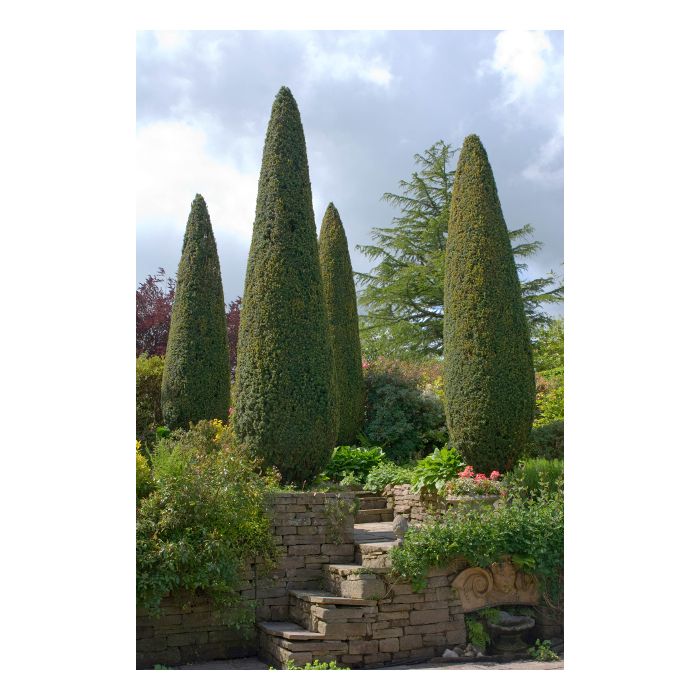
The Irish Yew is a narrow, upright evergreen that looks like someone took a classic yew and gently pulled it skyward. Its needles are dark, glossy green—the kind of green that feels almost black in certain light—and they’re arranged in flat, fern-like sprays along dense, tightly packed branches. The overall silhouette is almost columnar, sometimes described as pencil-thin, making it an excellent choice for narrow spaces where you need vertical interest without spreading width. In autumn, female plants produce bright red, berry-like arils that add a pop of color and attract birds to your garden. These arils are actually one of the few fleshy parts of the yew—the rest of the plant is quite fine-textured and refined.

Growing it in your garden

Irish Yew is surprisingly adaptable once established, though it does prefer conditions that don’t swing wildly. In Connecticut’s climate, you’ll want to give it a spot with afternoon shade—morning sun is fine, even welcome, but harsh afternoon rays combined with our variable winter temperatures can stress the plant. The good news? It’s not fussy about soil. Well-drained soil is ideal, but Irish Yew tolerates clay better than most evergreens, which makes it genuinely useful for New England gardens. Plant it in spring so it has the whole growing season to establish before our first hard freeze.

This is a plant that appreciates consistent moisture during its first year, so plan to water regularly if we go through a dry spell. Once it’s settled in, it becomes quite drought-tolerant—another quality that makes it surprisingly practical for Connecticut gardeners. Irish Yew grows slowly, which is part of its charm. You’re not going to be pruning this constantly; it maintains its elegant form naturally.

Through the seasons

Winter is where Irish Yew truly shines. When snow settles on its narrow, dense branches, it looks like something from a Victorian Christmas card. The deep green color intensifies against a gray winter sky, providing the kind of structural beauty that keeps your garden from looking bare and sad. Spring brings fresh new growth—a bright green that eventually darkens to match the rest of the foliage. Summer is quietly reliable; this evergreen asks for very little and gives continuous presence. Autumn is when the red arils appear on female plants, creating unexpected color and attracting wildlife. The berry-like structures persist well into winter, sometimes carrying over through the holidays.

Where it shines

Think of Irish Yew as a plant with purpose. Use it as a living exclamation point in your landscape—at the corner of a fence, flanking an entryway, or creating a formal vertical accent in a mixed border. It’s perfect for small gardens where you need height without sprawl. In Connecticut, it works beautifully in partially shaded woodland gardens and makes an excellent backdrop plant that won’t shade out sun-lovers planted in front of it. Use it as a specimen in a container garden, or create a formal evergreen screen with multiples planted in a row.

Perfect companions

Irish Yew pairs beautifully with broad-leaved evergreens like ILEX (holly) and BUXUS (boxwood). The contrast between its fine-textured needles and bolder foliage creates visual interest. At its base, try shade-tolerant plants like HELLEBORUS (hellebores) or HEDERA (ivy) to soften the formal silhouette. In a mixed border, it provides the perfect vertical punctuation among perennials like ASTILBE or HOSTA. For year-round interest with fellow conifers, pair it with spreading junipers or softer-textured CHAMAECYPARIS.

Care tips

Irish Yew needs very little fussing. In spring, remove any winter-damaged branches (they’ll appear brown or blackened). Avoid heavy pruning; this plant looks best when you let its natural form develop. It doesn’t appreciate being sheared into unnatural shapes. If branches do get out of line, gently tie them back toward the center of the plant rather than cutting them off. Water during establishment and during our Connecticut dry spells. In areas prone to heavy wet snow, you might gently brush snow off branches to prevent damage, though the plant is generally tough.

Quick facts

  • Hardiness Zone: 5-7 (reliably hardy in Connecticut)
  • Mature Height & Spread: 15-20 feet tall, 2-3 feet wide
  • Bloom Season: Spring (inconspicuous flowers); red arils in fall
  • Light Requirements: Partial shade to full sun
  • Water Needs: Moderate; drought-tolerant once established
  • Available at: Both our retail and wholesale locations

Irish Yew

A handsome evergreen shrub with a narrow columnar form. Its rich dark green needles are larger than that of English Yew, densely cloaking its strong upright branches.

Pot Size (gallons), Height: 10-12′

Description

Irish Yew

TAXUS BACCATA ‘FASTIGIATA’

If you’ve been dreaming of adding something with old-world elegance to your Connecticut garden—something that whispers of European estates and formal gardens—the Irish Yew is your answer. This is a plant that makes a statement without shouting. Narrow, columnar, and dressed in deep forest-green needles year-round, the Irish Yew is architecture in botanical form. It’s the kind of plant that catches the eye in winter when everything else has faded, and holds its own beautifully through Connecticut’s most challenging seasons.

What it looks like

The Irish Yew is a narrow, upright evergreen that looks like someone took a classic yew and gently pulled it skyward. Its needles are dark, glossy green—the kind of green that feels almost black in certain light—and they’re arranged in flat, fern-like sprays along dense, tightly packed branches. The overall silhouette is almost columnar, sometimes described as pencil-thin, making it an excellent choice for narrow spaces where you need vertical interest without spreading width. In autumn, female plants produce bright red, berry-like arils that add a pop of color and attract birds to your garden. These arils are actually one of the few fleshy parts of the yew—the rest of the plant is quite fine-textured and refined.

Growing it in your garden

Irish Yew is surprisingly adaptable once established, though it does prefer conditions that don’t swing wildly. In Connecticut’s climate, you’ll want to give it a spot with afternoon shade—morning sun is fine, even welcome, but harsh afternoon rays combined with our variable winter temperatures can stress the plant. The good news? It’s not fussy about soil. Well-drained soil is ideal, but Irish Yew tolerates clay better than most evergreens, which makes it genuinely useful for New England gardens. Plant it in spring so it has the whole growing season to establish before our first hard freeze.

This is a plant that appreciates consistent moisture during its first year, so plan to water regularly if we go through a dry spell. Once it’s settled in, it becomes quite drought-tolerant—another quality that makes it surprisingly practical for Connecticut gardeners. Irish Yew grows slowly, which is part of its charm. You’re not going to be pruning this constantly; it maintains its elegant form naturally.

Through the seasons

Winter is where Irish Yew truly shines. When snow settles on its narrow, dense branches, it looks like something from a Victorian Christmas card. The deep green color intensifies against a gray winter sky, providing the kind of structural beauty that keeps your garden from looking bare and sad. Spring brings fresh new growth—a bright green that eventually darkens to match the rest of the foliage. Summer is quietly reliable; this evergreen asks for very little and gives continuous presence. Autumn is when the red arils appear on female plants, creating unexpected color and attracting wildlife. The berry-like structures persist well into winter, sometimes carrying over through the holidays.

Where it shines

Think of Irish Yew as a plant with purpose. Use it as a living exclamation point in your landscape—at the corner of a fence, flanking an entryway, or creating a formal vertical accent in a mixed border. It’s perfect for small gardens where you need height without sprawl. In Connecticut, it works beautifully in partially shaded woodland gardens and makes an excellent backdrop plant that won’t shade out sun-lovers planted in front of it. Use it as a specimen in a container garden, or create a formal evergreen screen with multiples planted in a row.

Perfect companions

Irish Yew pairs beautifully with broad-leaved evergreens like ILEX (holly) and BUXUS (boxwood). The contrast between its fine-textured needles and bolder foliage creates visual interest. At its base, try shade-tolerant plants like HELLEBORUS (hellebores) or HEDERA (ivy) to soften the formal silhouette. In a mixed border, it provides the perfect vertical punctuation among perennials like ASTILBE or HOSTA. For year-round interest with fellow conifers, pair it with spreading junipers or softer-textured CHAMAECYPARIS.

Care tips

Irish Yew needs very little fussing. In spring, remove any winter-damaged branches (they’ll appear brown or blackened). Avoid heavy pruning; this plant looks best when you let its natural form develop. It doesn’t appreciate being sheared into unnatural shapes. If branches do get out of line, gently tie them back toward the center of the plant rather than cutting them off. Water during establishment and during our Connecticut dry spells. In areas prone to heavy wet snow, you might gently brush snow off branches to prevent damage, though the plant is generally tough.

Quick facts

  • Hardiness Zone: 5-7 (reliably hardy in Connecticut)
  • Mature Height & Spread: 15-20 feet tall, 2-3 feet wide
  • Bloom Season: Spring (inconspicuous flowers); red arils in fall
  • Light Requirements: Partial shade to full sun
  • Water Needs: Moderate; drought-tolerant once established
  • Available at: Both our retail and wholesale locations