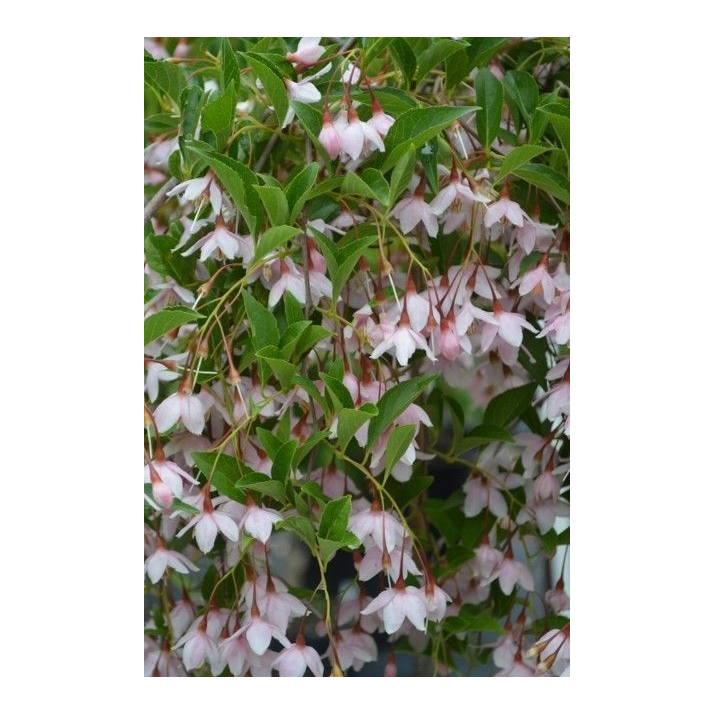
JL Weeping Japanese Snowbell

STYRAX JAPONICA ‘JL WEEPING’

If you’ve been searching for a tree that combines elegance with an almost theatrical presence—something that will make visitors pause and ask what it is—the JL Weeping Japanese Snowbell might just be your answer. This cultivar is a stunning departure from the upright form of its species, offering cascading branches that create a fountain-like silhouette that’s simply mesmerizing. Picture it in your garden on a June morning, when delicate white flowers dangle like tiny bells along the weeping branches, their sweet fragrance drifting on the breeze. This is a tree that doesn’t just occupy space; it commands attention with grace.

What it looks like

The JL Weeping Japanese Snowbell is a small to medium-sized deciduous tree with a distinctly weeping, fountain-form habit. The branches arch gracefully downward, creating that coveted cascading effect that landscape designers dream about. The foliage is fine-textured and delicate—glossy green leaves that are relatively small and neatly arranged along drooping stems. Come late spring and early summer, the show really begins: fragrant white flowers appear in abundance, hanging in small clusters from the weeping branches like nature’s own mobile. The flowers are followed by small, inedible drupes that birds may enjoy, and in fall, the foliage turns a soft yellow-bronze before dropping.

Growing it in your garden

This tree is surprisingly adaptable for Connecticut gardens, though it does appreciate some thoughtful placement. It thrives in full sun to part shade—aim for at least four to six hours of direct sunlight for the best flowering. Unlike some Japanese plants that can be finicky in New England, the JL Weeping is notably hardy and reliable when sited properly. It prefers well-draining soil rich in organic matter; if your garden tends toward clay, amend generously with compost or peat moss to create that ideal growing environment. The weeping habit means you’ll want to give it space—this tree needs room to express itself without being cramped by fences or structures. Because of its naturally pendulous branches, you won’t need to fight against its natural form with heavy pruning, which is one of the joys of growing this cultivar.

Through the seasons

Spring is when the JL Weeping truly shines. As temperatures warm in May and early June, those exquisite fragrant white flowers appear along the cascading branches, creating a waterfall of bloom. The scent—sweet and subtle—is something you’ll want to position near a seating area so you can fully enjoy it. Summer sees the tree settle into a fountain of fine green foliage, providing dappled shade beneath its canopy and a beautiful focal point in the garden. Fall arrives with those golden-bronze leaves that drift down gracefully, revealing the elegant branch structure underneath. Winter reveals the true architecture of the tree—those weeping branches form an almost architectural silhouette against the sky, adding winter interest without being harsh or stark.

Where it shines

This tree is perfect as a specimen plant—plant it where it can be appreciated from multiple angles. It’s stunning near patios or seating areas where you can enjoy the fragrance in season. The cascading form makes it ideal near water features; the reflection doubles its visual impact. In smaller Connecticut gardens, it’s a great alternative to larger specimen trees because it provides significant visual presence without overwhelming the space. It’s also wonderful on berms or raised areas where the weeping branches can cascade downward naturally. Group it with underplantings of shade-tolerant perennials like HELLEBORUS or Japanese painted ferns to soften the ground plane and extend interest beyond the tree’s flowering season.

Perfect companions

Pair the JL Weeping with plants that won’t compete for attention but will create a sophisticated supporting cast. Low-growing hostas in chartreuse or blue tones create a lovely color echo beneath the canopy. Astilbe brings airy texture and shade tolerance. Consider bleeding heart (DICENTRA) for spring interest before the snowbell takes center stage. Japanese forest grass (HAKONECHLOA) makes an exquisite groundcover companion, and its own subtle movement echoes the weeping form above. Later-blooming perennials like Japanese anemones can provide color after the snowbell’s show has finished. Deciduous azaleas bloom at roughly the same time and can create a colorful underplanting without overwhelming the tree’s more refined aesthetic.

Care tips

Once established, the JL Weeping Japanese Snowbell is quite low-maintenance. Water regularly during its first season, then taper off to deep watering during dry spells in summer. A 2-3 inch layer of mulch around the base keeps roots cool and moist in Connecticut’s sometimes unpredictable summers. Pruning is minimal—this tree’s natural form is its best feature, so resist the urge to reshape it. Remove any dead wood in early spring, and thin crossing branches if necessary, but otherwise, let it grow. If you notice any weak growth, feed with a balanced fertilizer in early spring. This tree doesn’t have major pest or disease issues in New England, making it a worry-free choice for busy gardeners.

Quick facts

  • Hardiness Zone: 5-8 (reliably hardy throughout Connecticut)
  • Mature Height & Spread: 20-30 feet tall with an equal or greater spread; the weeping form will depend on its support
  • Bloom Season: Late May through June
  • Light Requirements: Full sun to part shade (4-6 hours of direct sun)
  • Water Needs: Moderate; prefers consistent moisture but well-draining soil
  • Available at: Both our retail and wholesale locations

JL Weeping Japanese Snowbell

A choice styrax that recently arrived in the United States from Japan. Plants are admired for their elegant, weeping branch structure and loosely mounded form. In late spring, delicate, 1″ pale-pink blossoms elicit much admiration. Plants form low spreading specimens if left to their own or can be trained to gain height. One of the best of all flowering trees.

Pot Size (gallons), Height: 5-6′

Description

JL Weeping Japanese Snowbell

STYRAX JAPONICA ‘JL WEEPING’

If you’ve been searching for a tree that combines elegance with an almost theatrical presence—something that will make visitors pause and ask what it is—the JL Weeping Japanese Snowbell might just be your answer. This cultivar is a stunning departure from the upright form of its species, offering cascading branches that create a fountain-like silhouette that’s simply mesmerizing. Picture it in your garden on a June morning, when delicate white flowers dangle like tiny bells along the weeping branches, their sweet fragrance drifting on the breeze. This is a tree that doesn’t just occupy space; it commands attention with grace.

What it looks like

The JL Weeping Japanese Snowbell is a small to medium-sized deciduous tree with a distinctly weeping, fountain-form habit. The branches arch gracefully downward, creating that coveted cascading effect that landscape designers dream about. The foliage is fine-textured and delicate—glossy green leaves that are relatively small and neatly arranged along drooping stems. Come late spring and early summer, the show really begins: fragrant white flowers appear in abundance, hanging in small clusters from the weeping branches like nature’s own mobile. The flowers are followed by small, inedible drupes that birds may enjoy, and in fall, the foliage turns a soft yellow-bronze before dropping.

Growing it in your garden

This tree is surprisingly adaptable for Connecticut gardens, though it does appreciate some thoughtful placement. It thrives in full sun to part shade—aim for at least four to six hours of direct sunlight for the best flowering. Unlike some Japanese plants that can be finicky in New England, the JL Weeping is notably hardy and reliable when sited properly. It prefers well-draining soil rich in organic matter; if your garden tends toward clay, amend generously with compost or peat moss to create that ideal growing environment. The weeping habit means you’ll want to give it space—this tree needs room to express itself without being cramped by fences or structures. Because of its naturally pendulous branches, you won’t need to fight against its natural form with heavy pruning, which is one of the joys of growing this cultivar.

Through the seasons

Spring is when the JL Weeping truly shines. As temperatures warm in May and early June, those exquisite fragrant white flowers appear along the cascading branches, creating a waterfall of bloom. The scent—sweet and subtle—is something you’ll want to position near a seating area so you can fully enjoy it. Summer sees the tree settle into a fountain of fine green foliage, providing dappled shade beneath its canopy and a beautiful focal point in the garden. Fall arrives with those golden-bronze leaves that drift down gracefully, revealing the elegant branch structure underneath. Winter reveals the true architecture of the tree—those weeping branches form an almost architectural silhouette against the sky, adding winter interest without being harsh or stark.

Where it shines

This tree is perfect as a specimen plant—plant it where it can be appreciated from multiple angles. It’s stunning near patios or seating areas where you can enjoy the fragrance in season. The cascading form makes it ideal near water features; the reflection doubles its visual impact. In smaller Connecticut gardens, it’s a great alternative to larger specimen trees because it provides significant visual presence without overwhelming the space. It’s also wonderful on berms or raised areas where the weeping branches can cascade downward naturally. Group it with underplantings of shade-tolerant perennials like HELLEBORUS or Japanese painted ferns to soften the ground plane and extend interest beyond the tree’s flowering season.

Perfect companions

Pair the JL Weeping with plants that won’t compete for attention but will create a sophisticated supporting cast. Low-growing hostas in chartreuse or blue tones create a lovely color echo beneath the canopy. Astilbe brings airy texture and shade tolerance. Consider bleeding heart (DICENTRA) for spring interest before the snowbell takes center stage. Japanese forest grass (HAKONECHLOA) makes an exquisite groundcover companion, and its own subtle movement echoes the weeping form above. Later-blooming perennials like Japanese anemones can provide color after the snowbell’s show has finished. Deciduous azaleas bloom at roughly the same time and can create a colorful underplanting without overwhelming the tree’s more refined aesthetic.

Care tips

Once established, the JL Weeping Japanese Snowbell is quite low-maintenance. Water regularly during its first season, then taper off to deep watering during dry spells in summer. A 2-3 inch layer of mulch around the base keeps roots cool and moist in Connecticut’s sometimes unpredictable summers. Pruning is minimal—this tree’s natural form is its best feature, so resist the urge to reshape it. Remove any dead wood in early spring, and thin crossing branches if necessary, but otherwise, let it grow. If you notice any weak growth, feed with a balanced fertilizer in early spring. This tree doesn’t have major pest or disease issues in New England, making it a worry-free choice for busy gardeners.

Quick facts

  • Hardiness Zone: 5-8 (reliably hardy throughout Connecticut)
  • Mature Height & Spread: 20-30 feet tall with an equal or greater spread; the weeping form will depend on its support
  • Bloom Season: Late May through June
  • Light Requirements: Full sun to part shade (4-6 hours of direct sun)
  • Water Needs: Moderate; prefers consistent moisture but well-draining soil
  • Available at: Both our retail and wholesale locations