
Description

KALMIA LATIFOLIA
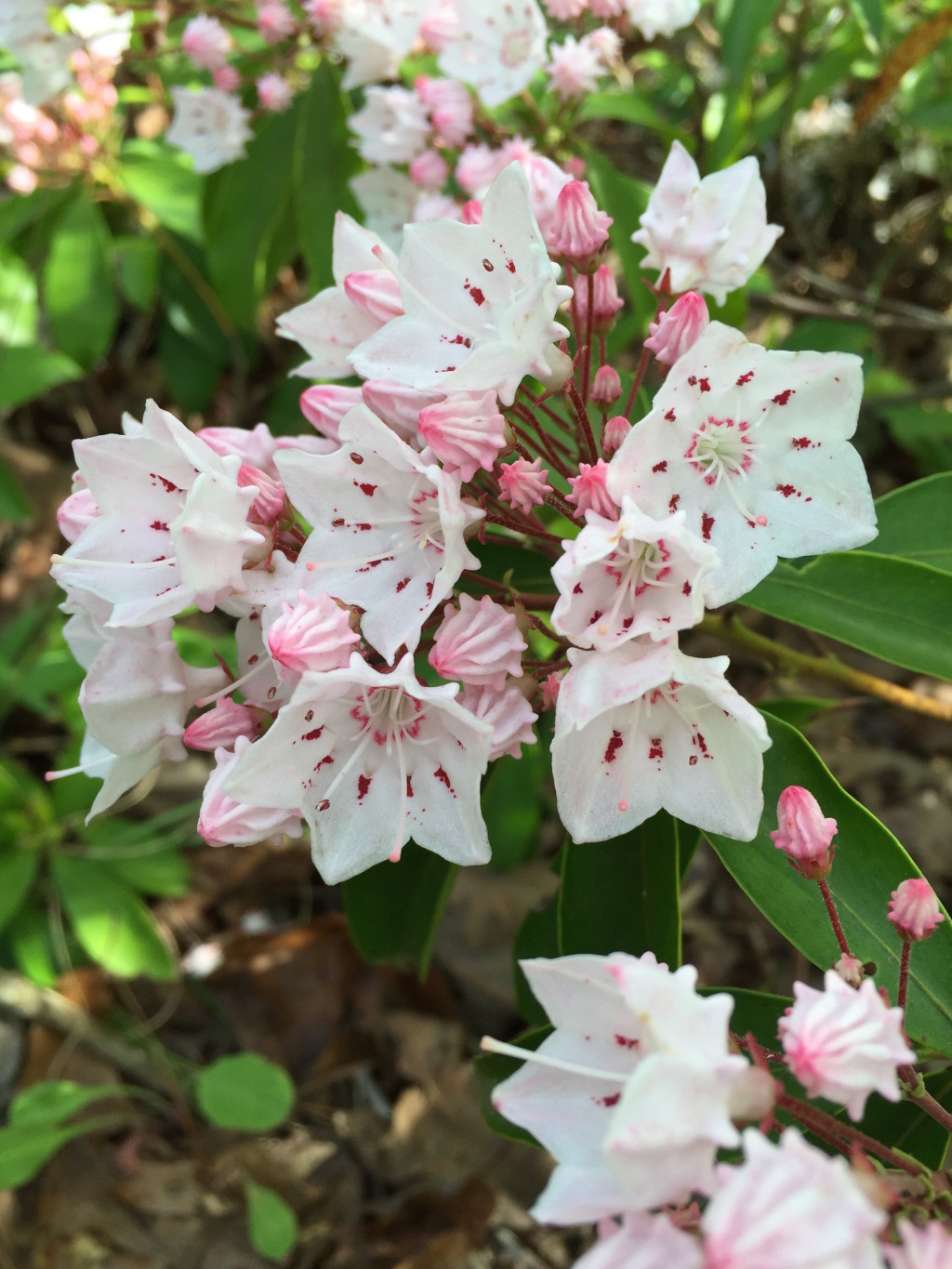
If you’ve been searching for a native Connecticut beauty that practically writes its own success story, Mountain Laurel is your answer. This isn’t just another evergreen shrub—it’s a statement plant that delivers spectacular spring blooms, year-round foliage interest, and the kind of resilience that makes gardeners actually relax. Picture this: late May arrives, and suddenly your garden is dressed in clusters of delicate, star-shaped flowers in shades of pink, crimson, or pristine white. Your neighbors will stop by asking questions. Your guests will request cuttings. And you’ll barely have lifted a finger.
What it looks like
Mountain Laurel is an architectural beauty even before it flowers. The glossy, deep green leaves are lance-shaped and leathery, arranged in whorls that create a naturally full, attractive silhouette year-round. The foliage often takes on a bronze or purple cast in winter—a feature that adds subtle sophistication to your cold-season garden. When bloom time arrives in late spring, the plant becomes absolutely show-stopping. Intricate clusters of flowers in pink, red, or white appear in profusion, each individual bloom resembling a tiny, delicate star. Some cultivars feature deeper colored buds that open to lighter flowers, creating a gorgeous bicolor effect. The flowers are pollinated by bumblebees, and watching them work these blooms is genuinely mesmerizing.
Growing it in your garden
Here’s what makes Mountain Laurel such a gift for Connecticut gardeners: it thrives in acidic soil, which is abundant throughout New England. Unlike many finicky ornamentals, it actually prefers the slightly lean conditions of well-draining, organic-rich soil. Plant it where it receives dappled afternoon shade—morning sun is wonderful, but harsh afternoon heat can stress the plant. Mountain Laurel is perfectly at home under the canopy of oak or pine trees, tucked into woodland gardens, or used as a striking accent shrub in mixed borders. The key is avoiding both soggy feet and baked-out locations. Think “woodland edge” rather than “open meadow,” and you’ve got the right idea. Once established, Mountain Laurel becomes remarkably independent, asking very little of you beyond the initial planting care.
Through the seasons
Spring is obviously the star season—those incredible flowers transform the entire garden. But Mountain Laurel is a generous performer throughout the year. Summer brings lush, healthy foliage that provides a sophisticated backdrop for other plantings. In fall, as other deciduous shrubs fade away, the persistent evergreen leaves of Mountain Laurel remain vibrant, often deepening in color as temperatures drop. Winter is when you’ll appreciate the structural form; in snow, those dense branches create beautiful sculptural shapes, and the foliage offers visual warmth when the landscape is otherwise quiet.
Where it shines
Mountain Laurel is a native Connecticut plant, which means it’s perfectly adapted to our regional climate and conditions. It’s ideal for woodland gardens, shade borders, and naturalized areas where you want to celebrate native plant beauty. Mix it with rhododendrons, azaleas, and ferns for a layered, lush appearance. Use it as a specimen shrub where its spring blooms can be admired up close. Plant it en masse for a stunning spring display, or use single specimens as anchors in mixed borders. It’s also an excellent choice for difficult sites—under trees, in areas with acidic soil, and in spots where you need an attractive, independent shrub that won’t demand constant attention.
Perfect companions
Mountain Laurel plays beautifully with other acid-loving plants. Pair it with RHODODENDRON varieties for coordinated spring color and complementary foliage. Native ferns like Christmas fern and cinnamon fern make excellent companions, as do hostas for contrast. Bleeding heart and hellebores work nicely at the base level. Consider adding evergreen groundcovers like VINCA MINOR or native woodland sedges to complete the picture. The silvery foliage of PIERIS can create stunning textural contrast alongside Mountain Laurel’s glossy leaves.
Care tips
Plant Mountain Laurel in fall or spring for best establishment. Mulch with 2-3 inches of pine bark or leaf mold to maintain the acidic soil pH it prefers and to regulate moisture. Water regularly during the first growing season, then reduce frequency as the plant establishes itself. Deadhead spent flowers in early summer to encourage denser growth, though this isn’t strictly necessary—the plant will bloom beautifully even if you skip this step. Avoid heavy pruning; Mountain Laurel has naturally attractive form and responds better to light shaping if needed. The plant is remarkably pest and disease-resistant, which means you get gorgeous results without chemical interventions.
Quick facts
- Hardiness Zone: 4-9
- Mature Height & Spread: 5-10 feet tall and wide, depending on cultivar
- Bloom Season: Late May through June
- Light Requirements: Dappled shade to partial shade; morning sun is fine
- Water Needs: Moderate; prefers consistently moist (not wet) soil
- Available at: Both our retail and wholesale locations