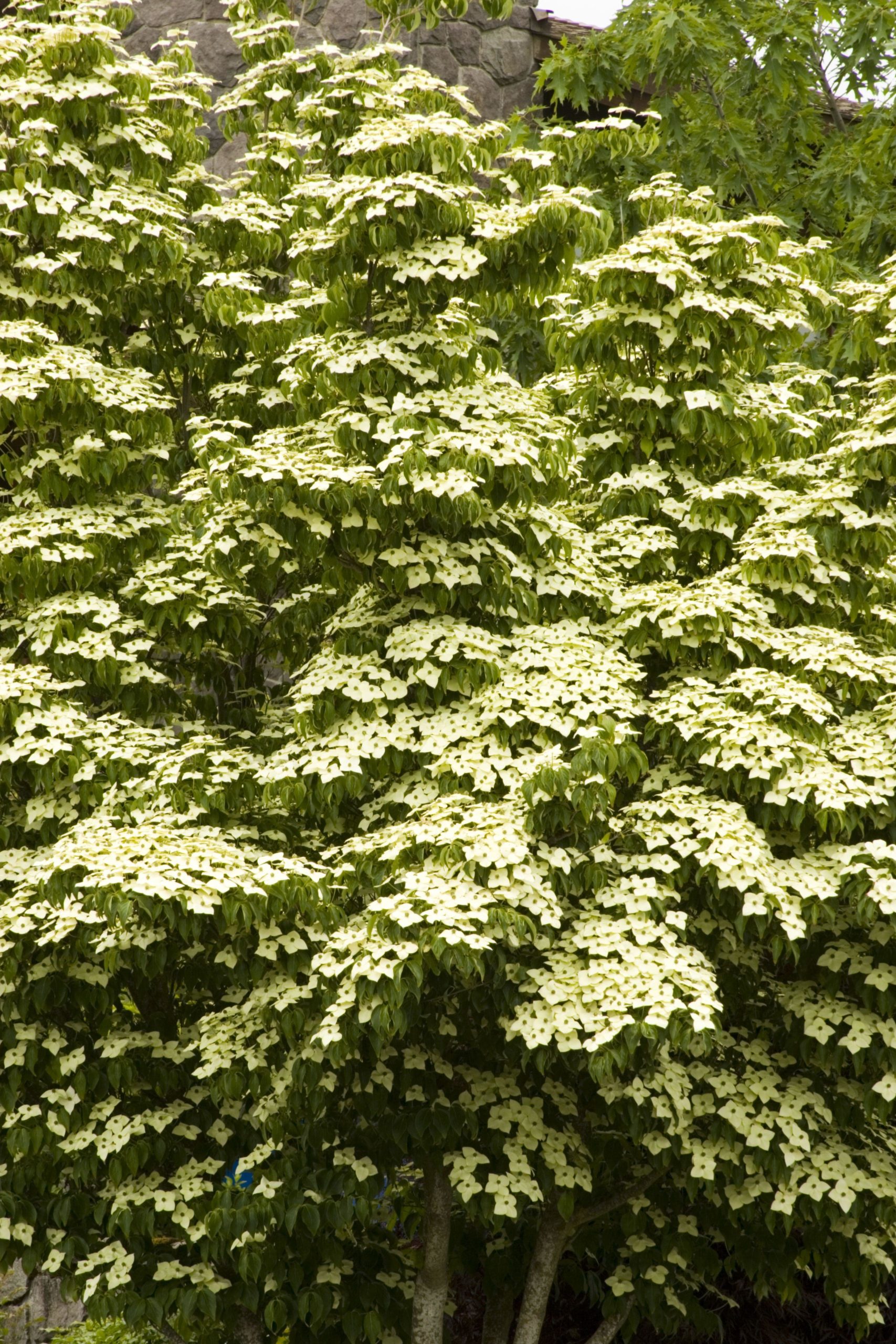
Kousa Dogwood

CORNUS KOUSA

The Kousa Dogwood is the overachiever of the dogwood family—the sophisticated Asian cousin that shows up to the party with good looks, better manners, and a résumé that makes you wonder why you didn’t plant one sooner. While the native Flowering Dogwood (CORNUS FLORIDA) has its charms, the Kousa brings something extra to Connecticut gardens: reliability, disease resistance, and a four-season show that keeps your landscape interesting from spring through winter.

What it looks like

Imagine a small, elegant tree with layered branching that creates a naturally pyramidal or vase-shaped silhouette. In late spring to early summer—typically May through June in Connecticut—Kousa Dogwood puts on its main event: four-petaled white (or pale pink in certain cultivars) flowers that point upward and outward, giving the entire canopy an airy, fireworks-like appearance. These aren’t the same flowers as native Dogwoods; they’re slightly later-blooming and have a more delicate, almost ethereal quality.

But here’s where things get really interesting. By late summer, the flowers transform into fascinating raspberry-like fruits that start green, then blush pink, and finally turn a deep crimson-red. These berries hang on the tree well into fall and attract birds and wildlife. The glossy, dark green foliage turns a stunning burgundy-purple in autumn—not the typical red you might expect, but something altogether more sophisticated. Even in winter, the exfoliating bark reveals tan and cream-colored patches that add quiet interest to the winter landscape.

Growing it in your garden

Here’s the honest truth: Kousa Dogwoods are more adaptable than their native cousins, which is why they’re becoming increasingly popular in New England gardens. They prefer partial shade (morning sun with afternoon protection is ideal in Connecticut’s hot summers) but will tolerate more sun than CORNUS FLORIDA. They’re not fussy about soil pH and actually handle the acidic, slightly dry conditions common in our region quite well.

Plant your Kousa in spring or fall, giving it adequate space to develop its natural architecture—typically 20 to 30 feet tall and nearly as wide at maturity, though smaller cultivars exist. The tree doesn’t like to be cramped or crowded. Mulch around the base to keep roots cool and maintain consistent moisture during establishment, but avoid piling mulch against the trunk itself.

Through the seasons

Spring arrives quietly with the Kousa Dogwood, its buds swelling gradually before those stunning white flowers emerge in May and June—later than native Dogwoods, which means late frosts are less likely to damage them. Summer brings dense, attractive foliage and those conversation-starting berries that develop throughout July and August. Fall is when the real magic happens: the foliage puts on a burgundy-purple show while the fruits deepen to red, and birds descend on the tree to feast. Winter reveals the architectural bones of the tree, with that attractive exfoliating bark drawing attention even when the landscape is quiet and bare.

Where it shines

Kousa Dogwoods excel in woodland edges, dappled shade gardens, and as specimen trees in mixed borders. They’re particularly valuable in Connecticut gardens because they resist the anthracnose fungus that troubles native Dogwoods in our humid climate. Use them to create a focal point in a shade garden, plant them in clusters for a layered, naturalistic effect, or feature a single specimen where its winter bark and form can be appreciated. They work beautifully in rain gardens and areas with moderate moisture, unlike some ornamental trees that demand perfection.

Perfect companions

Underplant your Kousa Dogwood with shade-tolerant perennials like Hellebores, Epimediums, or Japanese Anemones that won’t compete for moisture. Combine it with other ornamental trees like Japanese Maples or Serviceberry for a multi-layered canopy. Hostas, Ferns, and Astilbes create a lush woodland atmosphere beneath the spreading branches. The burgundy fall color pairs beautifully with golden Birch trees or evergreen conifers that provide winter contrast.

Care tips

Young Kousa Dogwoods benefit from consistent moisture during their first two years—aim for about an inch of water weekly during dry periods. Prune only to remove crossed branches or shape the tree when young; once established, the Kousa Dogwood rarely needs corrective pruning. Avoid pruning in late summer or fall, as this can stimulate tender new growth vulnerable to winter damage. The tree is naturally pest and disease resistant, which means you can essentially sit back and watch it perform. No fungicides, no fussy requirements—just a beautiful, reliable tree that handles Connecticut’s challenging climate with grace.

Quick facts

  • Hardiness Zone: Zones 5-8 (thrives in Connecticut)
  • Mature Height & Spread: 20-30 feet tall and wide (varies by cultivar)
  • Bloom Season: May-June
  • Light Requirements: Partial shade to full sun (afternoon shade preferred)
  • Water Needs: Moderate; consistent moisture during establishment
  • Available at: Both our retail and wholesale locations.

Kousa Dogwood

Category:

Attractive horizontal tiers of branches help make this small deciduous tree popular. Splendid white bracts followed in fall by hanging red fruit. Autumn leaves have red-scarlet tints. Special accent.

Trunk Diameter: 3-3.5″

Description

Kousa Dogwood

CORNUS KOUSA

The Kousa Dogwood is the overachiever of the dogwood family—the sophisticated Asian cousin that shows up to the party with good looks, better manners, and a résumé that makes you wonder why you didn’t plant one sooner. While the native Flowering Dogwood (CORNUS FLORIDA) has its charms, the Kousa brings something extra to Connecticut gardens: reliability, disease resistance, and a four-season show that keeps your landscape interesting from spring through winter.

What it looks like

Imagine a small, elegant tree with layered branching that creates a naturally pyramidal or vase-shaped silhouette. In late spring to early summer—typically May through June in Connecticut—Kousa Dogwood puts on its main event: four-petaled white (or pale pink in certain cultivars) flowers that point upward and outward, giving the entire canopy an airy, fireworks-like appearance. These aren’t the same flowers as native Dogwoods; they’re slightly later-blooming and have a more delicate, almost ethereal quality.

But here’s where things get really interesting. By late summer, the flowers transform into fascinating raspberry-like fruits that start green, then blush pink, and finally turn a deep crimson-red. These berries hang on the tree well into fall and attract birds and wildlife. The glossy, dark green foliage turns a stunning burgundy-purple in autumn—not the typical red you might expect, but something altogether more sophisticated. Even in winter, the exfoliating bark reveals tan and cream-colored patches that add quiet interest to the winter landscape.

Growing it in your garden

Here’s the honest truth: Kousa Dogwoods are more adaptable than their native cousins, which is why they’re becoming increasingly popular in New England gardens. They prefer partial shade (morning sun with afternoon protection is ideal in Connecticut’s hot summers) but will tolerate more sun than CORNUS FLORIDA. They’re not fussy about soil pH and actually handle the acidic, slightly dry conditions common in our region quite well.

Plant your Kousa in spring or fall, giving it adequate space to develop its natural architecture—typically 20 to 30 feet tall and nearly as wide at maturity, though smaller cultivars exist. The tree doesn’t like to be cramped or crowded. Mulch around the base to keep roots cool and maintain consistent moisture during establishment, but avoid piling mulch against the trunk itself.

Through the seasons

Spring arrives quietly with the Kousa Dogwood, its buds swelling gradually before those stunning white flowers emerge in May and June—later than native Dogwoods, which means late frosts are less likely to damage them. Summer brings dense, attractive foliage and those conversation-starting berries that develop throughout July and August. Fall is when the real magic happens: the foliage puts on a burgundy-purple show while the fruits deepen to red, and birds descend on the tree to feast. Winter reveals the architectural bones of the tree, with that attractive exfoliating bark drawing attention even when the landscape is quiet and bare.

Where it shines

Kousa Dogwoods excel in woodland edges, dappled shade gardens, and as specimen trees in mixed borders. They’re particularly valuable in Connecticut gardens because they resist the anthracnose fungus that troubles native Dogwoods in our humid climate. Use them to create a focal point in a shade garden, plant them in clusters for a layered, naturalistic effect, or feature a single specimen where its winter bark and form can be appreciated. They work beautifully in rain gardens and areas with moderate moisture, unlike some ornamental trees that demand perfection.

Perfect companions

Underplant your Kousa Dogwood with shade-tolerant perennials like Hellebores, Epimediums, or Japanese Anemones that won’t compete for moisture. Combine it with other ornamental trees like Japanese Maples or Serviceberry for a multi-layered canopy. Hostas, Ferns, and Astilbes create a lush woodland atmosphere beneath the spreading branches. The burgundy fall color pairs beautifully with golden Birch trees or evergreen conifers that provide winter contrast.

Care tips

Young Kousa Dogwoods benefit from consistent moisture during their first two years—aim for about an inch of water weekly during dry periods. Prune only to remove crossed branches or shape the tree when young; once established, the Kousa Dogwood rarely needs corrective pruning. Avoid pruning in late summer or fall, as this can stimulate tender new growth vulnerable to winter damage. The tree is naturally pest and disease resistant, which means you can essentially sit back and watch it perform. No fungicides, no fussy requirements—just a beautiful, reliable tree that handles Connecticut’s challenging climate with grace.

Quick facts

  • Hardiness Zone: Zones 5-8 (thrives in Connecticut)
  • Mature Height & Spread: 20-30 feet tall and wide (varies by cultivar)
  • Bloom Season: May-June
  • Light Requirements: Partial shade to full sun (afternoon shade preferred)
  • Water Needs: Moderate; consistent moisture during establishment
  • Available at: Both our retail and wholesale locations.