
Description
PRUNUS SERRULATA ‘KWANZAN’
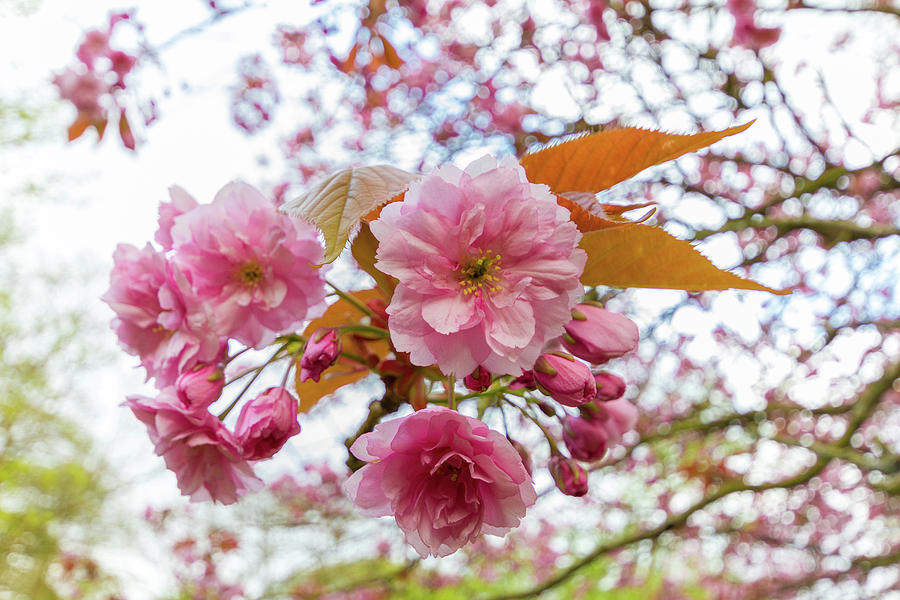
When spring arrives in Connecticut, nothing announces it quite like the Kwanzan Cherry. This isn’t a subtle statement—it’s a full-throttle celebration of everything glorious about temperate gardens. For two magnificent weeks in late April and early May, this tree transforms into an absolute cloud of deep pink, fully double blossoms that stop traffic, spark neighborhood conversations, and make you wonder why you didn’t plant three of these years ago.
What it looks like
The Kwanzan Cherry is a deciduous tree with a distinctly vase-shaped form, eventually growing into a broad, rounded silhouette that adds elegant structure to your garden even in winter. But it’s the springtime show that steals every heart. The flowers—and there are hundreds of them—are densely double blooms (meaning multiple layers of petals) in a rich rose-pink shade that deepens slightly as the flowers age. Each blossom cluster holds ten to twenty petals, creating the appearance of tiny peonies scattered throughout the entire canopy.
Summer foliage emerges bronze-tinted before maturing to a lustrous deep green. In autumn, the leaves turn burnished bronze and golden-amber, offering a quieter but still worthwhile seasonal show. The bark has an attractive polished appearance with horizontal lenticels that adds winter interest.
Growing it in your garden
Kwanzan Cherries thrive in Connecticut’s Zone 5 and 6 gardens when planted in full sun—and they really do need that sun to perform their springtime magic. Plant in well-draining soil that’s been amended with organic matter, and choose a location with good air circulation. This matters: adequate air movement helps prevent fungal issues that can plague ornamental cherries in humid New England springs.
These are not difficult trees, but they do appreciate some attention during establishment. In their first year or two, consistent moisture—not waterlogging, but consistent—helps them settle in beautifully. Once established, they’re reasonably drought-tolerant for a cherry, though they’ll flower more prolifically with adequate water throughout the growing season.
Through the seasons
Spring is obviously the star season, but there’s more to appreciate. As summer settles in, the deep green foliage provides a lush backdrop for other plantings, and the tree’s architectural form creates valuable shade and structure. The glossy leaves catch light beautifully on warm June afternoons. Come fall, expect those burnished bronze tones that complement New England’s broader autumn palette. Winter reveals the tree’s framework and ornamental bark—not dramatic, but honest and lovely.
One note: Kwanzan Cherries bloom on old wood, so flowers develop on last year’s growth. This means you’ll want to prune immediately after flowering (not in fall or winter) if you need to shape the tree, as late pruning removes next year’s flower buds.
Where it shines
This cherry is a natural focal point. Plant it as a specimen tree where you can enjoy the springtime performance from multiple windows, or position it to frame a view. It’s stunning planted in groups of three at varying distances—not in a rigid row, but in a loose triangle—where the mass of pink creates an almost surreal garden moment.
Kwanzan Cherries also excel in urban and suburban settings. They’re columnar enough not to overwhelm a modest property, yet substantial enough to anchor a larger landscape. They work beautifully along property lines, in sun-drenched courtyards, or as the centerpiece of a spring-focused garden.
Perfect companions
Underplant with shade-tolerant spring bulbs: Spanish bluebells, creeping phlox, and hellebores create a purple and pink echo beneath the canopy. Pair the tree with white-flowering crabapples for a sophisticated spring duet. Later in the season, hydrangeas and ornamental grasses fill the space where cherry blossoms were, extending visual interest through summer and fall. The dark foliage of a burgundy Japanese maple nearby creates stunning contrast during the cherry’s bloom time.
Care tips
Water deeply during establishment and during dry spells—cherry roots appreciate consistent moisture but despise soggy conditions. Mulch around the base with 2-3 inches of organic material, keeping mulch a few inches away from the trunk itself. Feed in early spring with a balanced fertilizer if soil is poor, though established trees rarely need additional feeding.
Monitor for Japanese beetles in summer (they occasionally bother cherry foliage) and watch for black knot fungus on twigs—prune these out promptly. Most ornamental cherries live 30-40 years with minimal intervention. This is a plant that rewards good siting with decades of reliable, spectacular spring performance.
Quick facts
- Hardiness Zone: 5-8
- Mature Height & Spread: 25-30 feet tall, 20-25 feet wide
- Bloom Season: Late April through early May
- Light Requirements: Full sun (6+ hours daily)
- Water Needs: Moderate; consistent moisture during establishment
- Available at: Both our retail and wholesale locations