
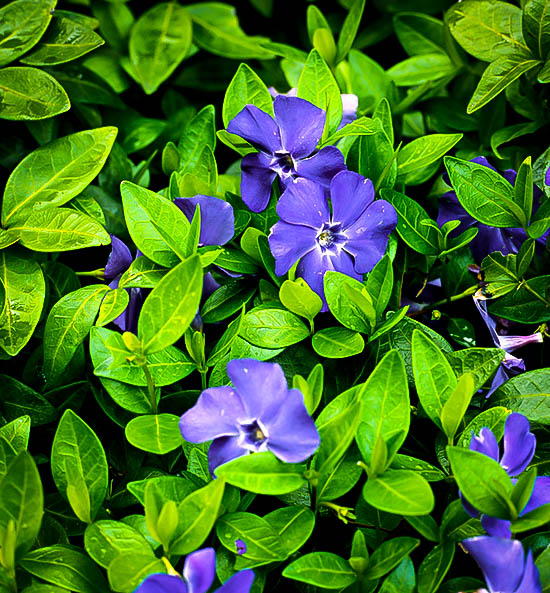
Description
VINCA MINOR
If you’ve been searching for something that handles the trickiest corners of your Connecticut garden—those dry patches under the big oak trees, the shady spots where nothing else wants to grow, the slopes that need holding—then lesser periwinkle is about to become your secret weapon. This groundcover is the definition of reliable, the plant that asks for nothing and gives everything. Once it settles in, it’ll spread across difficult terrain with quiet determination, all while producing charming little violet-blue flowers that brighten even the shadiest days.
What it looks like
Lesser periwinkle is a low, trailing evergreen that typically grows just 4 to 8 inches tall, making it perfect for tucking into spaces where taller plants would overwhelm. The glossy, dark green leaves are small and oval, arranged neatly along creeping stems that root as they spread. In spring and early summer, delicate five-petaled flowers appear in shades of lavender-blue, violet, or occasionally white—they’re small but utterly charming, with a gentle presence that somehow feels both modest and magical. The foliage remains green throughout Connecticut winters, providing year-round visual interest.
Growing it in your garden
VINCA MINOR thrives in conditions where many plants would simply give up. It’s absolutely unfussy about soil—clay, sandy, loam, it adapts to whatever you’ve got. Dry shade? That’s its specialty. Damp, poorly draining spots? No problem. This is the groundcover for the places you’d forgotten about, the areas that always seemed too difficult to bother with. While it prefers well-draining soil and moderate moisture, what makes it so valuable is that it doesn’t require either. Plant it on slopes where erosion is an issue, under trees where competition is fierce, or along foundation plantings where you want something reliable and low-maintenance.
Through the seasons
Spring is when lesser periwinkle really shines. As the weather warms, the leaves take on a fresh, vigorous appearance, and suddenly the ground is studded with those delightful little flowers. Bloom season typically extends from April through June in Connecticut, though you may see sporadic flowers throughout the growing season. In summer, the foliage provides a dense, attractive mat that suppresses weeds while requiring virtually no attention from you. Fall sees no dramatic color change—the leaves remain that deep evergreen—but this consistency is actually part of the plant’s charm. Winter is when you truly appreciate this groundcover. While deciduous plants are bare sticks, VINCA MINOR keeps its composure, maintaining its color and structure even under snow.
Where it shines
Lesser periwinkle is the answer to countless gardening challenges in New England. It’s exceptional for erosion control on banks and slopes, gradually knitting together the soil with its spreading stems. Under deciduous trees, where shade is dense and tree roots compete for moisture, it flourishes when shade-loving companions might struggle. It works beautifully along shaded walkways, creates attractive edging around foundation plantings, and can even soften the appearance of rocky or difficult terrain. In containers or hanging baskets, it cascades gracefully. Many gardeners in Connecticut use it to transition from cultivated beds into more naturalized areas—it’s refined enough for deliberate design but tough enough to handle the real world.
Perfect companions
Lesser periwinkle pairs beautifully with other shade-tolerant plants. Consider combining it with hellebores for winter interest, with hostas for foliage contrast, or with shade-loving ferns for texture. Spring bulbs like snowdrops and crocuses pop wonderfully when planted through a VINCA MINOR carpet. In shadier foundation plantings, pair it with evergreens like Japanese yew or dwarf boxwood for structure, allowing the periwinkle to soften the edges. Even in sunnier spots, it complements sedums, thyme, and other ground-hugging plants that share its no-fuss attitude.
Care tips
Here’s the honest truth: once established, lesser periwinkle barely needs you. Water regularly during the first season to help it settle in, but after that, it’s essentially on its own. It doesn’t require fertilizing—poor soil actually keeps it from becoming too aggressive. It doesn’t need pruning, though you can tidy it up in early spring if desired. The main thing to watch for is that it can occasionally be susceptible to rust or leaf spot in extremely wet conditions, but well-draining soil prevents most issues. In Connecticut’s climate, it’s completely winter-hardy and asks nothing of you during the cold months.
Quick facts
- Hardiness Zone: 4-9
- Mature Height & Spread: 4-8 inches tall, spreads 12-24 inches or more
- Bloom Season: April-June (sporadic summer bloom)
- Light Requirements: Shade to part shade (tolerates full shade)
- Water Needs: Low to moderate once established; drought-tolerant
- Available at: Both our retail and wholesale locations.