Lily turf

LIRIOPE MUSCARI

If you’ve been searching for something that handles wet soil, deep shade, and Connecticut winters without complaint, while still delivering months of delicate purple flowers and textured foliage—Lily Turf might be your answer. This unassuming little plant works harder than it looks, offering the reliable grace of ornamental grass combined with the surprising bonus of late-summer blooms. It’s the kind of plant that quietly proves itself year after year, never demanding much but consistently delivering.

What it looks like

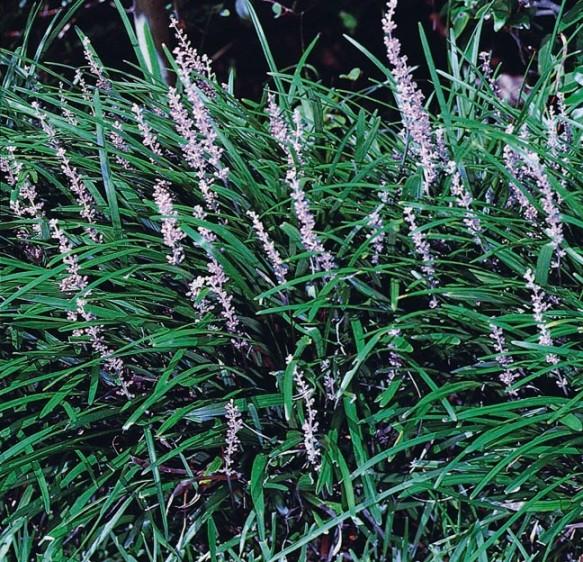
Lily Turf forms dense, fountain-like clumps of narrow, dark green, strap-like leaves that stay relatively evergreen through Connecticut winters—though they may take on a bronze tint in the coldest months, which honestly just adds to its winter interest. From mid-August through September, slender spikes of tiny lavender-purple flowers emerge from the foliage, creating a delicate, airy effect that seems to float above the leaves. The blooms are followed by glossy black berries that persist into fall, providing additional visual interest and food for birds. The overall texture is fine and graceful, making it an excellent choice for adding movement and definition to garden beds.

Growing it in your garden

One of the most appealing qualities of LIRIOPE MUSCARI is its remarkable adaptability. This plant genuinely doesn’t care whether you plant it in full sun or deep shade—it thrives in both conditions, which is rarer than you’d think. It tolerates everything from poor, compacted soil to areas that stay boggy well into spring. If your Connecticut garden has challenging spots where other plants seem to give up, Lily Turf will establish itself without drama. It spreads slowly and steadily through underground rhizomes, gradually creating fuller clumps over time.

Through the seasons

Spring brings fresh green growth as this plant awakens from dormancy, quickly establishing its lush clumps. Summer sees it maintaining its attractive mounding form, staying neat and attractive without deadheading or fussing. Late summer and early fall—when many other plants are winding down—is when Lily Turf truly shines, with those purple flower spikes providing color during a transitional season. Even as temperatures drop and the foliage darkens, the persistent black berries keep the plant looking sophisticated through the earliest weeks of winter.

Where it shines

Plant Lily Turf as an edging along garden beds, pathways, or the front of borders where its fine texture and flower spikes can be appreciated up close. It’s exceptional in shade gardens beneath trees where its ability to thrive without full sun means you’re not fighting nature—you’re working with it. Use it in containers and combination planters for long-season texture and late-summer color. It’s magnificent in mass plantings across difficult areas, where its spreading habit will gradually fill in and create an elegant, unified look. It also makes a wonderful choice for rain gardens or low-lying areas that get boggy, since it handles moisture beautifully.

Perfect companions

Pair Lily Turf with shade-tolerant hostas for contrasting foliage textures, or with hellebores for extended seasonal interest. It looks wonderful alongside heuchera varieties that offer different foliage colors and tones. In sunnier spots, combine it with coreopsis, Russian sage, or salvia to create layers of texture and late-season color. Shade-loving ferns are excellent companions, as are bleeding heart and astilbe in moist areas. The fine texture of Lily Turf plays beautifully with any larger-leafed plants, creating visual balance in mixed borders.

Care tips

Lily Turf is one of those plants that rewards your neglect more than your obsessive attention. Water it regularly during its first growing season to establish a strong root system, but once settled, it’s remarkably drought-tolerant even in full sun. Cut back the foliage in early spring before new growth emerges—you can wait until late February or early March in Connecticut. This removes any winter-damaged leaves and makes room for fresh growth. It rarely needs division, but if you want to share it or rejuvenate an older planting, late spring is the right time. Fertilizer is entirely optional; Lily Turf is happy to perform beautifully in poor soil. In fact, rich soil sometimes encourages excessive foliage at the expense of flowers, so restraint is wise.

Quick facts

  • Hardiness Zone: 5-10 (reliably hardy throughout Connecticut)
  • Mature Height & Spread: 12-15 inches tall, 12-18 inches wide
  • Bloom Season: Late August through September
  • Light Requirements: Full sun to full shade
  • Water Needs: Moderate; drought-tolerant once established; tolerates wet conditions
  • Available at: Both our retail and wholesale locations
Lily turf

Abundant blue flower spikes rise above the attractive, tufted arching, grass-like foliage followed by clusters of black berries. Superior edging, border or groundcover. Tolerates drier conditions when established. Evergreen.

Pot Size (gallons), Height: #1

Description

Lily turf

LIRIOPE MUSCARI

If you’ve been searching for something that handles wet soil, deep shade, and Connecticut winters without complaint, while still delivering months of delicate purple flowers and textured foliage—Lily Turf might be your answer. This unassuming little plant works harder than it looks, offering the reliable grace of ornamental grass combined with the surprising bonus of late-summer blooms. It’s the kind of plant that quietly proves itself year after year, never demanding much but consistently delivering.

What it looks like

Lily Turf forms dense, fountain-like clumps of narrow, dark green, strap-like leaves that stay relatively evergreen through Connecticut winters—though they may take on a bronze tint in the coldest months, which honestly just adds to its winter interest. From mid-August through September, slender spikes of tiny lavender-purple flowers emerge from the foliage, creating a delicate, airy effect that seems to float above the leaves. The blooms are followed by glossy black berries that persist into fall, providing additional visual interest and food for birds. The overall texture is fine and graceful, making it an excellent choice for adding movement and definition to garden beds.

Growing it in your garden

One of the most appealing qualities of LIRIOPE MUSCARI is its remarkable adaptability. This plant genuinely doesn’t care whether you plant it in full sun or deep shade—it thrives in both conditions, which is rarer than you’d think. It tolerates everything from poor, compacted soil to areas that stay boggy well into spring. If your Connecticut garden has challenging spots where other plants seem to give up, Lily Turf will establish itself without drama. It spreads slowly and steadily through underground rhizomes, gradually creating fuller clumps over time.

Through the seasons

Spring brings fresh green growth as this plant awakens from dormancy, quickly establishing its lush clumps. Summer sees it maintaining its attractive mounding form, staying neat and attractive without deadheading or fussing. Late summer and early fall—when many other plants are winding down—is when Lily Turf truly shines, with those purple flower spikes providing color during a transitional season. Even as temperatures drop and the foliage darkens, the persistent black berries keep the plant looking sophisticated through the earliest weeks of winter.

Where it shines

Plant Lily Turf as an edging along garden beds, pathways, or the front of borders where its fine texture and flower spikes can be appreciated up close. It’s exceptional in shade gardens beneath trees where its ability to thrive without full sun means you’re not fighting nature—you’re working with it. Use it in containers and combination planters for long-season texture and late-summer color. It’s magnificent in mass plantings across difficult areas, where its spreading habit will gradually fill in and create an elegant, unified look. It also makes a wonderful choice for rain gardens or low-lying areas that get boggy, since it handles moisture beautifully.

Perfect companions

Pair Lily Turf with shade-tolerant hostas for contrasting foliage textures, or with hellebores for extended seasonal interest. It looks wonderful alongside heuchera varieties that offer different foliage colors and tones. In sunnier spots, combine it with coreopsis, Russian sage, or salvia to create layers of texture and late-season color. Shade-loving ferns are excellent companions, as are bleeding heart and astilbe in moist areas. The fine texture of Lily Turf plays beautifully with any larger-leafed plants, creating visual balance in mixed borders.

Care tips

Lily Turf is one of those plants that rewards your neglect more than your obsessive attention. Water it regularly during its first growing season to establish a strong root system, but once settled, it’s remarkably drought-tolerant even in full sun. Cut back the foliage in early spring before new growth emerges—you can wait until late February or early March in Connecticut. This removes any winter-damaged leaves and makes room for fresh growth. It rarely needs division, but if you want to share it or rejuvenate an older planting, late spring is the right time. Fertilizer is entirely optional; Lily Turf is happy to perform beautifully in poor soil. In fact, rich soil sometimes encourages excessive foliage at the expense of flowers, so restraint is wise.

Quick facts

  • Hardiness Zone: 5-10 (reliably hardy throughout Connecticut)
  • Mature Height & Spread: 12-15 inches tall, 12-18 inches wide
  • Bloom Season: Late August through September
  • Light Requirements: Full sun to full shade
  • Water Needs: Moderate; drought-tolerant once established; tolerates wet conditions
  • Available at: Both our retail and wholesale locations