MANDEVILLA SANDERI

What if one plant could wrap your summer porch in pure tropical romance without the plane ticket? The Mandevilla does exactly that—delivering clusters of funnel-shaped flowers in shades of pink, red, and white that look almost too perfect to be real. These aren’t just pretty faces either. Mandevillas are vigorous, eager growers that will scramble up a trellis, cascade from a hanging basket, or weave through a mailbox with genuine enthusiasm. For Connecticut gardeners who’ve fallen in love with the idea of bringing a little Caribbean flair to their summer spaces, Mandevilla is your secret weapon.

What it looks like

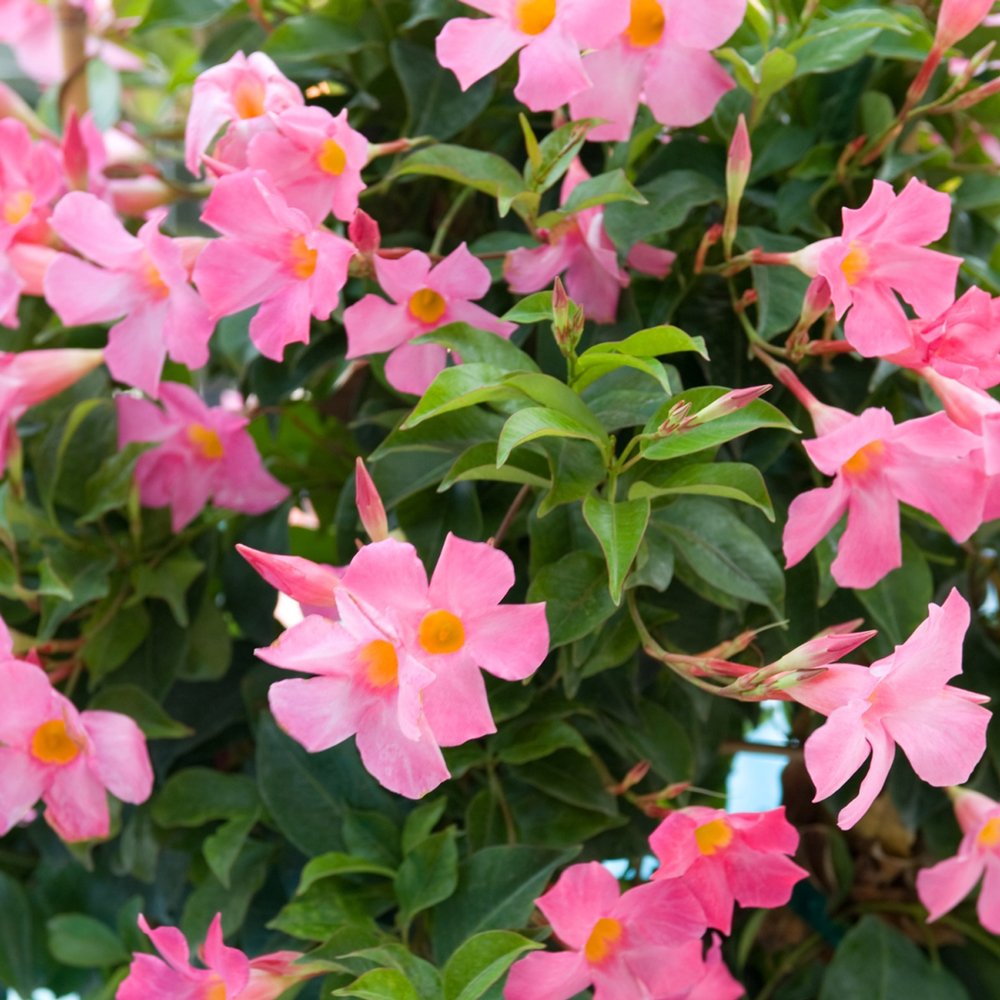
Imagine glossy, deep green leaves—oval and elegant—forming a lush backdrop for flowers that seem almost sculptural in their perfection. The blooms are the real star here: five-petaled trumpets typically measuring two to three inches across, with that characteristic white throat that really pops against the vibrant pink or red outer petals. Some varieties blush with softer rose tones; others are bold crimson. New flowers continuously emerge throughout the growing season, creating an almost overwhelming abundance of color from early summer right through fall frost. The vine itself is twining and semi-woody, ready to climb, trail, or sprawl depending on how you guide it.

Growing it in your garden

Here’s the thing about Mandevilla in Connecticut: it’s a tropical plant, which means it won’t survive our winters outdoors, but that’s actually fine. Think of it as an annual or tender perennial—a glorious summer performer that you can overwinter indoors if you’re feeling ambitious, or simply replant fresh each season. Plant it in well-draining soil with plenty of organic matter worked in. Position it where it gets at least six to eight hours of direct sun daily; this is non-negotiable if you want those flowers to really proliferate. The more sun, the more blooms. If you’re growing it in a container—which many Connecticut gardeners do—make sure that container has good drainage holes and that you’re using quality potting soil, not garden soil.

Through the seasons

Mandevilla’s season is gloriously concentrated. Plant it outdoors after the last frost date in May, and it will spend June establishing itself, with flowers beginning to emerge in late June or early July. July through September is peak flowering time—when the plant really puts on its show. As temperatures cool in October and frost threatens, the plant slows down, and that’s your cue to either enjoy the final blooms before frost takes it, or bring it indoors for overwintering. If you do bring it inside, place it in a bright window and reduce watering significantly through the winter months.

Where it shines

Mandevilla absolutely excels on sunny patios and decks, where it can climb a sturdy trellis or obelisk and create living walls of flowers. It’s stunning cascading from hanging baskets on a bright porch, where the flowers dangle down like jewels. Train it around a mailbox post, weave it through deck railings, or let it climb a pergola. Container growing is particularly popular in Connecticut because it keeps the plant portable—you can move it to catch the best sun exposure, and it’s easy to bring inside when frost threatens. The plant is also excellent for creating privacy screens on sunny spots; plant several specimens along a fence line or arbor.

Perfect companions

Pair Mandevilla with other heat-loving, sun-worshipping annuals and tender perennials. Creeping Fig creates interesting textural contrast. Ornamental sweet potato vines in chartreuse or burgundy complement the flowers beautifully. Purple-leafed alternanthera or coleus provides a dramatic background. For a container combination, try pairing Mandevilla with trailing petunias or diascia at the base—the lower-growing plants fill in while the Mandevilla climbs. Silvery dusty miller adds sophisticated texture around the base of a trellis-trained specimen.

Care tips

Once established, Mandevilla is relatively low-maintenance. Water regularly during hot weather—container-grown plants may need daily watering in peak summer—but let the soil dry slightly between waterings. Overwatering is the main enemy here. Feed monthly with a balanced fertilizer or a formula slightly higher in phosphorus to encourage flowering. Pinch back new growth early in the season if you want bushier, more branching growth; let it grow freely if you want height quickly. Watch for spider mites in very hot, dry conditions, and spray with water or insecticidal soap if needed. That’s truly it. No fussy pruning required.

Quick facts

  • Hardiness Zone: Tender perennial; grown as annual in Connecticut (Zones 6-7)
  • Mature Height & Spread: 6-10 feet as a climber, 3-4 feet in containers depending on support and variety
  • Bloom Season: June through September, peak July-August
  • Light Requirements: Full sun (6-8+ hours daily for maximum flowers)
  • Water Needs: Moderate; regular watering during growing season, drier in winter if overwintering indoors
  • Available at: Both our retail and wholesale locations

Mandevilla

Category:

When growing as a vine, small trellises (to 3’ tall) are usually inserted in the containers for the plants to grow upon. Bring plants indoors in fall before frost and overwinter them in a warm, sunny room. Prune plant stems back before placing them outside in spring after last frost date.

Zoning: 10-11
Pot Size (gallons), Height: #3

Description

MANDEVILLA SANDERI

What if one plant could wrap your summer porch in pure tropical romance without the plane ticket? The Mandevilla does exactly that—delivering clusters of funnel-shaped flowers in shades of pink, red, and white that look almost too perfect to be real. These aren’t just pretty faces either. Mandevillas are vigorous, eager growers that will scramble up a trellis, cascade from a hanging basket, or weave through a mailbox with genuine enthusiasm. For Connecticut gardeners who’ve fallen in love with the idea of bringing a little Caribbean flair to their summer spaces, Mandevilla is your secret weapon.

What it looks like

Imagine glossy, deep green leaves—oval and elegant—forming a lush backdrop for flowers that seem almost sculptural in their perfection. The blooms are the real star here: five-petaled trumpets typically measuring two to three inches across, with that characteristic white throat that really pops against the vibrant pink or red outer petals. Some varieties blush with softer rose tones; others are bold crimson. New flowers continuously emerge throughout the growing season, creating an almost overwhelming abundance of color from early summer right through fall frost. The vine itself is twining and semi-woody, ready to climb, trail, or sprawl depending on how you guide it.

Growing it in your garden

Here’s the thing about Mandevilla in Connecticut: it’s a tropical plant, which means it won’t survive our winters outdoors, but that’s actually fine. Think of it as an annual or tender perennial—a glorious summer performer that you can overwinter indoors if you’re feeling ambitious, or simply replant fresh each season. Plant it in well-draining soil with plenty of organic matter worked in. Position it where it gets at least six to eight hours of direct sun daily; this is non-negotiable if you want those flowers to really proliferate. The more sun, the more blooms. If you’re growing it in a container—which many Connecticut gardeners do—make sure that container has good drainage holes and that you’re using quality potting soil, not garden soil.

Through the seasons

Mandevilla’s season is gloriously concentrated. Plant it outdoors after the last frost date in May, and it will spend June establishing itself, with flowers beginning to emerge in late June or early July. July through September is peak flowering time—when the plant really puts on its show. As temperatures cool in October and frost threatens, the plant slows down, and that’s your cue to either enjoy the final blooms before frost takes it, or bring it indoors for overwintering. If you do bring it inside, place it in a bright window and reduce watering significantly through the winter months.

Where it shines

Mandevilla absolutely excels on sunny patios and decks, where it can climb a sturdy trellis or obelisk and create living walls of flowers. It’s stunning cascading from hanging baskets on a bright porch, where the flowers dangle down like jewels. Train it around a mailbox post, weave it through deck railings, or let it climb a pergola. Container growing is particularly popular in Connecticut because it keeps the plant portable—you can move it to catch the best sun exposure, and it’s easy to bring inside when frost threatens. The plant is also excellent for creating privacy screens on sunny spots; plant several specimens along a fence line or arbor.

Perfect companions

Pair Mandevilla with other heat-loving, sun-worshipping annuals and tender perennials. Creeping Fig creates interesting textural contrast. Ornamental sweet potato vines in chartreuse or burgundy complement the flowers beautifully. Purple-leafed alternanthera or coleus provides a dramatic background. For a container combination, try pairing Mandevilla with trailing petunias or diascia at the base—the lower-growing plants fill in while the Mandevilla climbs. Silvery dusty miller adds sophisticated texture around the base of a trellis-trained specimen.

Care tips

Once established, Mandevilla is relatively low-maintenance. Water regularly during hot weather—container-grown plants may need daily watering in peak summer—but let the soil dry slightly between waterings. Overwatering is the main enemy here. Feed monthly with a balanced fertilizer or a formula slightly higher in phosphorus to encourage flowering. Pinch back new growth early in the season if you want bushier, more branching growth; let it grow freely if you want height quickly. Watch for spider mites in very hot, dry conditions, and spray with water or insecticidal soap if needed. That’s truly it. No fussy pruning required.

Quick facts

  • Hardiness Zone: Tender perennial; grown as annual in Connecticut (Zones 6-7)
  • Mature Height & Spread: 6-10 feet as a climber, 3-4 feet in containers depending on support and variety
  • Bloom Season: June through September, peak July-August
  • Light Requirements: Full sun (6-8+ hours daily for maximum flowers)
  • Water Needs: Moderate; regular watering during growing season, drier in winter if overwintering indoors
  • Available at: Both our retail and wholesale locations