
Description

MYRICA PENNSYLVANICA
There’s something almost magical about running your fingers along bayberry leaves and catching that spicy, clean fragrance that’s been prized for centuries. This native New England shrub isn’t just a pretty face—it’s a workhorse that transforms difficult spots into something genuinely special. If you’ve got sandy soil, salty conditions, or a dry slope that laughs at most plants, bayberry is your answer. Better yet, it produces those charming wax-coated berries that colonial homemakers melted into candles, filling their homes with that signature scent that still smells like “traditional” to many of us.
What it looks like
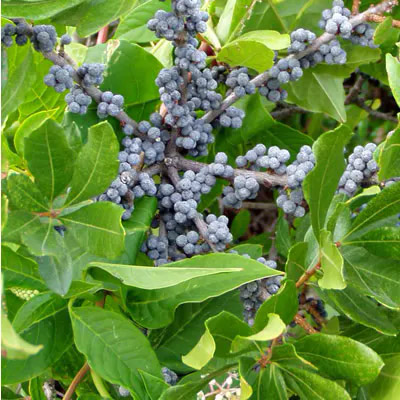
Bayberry is an elegant, multi-stemmed native shrub with a naturally graceful, somewhat loose branching habit. The narrow, lance-shaped leaves are a soft gray-green, and they hold that aromatic quality year-round—just brushing past releases that distinctive spicy-sweet scent that’s utterly distinctive. Come fall, the foliage shifts to warm bronze and burgundy tones before dropping. The real show comes in late summer through winter, when the female plants produce their signature waxy gray berries that persist on the stems well into the cold months. These berries are what made bayberry famous, and they’re genuinely beautiful.
Growing it in your garden
This is where bayberry truly shines for Connecticut gardeners. It thrives in sandy, gravelly, or poor soil where other plants struggle. It handles salt spray without complaint, making it perfect for coastal properties or driveways where winter salt creep is inevitable. Bayberry tolerates dry conditions beautifully and actually prefers well-drained soil—wet, heavy clay will make it unhappy. The plant is tough as nails once established, needing minimal fussing. Plant it where you want it to stay, as it develops a deep root system that doesn’t appreciate disturbance. For the best berry production, plant at least one male plant among your females, since they require cross-pollination to set fruit.
Through the seasons
Spring brings fresh, delicate foliage on an increasingly full plant, with inconspicuous flowers that hint at the bounty to come. Summer sees the shrub fill out into a handsome, billowing form, with that marvelous aromatic foliage ready to scent your fingers or a passing breeze. Fall transforms it with warm bronze tones, but the real magic happens as temperatures drop and the gray berries mature. Winter is bayberry’s moment—when most shrubs look tired, those pearl-gray berries gleam against bare branches and evergreen companions, providing color and texture through the coldest months. It’s one of the few Connecticut native shrubs that earns its keep visually throughout the entire year.
Where it shines
Bayberry is your solution for those problem areas that have defeated lesser plants. Sandy banks, dry slopes, coastal properties, windy exposures—this native practically laughs at these challenges. It’s gorgeous in a mixed border, beautiful in a naturalistic planting, and absolutely stellar in a coastal garden where its salt tolerance is genuine. Group several plants together for a fuller effect, or use it as an accent specimen where you want interesting texture and late-season color. It’s also excellent for erosion control on sandy soil and makes a wonderful informal hedge or windbreak.
Perfect companions
Pair bayberry with other tough Connecticut natives that appreciate similar conditions: beach roses (ROSA VIRGINIANA), native junipers, chokeberry (ARONIA species), and inkberry holly. Underplant with bearberry (ARCTOSTAPHYLOS UVA-URSI), native sedges, and lamb’s ear for textural contrast. The gray berries look striking next to evergreens like Eastern red cedar or ornamental grasses that provide winter interest. For coastal gardens, combine it with salt-tolerant companions like highbush blueberry and winterberry holly.
Care tips
Bayberry is refreshingly low-maintenance once established. Water regularly during the first growing season, then let it rely on rainfall. It rarely needs fertilizing—in fact, poor soil is often its preference. Minimal pruning is necessary; light shaping after flowering keeps it tidy if desired, but it’s lovely left to its natural form. No significant pests or diseases trouble it in Connecticut. The wonderful scent means deer typically leave it alone. If you want maximum berry production, ensure you have both male and female plants, and provide full sun to part shade.
Quick facts
- Hardiness Zone: Zones 3-6
- Mature Height & Spread: 5-9 feet tall and wide
- Bloom Season: May (inconspicuous); berries August-February
- Light Requirements: Full sun to part shade
- Water Needs: Low; prefers dry to moderate moisture
- Available at: Both our retail and wholesale locations