
Description
ILEX X AQUIPERNYI ‘NELLIE STEVENS’
If you’ve been searching for an evergreen that actually earns its place in a Connecticut garden—one that delivers dark, glossy foliage, reliable berry production, and genuine structural presence—stop looking. Nellie Stevens Holly is the dependable workhorse that transforms from a graceful shrub into a confident small tree, standing tall through winter when everything else has surrendered to frost. This hybrid holly brings together the best traits of its parents: the hardiness and berry abundance we need in New England, wrapped in an elegant, naturally pyramidal form that looks intentional even when you’re not fussing over it.
What it looks like
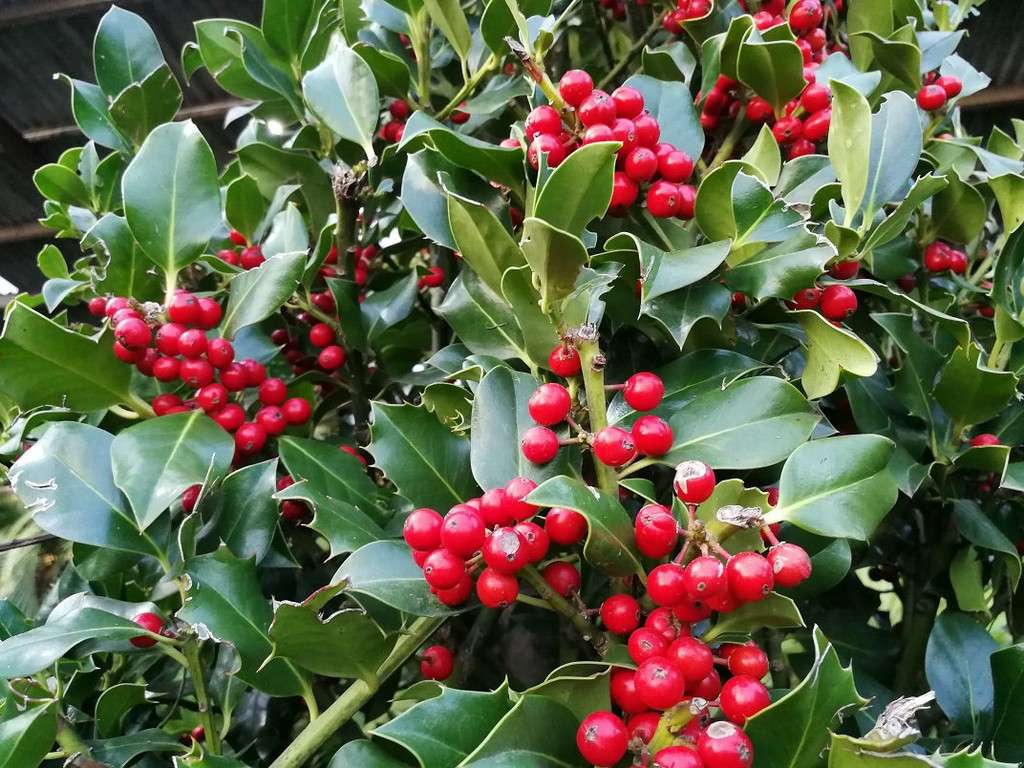
Nellie Stevens is the kind of plant that makes you stop and look twice. Its deep green, finely textured foliage has just enough of a subtle sheen to catch the light on winter mornings. The leaves are smaller and more refined than some hollies—less dramatically spiky, more sophisticated—creating an almost feathery appearance that softens its strong architectural bones. Come fall, this is where Nellie Stevens truly shines: brilliant red berries crowd the branches in such profusion that sometimes you can barely see the foliage underneath. These aren’t sparse, scattered fruits; they’re a genuine statement, persisting well into winter and providing vital food for cedar waxwings and robins when the Connecticut landscape has turned lean.
The plant grows naturally into a compact, pyramidal form—no aggressive pruning required—reaching toward the sky in a way that suggests intention without demanding constant correction from you. This is architecture that respects both your garden and your time.
Growing it in your garden
Nellie Stevens wants sun, and in Connecticut, more sun is always better. Plant it where it receives at least six hours of direct daily light—ideally eight or more. It’s not fussy about soil, tolerating everything from slightly acidic to neutral pH, and it handles both well-draining and even somewhat clay-heavy soils without complaint. What matters most is avoiding waterlogged conditions; while it’s far more forgiving than some plants, persistent wet feet in winter can eventually wear on it.
This is one of the cold-hardy hybrid hollies, specifically bred to handle our climate. Unlike some fancy southern varieties that arrive with high expectations and low survival rates, Nellie Stevens knows how to live here. It settles in, establishes itself, and simply performs year after year.
Through the seasons
Spring brings new growth in shades of pale green and bronze, a subtle but lovely transition. By early summer, the foliage has deepened to that rich, permanent green you’ll appreciate all year long. Late summer into fall, the magic happens: small cream-colored flowers appear—modest and understated, but they’re crucial for berry development. By November, the red berries have fully colored, creating a spectacular display that intensifies as temperatures drop.
Winter is when many gardeners finally understand why they planted this. While deciduous neighbors stand bare and apologetic, Nellie Stevens remains strikingly present—dark, full, dignified, and absolutely dependable. The berries persist through January and into February if the birds haven’t claimed them, and the evergreen structure becomes a garden’s backbone when architectural interest is hardest to come by.
Where it shines
Use Nellie Stevens as a specimen plant where you want year-round presence and winter interest. It’s magnificent as a single accent in a mixed bed, equally effective grouped in threes for a stronger visual impact. It makes an excellent informal screen or hedge—tall enough to define space, attractive enough that you won’t regret seeing it up close. Plant it near your patio or visible from your kitchen window, where you can enjoy the berry display through the coldest months. It’s also perfect for creating that crucial vertical accent in a primarily horizontal landscape.
Perfect companions
Nellie Stevens pairs beautifully with shade-tolerant understory plants like hellebores, autumn ferns, and sweet woodruff. Its strong green structure is an excellent foil for gold-foliaged conifers like Hinoki cypress varieties. Add spring bulbs at its base—think hellebores or snowdrops—for early season interest beneath its protective branches. In a mixed border, it anchors lighter textures like butterfly bush or clethra, preventing the whole composition from feeling too wispy.
Care tips
Plant in spring or early fall to give it time to establish before winter stress. Water regularly during the first growing season, then deeply but less frequently once established—our New England rainfall typically handles maintenance watering. Prune only to remove dead wood or shape wayward branches; the plant’s natural form is already quite attractive. In spring, after the heaviest snows have cleared, you might gently remove any winter damage, but Nellie Stevens typically bounces back beautifully on its own. No special fertilizer is necessary; it’s not a heavy feeder. Enjoy watching the birds discover those berries—it’s one of the real pleasures of growing this plant.
Quick facts
- Hardiness Zone: 5–9
- Mature Height & Spread: 15–20 feet tall, 10–12 feet wide
- Bloom Season: Late summer (flowers); berries persist fall and winter
- Light Requirements: Full sun to partial shade
- Water Needs: Moderate; prefers well-draining soil, avoid prolonged wet conditions
- Available at: Both our retail and wholesale locations