
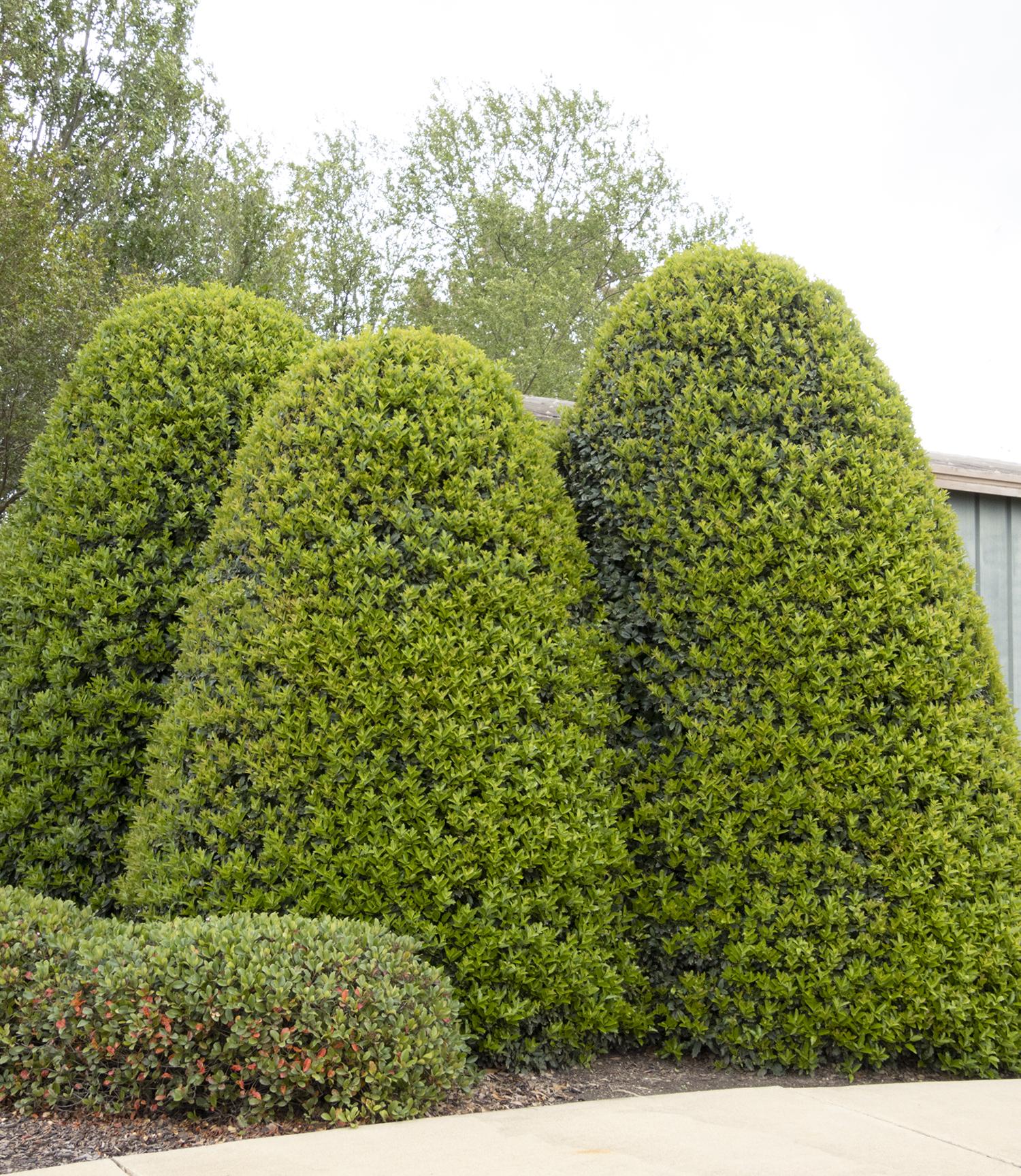
Description

ILEX x ALTACLERENSIS ‘WILSONII’
What if you could have a holly that doesn’t poke you every time you brush past it? The Oakleaf Holly is the civilized cousin in the holly family—architectural, elegant, and surprisingly friendly to anyone within arm’s reach. Native to the southeastern United States but surprisingly at home in Connecticut gardens, this evergreen shrub brings a sense of sophistication that standard hollies simply can’t match. With deeply lobed leaves that genuinely look more oak than holly and clusters of red berries that last well into winter, it’s the kind of plant that makes people stop and ask, “What is that?”
What it looks like
The moment you see an Oakleaf Holly, you understand why it has that name. Instead of the spiky, pointy foliage you expect from hollies, this one produces deeply cut, lobed leaves that could almost pass for miniature oak leaves—soft-textured and refined. The leaves are a rich, dark evergreen year-round, providing reliable structure even in the depths of winter. In late spring, delicate cream-colored flowers appear, working hard to attract pollinators. But the real show happens in fall and winter, when clusters of bright red berries develop on female plants, creating a stunning contrast against the dark foliage and providing crucial food for winter birds.
Growing it in your garden
Here’s the beautiful part: Oakleaf Holly is genuinely easygoing. It adapts to Connecticut’s variable conditions without complaint, growing steadily in partial shade to full sun, though it tends to look its best with at least a few hours of sun daily to encourage berry production. Unlike many hollies that demand perfectly drained, acidic soil, ILEX x ALTACLERENSIS ‘WILSONII’ is flexible about soil pH and actually tolerates the heavy clay common in New England gardens better than you’d expect. Once established, it’s remarkably drought-tolerant, though consistent moisture the first year helps it settle in faster.
Through the seasons
Spring brings those charming pale flowers that won’t win any beauty contests but are certainly pretty in their delicate way. Summer is when the shrub earns its paycheck as architectural greenery, its lobed foliage creating interesting texture and movement as it matures. Fall is when berries ripen to their brilliant red, and this is where companion plantings really shine—the berries become focal points against autumn foliage. Winter is where Oakleaf Holly becomes invaluable in Connecticut gardens. While deciduous plants go dormant and bare, this shrub maintains its structure and color, its evergreen foliage and persistent berries providing form and visual interest during the long, gray months when we need it most.
Where it shines
Oakleaf Holly is remarkably versatile. Use it as a specimen plant where its distinctive foliage can be fully appreciated, or incorporate it into mixed shrub borders where its texture plays beautifully against finer-textured companions. It works wonderfully in naturalized woodland gardens, fitting in seamlessly with native understory plants. Because the foliage is less aggressive than typical hollies, it’s suitable for locations closer to pathways and seating areas where softer textures are appreciated. It’s also excellent for screening purposes—dense enough to provide privacy but with enough visual interest that it doesn’t feel fortress-like.
Perfect companions
Oakleaf Holly pairs beautifully with other shade-tolerant shrubs. Consider pairing it with ILEX GLABRA (Inkberry) for a holly-on-holly combination with contrasting foliage texture, or with ILEX VERTICILLATA (Winterberry) for a succession of berry interest. The fine texture of ITEA VIRGINICA (Sweetspire) or CALYCANTHUS FLORIDUS (Eastern Sweetshrub) creates a pleasing contrast to the bold oak-like leaves. For spring interest, underplant with shade-tolerant perennials like hellebores, sedges, or woodland asters.
Care tips
Oakleaf Holly needs minimal fussing. Prune only to shape or remove crossing branches in late winter; this plant’s naturally elegant form rarely requires heavy-handed correction. Water regularly during the first growing season to establish a deep root system. After that, it’s genuinely low-maintenance. Fertilizing isn’t usually necessary unless your soil is particularly poor—a light application of balanced slow-release fertilizer in early spring is plenty. No serious pests or diseases trouble this holly in Connecticut gardens, making it one of the easier evergreens to maintain long-term.
Quick facts
- Hardiness Zone: 5-9
- Mature Height & Spread: 12-15 feet tall, 8-10 feet wide (but can be pruned smaller)
- Bloom Season: Late spring
- Light Requirements: Partial shade to full sun
- Water Needs: Moderate; drought-tolerant once established
- Available at: Both our retail and wholesale locations