Description

PHLOX PANICULATA ‘FLAME CORAL’
What if one plant could deliver that lush, cottage garden abundance you’ve been daydreaming about, while actually thriving in Connecticut’s unpredictable summers? Meet Flame Coral Phlox—a perennial that brings the warmth of a sunset-painted sky right into your garden beds. This isn’t just another phlox; it’s a statement piece that commands attention from July through September, when the garden often needs it most.
What it looks like
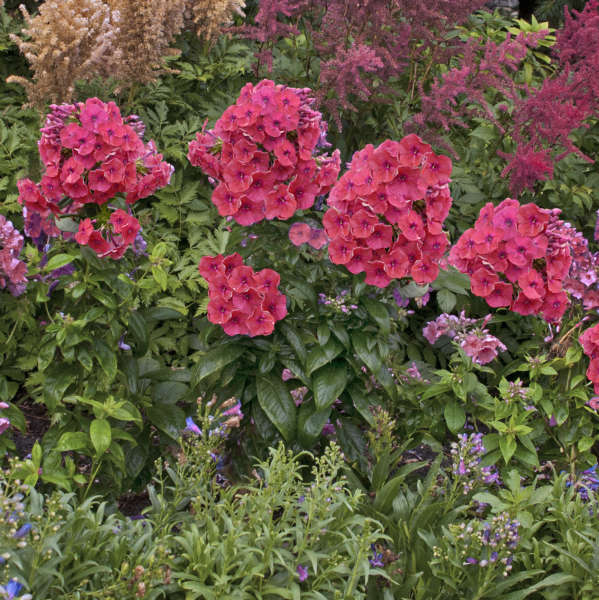
Flame Coral Phlox is a stunner with tall, sturdy stems crowned by massive flower panicles that glow in shades of coral-orange with a peachy undertone. The individual blooms are small and densely packed into those showy clusters that can stretch 8 to 10 inches long. What makes this variety special is the intensity of that coral coloring—it’s warm without being garish, sophisticated without being shy. The lance-shaped foliage is a neat, tidy green that serves as an excellent backdrop for the flowers, and the overall plant has an upright, architectural form that gives structure to any border planting.
Growing it in your garden
Flame Coral is one of those refreshingly straightforward perennials that actually enjoys New England summers. It prefers full sun (at least 6 hours daily) to produce those vivid blooms in their full glory, though it can tolerate light afternoon shade if your garden leans toward dappled conditions. Soil-wise, it’s not fussy—decent garden soil with decent drainage keeps it happy. Unlike some finicky phlox varieties, this one shows good resistance to powdery mildew, which is genuinely appreciated by Connecticut gardeners who’ve battled that frustration before. Plant it in spring or early fall, spacing plants about 24 inches apart to allow for good air circulation.
Through the seasons
Spring arrives with fresh green foliage emerging as the soil warms. By early summer, you’ll see the flower buds forming at the stem tips, creating anticipation. Then comes July, and the blooms unfurl in waves—and they just keep coming. Deadhead spent flowers regularly, and you’ll encourage continuous blooming well into September, sometimes even touching October if frost holds off. The flowers are delightfully fragrant in the evening and early morning, adding another sensory dimension to your garden. As temperatures cool in late autumn, the foliage takes on subtle bronze tones before fading back as the plant goes dormant. It returns reliably each spring—this is a perennial you can count on year after year.
Where it shines
Flame Coral Phlox is absolutely magnificent in mixed borders alongside coneflowers, black-eyed Susans, and ornamental grasses. The coral tones work beautifully with purple salvias, burgundy smoke bushes, or deep pink astilbes. It’s also a show-stopper in cutting gardens—these flowers last wonderfully in a vase and fill a room with fragrance. Plant it near seating areas where you can appreciate that evening scent. Because of its height (typically 3 to 4 feet), position it toward the middle or back of beds where it won’t shade out shorter plants. Container gardeners note: while phlox can be grown in containers, this particular variety is really designed to shine in-ground where its root system has room to flourish.
Perfect companions
Flame Coral plays beautifully with cool-toned perennials—imagine it alongside ‘Blue Fortune’ agastache or Salvia ‘Black and Blue.’ For a hot, energetic combination, pair it with golden rudbeckia or warm-toned daylilies. Ornamental grasses like ‘Karl Foerster’ feather reed grass create lovely textural contrast. It also combines wonderfully with late-season bloomers like Joe-Pye weed and Japanese anemones, creating a continual display when massed together.
Care tips
This phlox is a low-maintenance champion. Water consistently during establishment (spring and early summer), then taper back as the plant matures—it’s quite drought-tolerant once established. Deadheading encourages more blooms, so don’t be shy about snipping those spent flower heads. In early spring, thin stems to 4 or 5 per clump to encourage larger flower panicles and improve air circulation. A light application of compost in spring feeds the plant organically. Stake tall specimens if you’re in an exposed, windy location, though many gardeners find the stems sturdy enough to stand unassisted. Dividing plants every 3 to 4 years in spring keeps them vigorous and is an excellent way to propagate more for your garden or share with friends.
Quick facts
- Hardiness Zone: 4–8
- Mature Height & Spread: 3–4 feet tall, 2–3 feet wide
- Bloom Season: July through September
- Light Requirements: Full sun (6+ hours daily)
- Water Needs: Moderate; drought-tolerant once established
- Available at: Both our retail and wholesale locations.