
Description

PHOTINIA X FRASERI
If you’ve been searching for a plant that combines stunning year-round color with serious evergreen structure, Photinia might be exactly what your Connecticut garden has been waiting for. This hybrid beauty delivers that coveted red-tipped foliage that gardeners dream about, but here’s the best part: it’s not just a spring show. New growth emerges in brilliant shades of crimson and burgundy throughout the growing season, creating a plant that seems to be perpetually putting on a performance. Whether you’re looking for a dramatic focal point, a bold screening plant, or the perfect backbone for a mixed border, Photinia brings both architectural presence and color-changing magic.
What it looks like
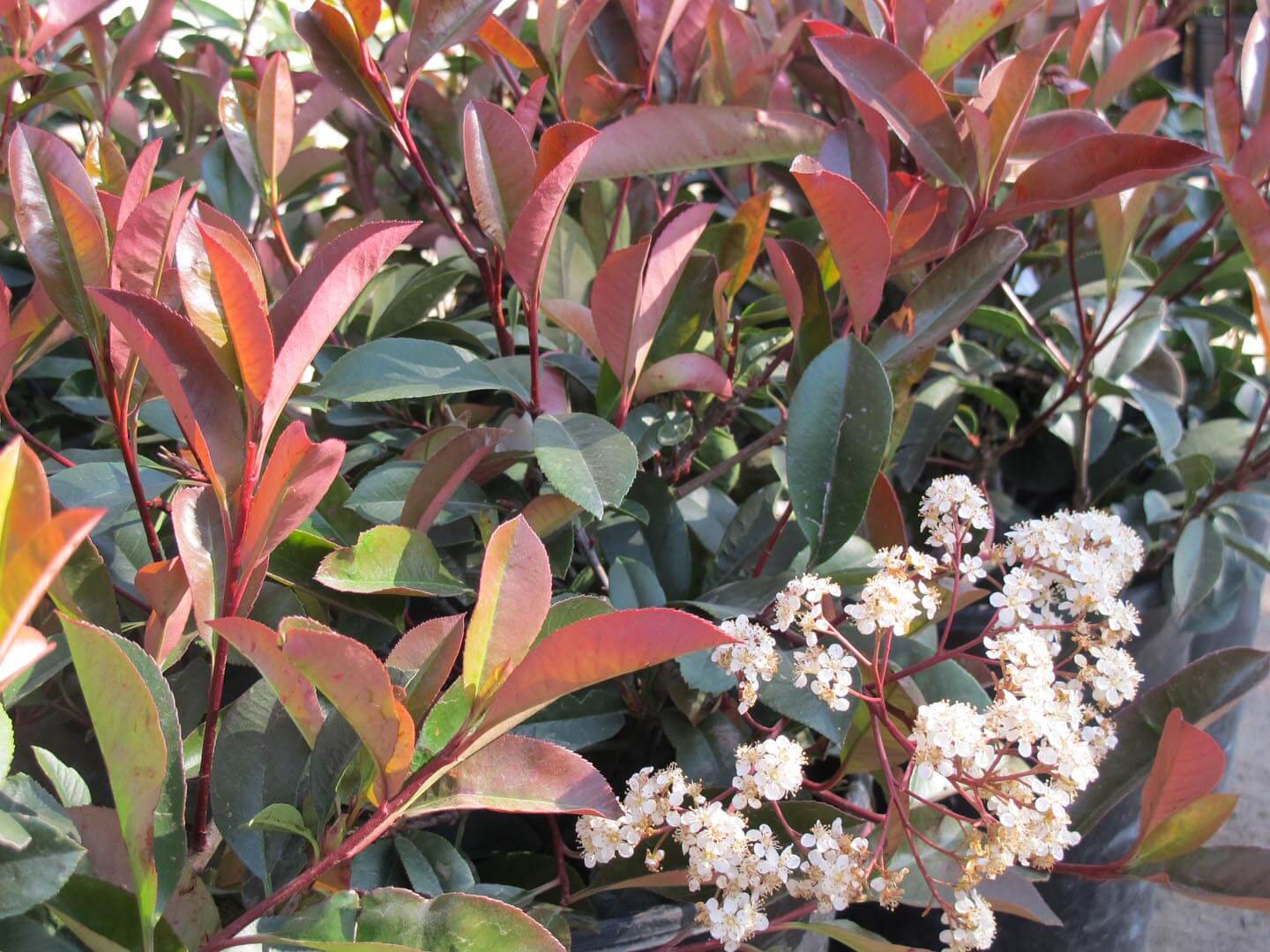
Photinia is a testament to what breeding for desirable traits can achieve. The glossy, leathery foliage emerges in deep red and burgundy tones before maturing to rich, lustrous green with red-tinged edges that persist throughout the season. The leaves are elongated and exceptionally glossy, almost appearing varnished, which catches light beautifully and adds dimension to the landscape. New flushes of growth—which can happen multiple times during the growing season in Connecticut gardens—create waves of that stunning crimson coloring that keep the plant looking fresh and dynamic. In spring, small white flowers appear in clusters, offering delicate interest before giving way to small red berries later in the season.
Growing it in your garden
Photinia is remarkably adaptable and far tougher than its ornamental appearance might suggest. It thrives in full sun to part shade, though you’ll get the most vibrant red coloration in full sun locations. The plant prefers well-draining soil and actually performs beautifully in Connecticut’s varied soil conditions, tolerating both slightly acidic and neutral pH levels. Space plants based on your intended use: closer together for a dense screen, further apart if you want them to develop into individual specimen plants. They’re fairly vigorous growers, so give them room to reach their mature size without constant pruning. In our New England climate, they’ll establish quickly if planted in spring or early fall, giving them plenty of time to develop a strong root system before their first winter.
Through the seasons
Spring is Photinia’s grand entrance, when new foliage emerges in those knockout red tones and delicate white flower clusters appear throughout the canopy. Summer sees the plant settle into its rhythm, with mature foliage providing solid, glossy green structure while new growth continues to add splashes of red. The plant remains fully evergreen through Connecticut’s winters, providing year-round presence and winter interest that deciduous alternatives simply can’t match. By late season, you might notice small red berries developing, which add another layer of visual appeal and can attract birds to your garden. Even on gray January days, the deep green and burgundy-tinged foliage catches whatever light exists and brings warmth to the winter landscape.
Where it shines
Photinia truly excels as a tall screening plant or privacy hedge, especially if you’re looking for something more sophisticated than traditional hedging material. Its dense growth habit and evergreen nature make it ideal for creating living walls that soften property lines while adding color throughout the year. Plant it as a specimen plant in a prominent location where its foliage can be appreciated up close. It works beautifully in foundation plantings, particularly when you want something that adds height and structure without feeling overly formal. Mixed borders benefit enormously from Photinia’s consistent form and reliable color. It’s also an excellent choice for areas where you need screening from neighbors or street views, delivering both function and beauty.
Perfect companions
Photinia’s glossy evergreen presence partners beautifully with softer-textured plants. Consider pairing it with ornamental grasses like MISCANTHUS or PANICUM for textural contrast. Silver-foliaged plants like ARTEMISIA or SENECIO create stunning color echoes with the red tones. Spring-blooming bulbs like tulips and alliums look sharp planted in front, creating a colorful foreground to the plant’s substantial backdrop. Low-growing evergreens like boxwood work well at its base, extending the sense of structure downward. Hydrangeas planted nearby can echo the red tones in their late-season color.
Care tips
Photinia is genuinely low-maintenance once established. Water regularly during its first growing season to help establish a deep root system. After that, it’s quite drought-tolerant, though it appreciates regular water during Connecticut’s drier summers. Prune lightly in late winter or early spring if you want to maintain a specific shape or size; this plant responds beautifully to pruning and quickly generates new red growth. If you notice any scale insects or other pests, address them promptly as with any plant. The foliage can occasionally be affected by fungal issues in very humid conditions, so ensure good air circulation if possible. In most Connecticut gardens, Photinia needs minimal intervention beyond occasional shaping.
Quick facts
- Hardiness Zone: Zones 6-9 (reliably hardy throughout Connecticut)
- Mature Height & Spread: 10-15 feet tall and 8-12 feet wide (varies with pruning)
- Bloom Season: Spring (white flowers); red berries in late season
- Light Requirements: Full sun to part shade (best red coloration in full sun)
- Water Needs: Moderate; drought-tolerant once established
- Available at: Both our retail and wholesale locations