
Description

PHYSOCARPUS OPULIFOLIUS
If you’ve been searching for a shrub that can take a punch—whether that’s harsh sun, poor soil, or the occasional neglect that comes with a busy life—Ninebark is your answer. This underrated native beauty gets its name from the way its bark peels in papery layers, revealing cinnamon and cream-colored undersides that steal the show in winter. But don’t let its toughness fool you into thinking it’s boring. With the right variety, Ninebark can be a genuine showstopper in any Connecticut garden, bringing color, texture, and reliable performance year after year.
What it looks like
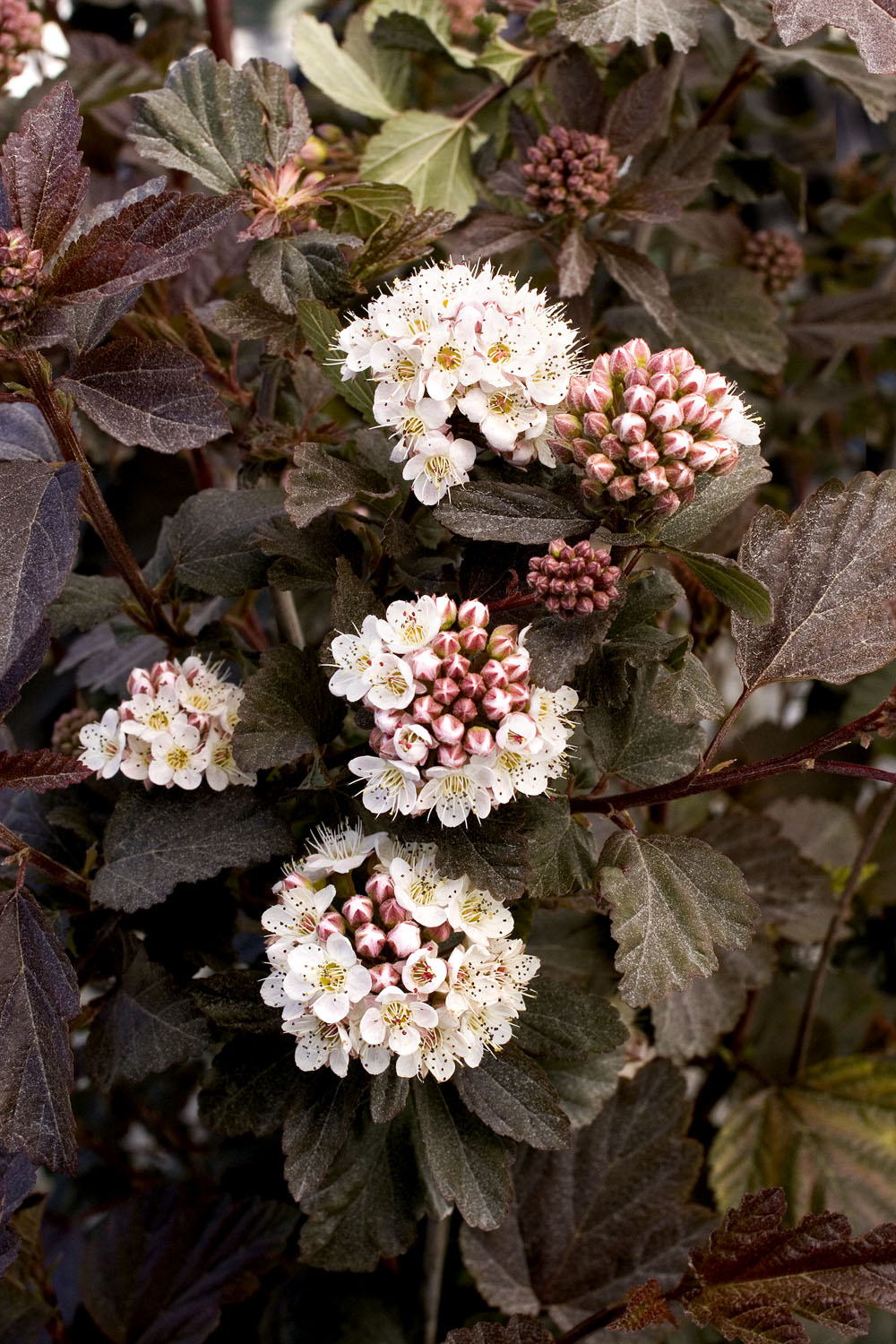
Ninebark is a deciduous shrub with an upright, vase-shaped habit that naturally fills in nicely without constant pruning. The leaves are the first thing you’ll notice—they’re deeply lobed and somewhat maple-like, which gives the plant an interesting texture even before the flowers arrive. Depending on the cultivar, foliage can range from soft green to stunning burgundy or deep purple that intensifies as temperatures cool.
In late spring to early summer, small white, pink, or red flowers appear in dense clusters along the stems. They’re not showy in the way some flashier shrubs are, but they’re charming and attract pollinators like nobody’s business. The real magic happens when the flowers fade and turn into decorative seed capsules that persist well into autumn, adding another layer of interest to the plant.
Growing it in your garden
This is where Ninebark really earns its reputation. It’s adaptable to nearly any soil condition—clay, sandy, acidic, alkaline, you name it. Unlike some plants that get temperamental about New England’s rocky, unpredictable soils, PHYSOCARPUS OPULIFOLIUS actually thrives in them. It tolerates drought once established, making it an excellent choice for slopes or challenging spots where watering isn’t convenient.
Ninebark is equally comfortable in full sun or partial shade, though the colored-foliage varieties look their best with at least six hours of direct sunlight to develop those rich, jewel-tone hues. Even in shadier locations, it remains healthy and full. Its cold-hardiness is never in question—it laughs at Connecticut winters and actually needs them to perform its best.
Through the seasons
Spring brings fresh growth and those delicate flower clusters that seem to emerge right when you need a little garden color. Summer is when foliage varieties really show their personality—’Diabolo’ glows with deep burgundy leaves, while ‘Summer Wine’ offers a dramatic blend of burgundy and copper. Fall brings a flush of color before the leaves drop, revealing the real treasure of the season: that exfoliating bark in shades of tan, brown, and cinnamon that becomes increasingly visible as the branches bare.
In winter, when many shrubs fade into the background, Ninebark’s shredding bark provides texture and visual interest that can make all the difference in a landscape that might otherwise feel bare. The persistent seed heads catch light and frost, adding dimension to the winter garden.
Where it shines
This shrub is perfect for mixed borders, foundation plantings, and hedgerow situations where its natural upright form works beautifully. It’s particularly valuable as a native plant choice—supporting local pollinators and wildlife while being undemanding about conditions. If you’re dealing with a difficult spot—a slope, a compacted area, or somewhere with poor drainage that other shrubs resent—Ninebark will settle in and thrive where others would sulk.
It also works wonderfully in informal screens and windbreak plantings. In a New England garden where winter winds are real and spring comes late, Ninebark’s reliability and structural interest make it an invaluable backbone plant.
Perfect companions
Ninebark pairs beautifully with other native shrubs like Serviceberry and Viburnum. Underplant it with shade-tolerant perennials like Coral Bells or Hosta to soften the base. The textural foliage also looks stunning paired with ornamental grasses like Karl Foerster Feather Reed Grass, which echo its vertical lines. For contrast, pair burgundy varieties with soft golden foliage plants like Spirea ‘Golden Princess’.
Care tips
Ninebark requires very little maintenance once established. Water regularly the first season to develop a strong root system, then gradually reduce supplemental watering. Prune in late winter while still dormant to maintain shape or rejuvenate old plants—it responds beautifully to pruning and quickly fills back in. Unlike some shrubs, it never gets leggy or sparse with age.
No serious pests or diseases trouble Ninebark in Connecticut, and it doesn’t require fertilizing in most situations. If you want maximum color intensity in the foliage varieties, give it a spot with good sun exposure.
Quick facts
- Hardiness Zone: 2-8
- Mature Height & Spread: 6-10 feet tall and 6-8 feet wide (depending on cultivar)
- Bloom Season: Late spring to early summer
- Light Requirements: Full sun to partial shade
- Water Needs: Moderate; drought-tolerant once established
- Available at: Both our retail and wholesale locations