
Description
QUERCUS PALUSTRIS
If you’ve been searching for an oak that doesn’t demand patience like some stately patriarch, the Pin Oak is your answer. This is the oak for those of us who want real character, real presence, and real seasonal drama—but without waiting twenty years to appreciate it. Native to the wet lowlands of eastern North America, the Pin Oak grows with purposeful vigor and a naturally elegant branching pattern that makes it one of the most refined oaks for Connecticut landscapes. It’s the oak that doesn’t feel like an institution; it feels like a friend who happens to be incredibly good-looking.
What it looks like
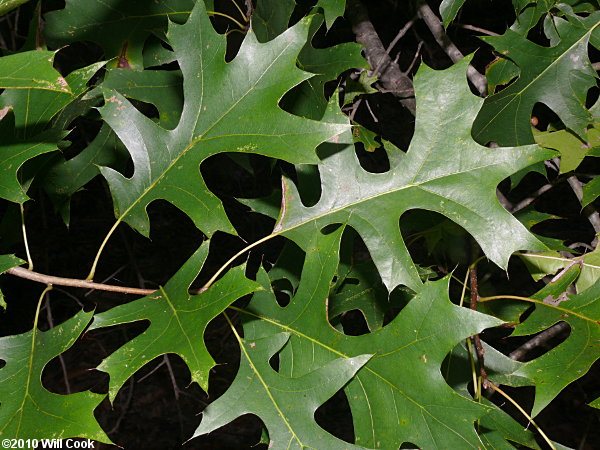
The Pin Oak’s silhouette is unmistakable—a dense, pyramidal form when young that develops a graceful, slightly drooping lower branch structure as it matures. Its name comes from the thin twigs that stud the branches like little pins, creating a delicate texture even when bare in winter. The deeply lobed leaves are smaller and more finely divided than other oaks, emerging in a soft bronze-red that transitions to glossy deep green through summer. Come autumn in Connecticut, this is where the Pin Oak truly excels: the foliage ignites in brilliant scarlet and rust-orange, sometimes holding its color well into November. The acorns are small and round, tucked into shallow cups that give them an almost endearing appearance.
Growing it in your garden
Here’s what makes the Pin Oak special: it actually prefers slightly moist, acidic soil—the kind of wet spots where other oaks struggle. While it’s incredibly adaptable and will grow in average conditions too, it seems to sing in the soil conditions naturally found throughout Connecticut. Unlike white oaks that can take decades to establish, the Pin Oak grows at a moderate to moderately fast pace, giving you relatively quick gratification. It develops a deep, fibrous root system, which means it transplants reasonably well and establishes faster than many oak species. Plant it where it has room to spread its lower branches without pruning; that graceful weeping form is part of its charm, not a flaw to be corrected.
Through the seasons
Spring arrives with soft, unfolding leaves that catch the light beautifully. By early summer, the Pin Oak has fully leafed out into a dense canopy of glossy green—perfect for providing dappled shade that still lets light filter through. Summer is quiet and reliable; this tree doesn’t demand attention, just steady moisture during dry spells. Autumn is when the drama peaks. The Pin Oak’s fall color is famous among Connecticut gardeners for its intensity and consistency; unlike some trees that color beautifully only in certain years, the Pin Oak delivers almost every fall. Winter reveals its architectural structure: that intricate branching pattern and persistent pin-like twigs create a beautiful tracery against gray New England skies.
Where it shines
Plant the Pin Oak where you want a focal point that works year-round—as a specimen in an open lawn, anchoring a corner of your property, or along a woodland edge where its graceful form can be appreciated. It’s particularly valuable in rain gardens or bioswales, those slightly soggy areas that are becoming more common as Connecticut’s weather grows more unpredictable. The Pin Oak creates perfect dappled shade for shade-tolerant perennials and shrubs, and its relatively fine texture doesn’t overwhelm smaller garden spaces the way some oaks can. It’s also excellent for properties where you want native plant benefits without the sprawling form of some other Connecticut oaks.
Perfect companions
Beneath a mature Pin Oak, shade-loving plants thrive beautifully. Try native understory shrubs like Spicebush or native azaleas, combined with shade perennials like Woodland Aster, Christmas Fern, and Trillium. The Pin Oak’s fine texture pairs beautifully with broader-leafed shrubs like Oakleaf Hydrangea, creating visual interest without competition. In larger landscapes, combine it with other native trees like Serviceberry, Dogwood, or River Birch for a diverse woodland feel that supports Connecticut’s native wildlife.
Care tips
Water regularly during the first two growing seasons to establish a deep root system. Mulch around the base with 2-3 inches of organic material, keeping it away from the trunk. Avoid heavy pruning; the Pin Oak naturally forms a beautiful structure. Once established, it’s remarkably low-maintenance. The tree is relatively pest-free in Connecticut, though like all oaks, it can occasionally host gypsy moth caterpillars. Iron chlorosis (yellowing of new leaves) can occur in very alkaline soils, so if you have an extremely high pH, amend with sulfur or choose a different oak species.
Quick facts
- Hardiness Zone: 4–8
- Mature Height & Spread: 50–65 feet tall and 40–50 feet wide
- Bloom Season: Spring (catkins); fall foliage peaks October–November
- Light Requirements: Full sun to part shade
- Water Needs: Moderate to moist; prefers slightly wet conditions
- Available at: Both our retail and wholesale locations