
Description

PLATANUS × ACERIFOLIA
If you’ve driven through New England and noticed those massive, stately trees with peeling white and gray bark dominating city streets and town squares, you’ve almost certainly seen a London Planetree. This iconic shade tree has been the backbone of American urban landscapes for over 250 years, and for good reason. The LONDON PLANETREE (also called American Sycamore hybrid) is tough, magnificent, and absolutely unfazed by the challenges that would intimidate lesser trees. It’s the tree that laughs at pollution, compacted soil, and Connecticut’s temperature swings—while somehow becoming more beautiful every single year.
What it looks like
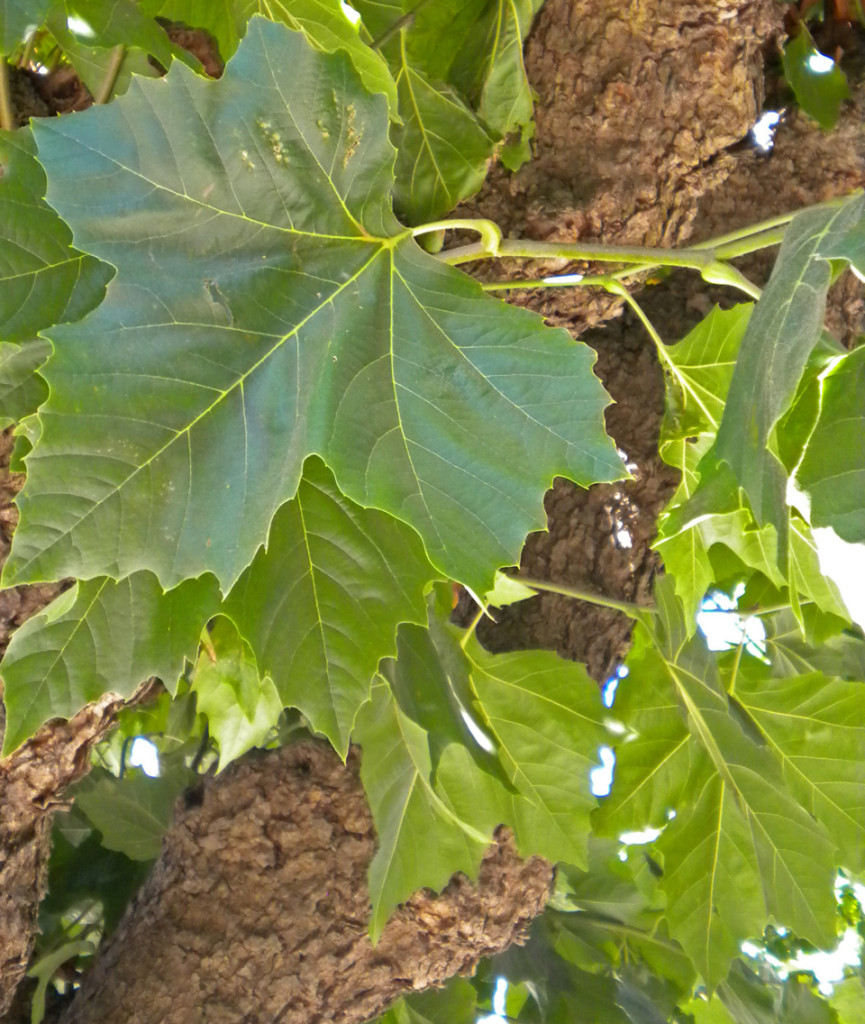
The London Planetree is nothing short of architectural. Picture massive, spreading branches that create a broad, rounded canopy that seems to open its arms to the sky. But what truly makes this tree unforgettable is its bark—a striking patchwork of cream, gray, olive, and white that peels away in irregular blocks, becoming increasingly dramatic as the tree matures. In spring, it emerges with deeply lobed leaves that look almost like maple leaves (hence the species name ACERIFOLIA), colored a fresh, clean green. These leaves turn to warm golden yellows in fall before dropping, revealing that gorgeous skeleton of branches and sensational peeling bark that steals the show all winter long.
The inconspicuous flowers appear in spring—small reddish clusters that mature into distinctive spiky ball-shaped seed pods about an inch in diameter. These seed pods dangle from thin stalks and add quirky charm to the winter landscape.
Growing it in your garden
This is where the London Planetree earns its reputation as an urban tough-as-nails champion. Plant it in full sun and give it room—this tree thinks big and grows bigger. It adapts to nearly any well-draining soil, from slightly acidic to alkaline. Unlike many large shade trees that are fussy about their conditions, the LONDON PLANETREE thrives even in compacted, disturbed soil, which is exactly why municipalities love it for streetscapes and why it’s perfect for Connecticut’s suburban yards.
The tree establishes itself quickly and grows at a moderate to fast pace, rewarding your patience with substantial growth each season. While it prefers consistent moisture during its first year or two, once established, it’s remarkably drought-tolerant—a quality that becomes more valuable every year in New England’s increasingly erratic climate.
Through the seasons
Spring brings that fresh green canopy and those curious little flowers, plus the first hint of what’s coming: peeling bark that becomes progressively more prominent. Summer is all about dense, cooling shade—the kind that makes sitting underneath feel like entering a sanctuary. The broad leaves cast dappled light that’s bright enough for some plantings below but substantial enough to genuinely cool things down on hot Connecticut afternoons.
Fall offers golden foliage that can range from warm yellow to apricot tones, though honestly, the tree’s real show comes after leaf drop. From November through March, that exfoliated bark is the star—creamy and architectural against bare branches and winter skies. Those spiky seed pods catch frost and snow beautifully, adding textural interest when little else is happening in the garden.
Where it shines
The LONDON PLANETREE is the answer to “I need a big, beautiful shade tree that won’t be fussy.” It’s magnificent as a standalone specimen where its bark can be appreciated year-round. It’s equally at home lining an avenue, anchoring a corner lot, or providing cooling shade over a large patio area. In Connecticut gardens, it’s particularly valuable in urban or suburban settings where pollution resistance and soil adaptability matter, and where you need something that can actually handle the wear and tear of being a hardworking landscape element.
Use it where you want dramatic winter interest, dependable summer shade, and a tree that will be bigger and more beautiful fifty years from now than it is today.
Perfect companions
Beneath a mature LONDON PLANETREE, consider shade-tolerant groundcovers like ajuga or vinca that won’t mind the dappled shade. Underplant with spring bulbs—daffodils and crocuses will bloom before the canopy fully leafs out. Pair it with other strong urban performers like Honeylocust or Zelkova for a mixed planting, or let it be the singular focal point and keep its immediate surroundings clean so nothing competes with that beautiful exfoliating bark.
Care tips
Prune lightly in late winter to maintain structure and encourage that branching framework. The LONDON PLANETREE is susceptible to anthracnose (a fungal disease), particularly in wet springs, but good air circulation and removing fallen leaves in fall help minimize problems. Mulch the root zone to retain moisture during establishment, but keep mulch away from the trunk itself to prevent bark issues.
Quick facts
- Hardiness Zone: 4–8 (thoroughly hardy throughout Connecticut)
- Mature Height & Spread: 60–100 feet tall and equally wide—a true giant
- Bloom Season: Spring (ornamental seed balls persist through winter)
- Light Requirements: Full sun
- Water Needs: Moderate; drought-tolerant once established
- Available at: Both our retail and wholesale locations