
Description

MALUS ‘PRAIRIEFIRE’
What if one plant could give you early spring color, summer interest, fall drama, and winter structure all in the same compact package? The Prairiefire Crabapple does exactly that, and it does it with such flair that you’ll wonder why every Connecticut garden doesn’t have one. This is the crabapple that performs—not just for a few weeks, but for months on end, transforming your landscape through every season while requiring surprisingly little fussing.
What it looks like
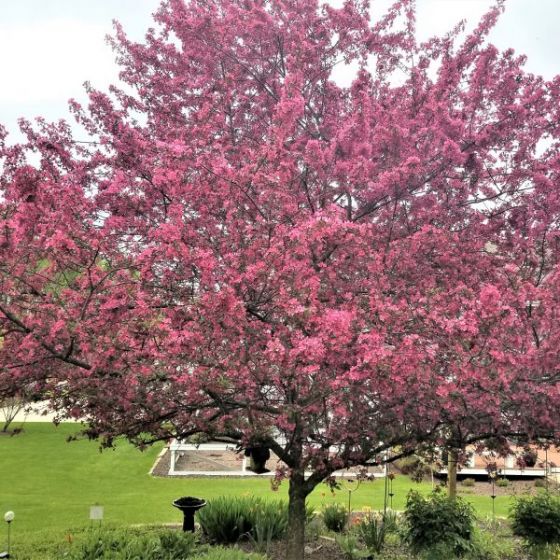
Prairiefire is a study in deep, rich color. In spring, the flower buds emerge in an almost wine-dark red, then open to reveal deep pink blossoms that seem to glow in the April sunshine. It’s showy without being garish—elegant, really, with a structure that stays upright and compact. The tree grows into a rounded, vase-shaped form that’s naturally well-proportioned, reaching about 20 feet tall and nearly as wide when mature, though it’s slow enough that you won’t feel like you’re constantly pruning it back.
The foliage follows the flower show with a deep burgundy-purple that persists throughout the growing season. Unlike some purple-leafed plants that fade to muddy green by July, Prairiefire holds its color. Come fall, those leaves shift to gorgeous shades of red and orange before dropping, revealing branches laden with bright red fruit that clings to the tree well into winter. Those persistent fruits aren’t just beautiful—they’re a wildlife magnet, feeding hungry birds during the colder months when other food sources dwindle.
Growing it in your garden
Here’s what makes Prairiefire special: it’s genuinely tough. This tree was bred specifically for the Upper Midwest, which means it laughs at New England winters and handles the unpredictable spring freezes that can catch tender plants off guard. Plant it in full sun—at least six hours daily—where it’ll develop the most vibrant color and produce the heaviest flower display. It’s not fussy about soil type, adapting to clay, loam, or sandy conditions as long as drainage is reasonable. It prefers slightly acidic to neutral soil, which aligns perfectly with Connecticut’s natural conditions.
Space it where you can appreciate it from multiple angles. A Prairiefire crabapple against a dark evergreen backdrop is absolutely stunning. It also works beautifully as a specimen tree in a foundation planting or as a focal point in a mixed border. The compact size makes it suitable even for modest yards, though it definitely earns its space in larger landscapes too.
Through the seasons
Spring arrives with those deep pink flowers that transform the tree into a frosted confection. In our Connecticut climate, bloom typically comes in late April through early May, after our hardiest trees have leafed out. The dark purple foliage that emerges provides a sophisticated backdrop for the blossoms and later for summer-blooming perennials planted nearby.
Summer brings those deep burgundy leaves and the developing fruit. The tree provides valuable structure and year-round interest without ever looking tired or spent. Fall is when Prairiefire truly becomes a showstopper—the foliage turns brilliant shades of red and orange while simultaneously displaying those persistent ruby-red fruits. Winter reveals the tree’s architectural bones, with the bright red crabapples hanging like ornaments against the bare branches. This is when birds discover them, creating animated scenes that are pure entertainment.
Where it shines
Prairiefire excels as a specimen tree where its full seasonal show can be appreciated. It’s perfect for the corner of a property or as a focal point visible from your house. It works beautifully in mixed borders, in woodland edges, or as part of a four-seasons garden plan. Smaller than many ornamental trees, it fits comfortably in suburban landscapes. Plant it near a seating area or window where you can enjoy the flowers in spring and the winter fruit display when the rest of the garden is dormant.
Perfect companions
Underplant Prairiefire with shade-tolerant perennials that bloom when the tree’s spring flowers fade—think hellebores, woodland phlox, and coral bells. The deep foliage color pairs beautifully with silver-leafed plants like artemisia or dusty miller. Pair it with other spring bloomers like magnolias or serviceberries for an extended flower show, or let it stand alone as the star of its space.
Care tips
Water regularly during the first growing season while the root system establishes itself, then Prairiefire becomes quite drought-tolerant. Minimal pruning is needed—just remove any crossing or damaged branches in early spring. Unlike some crabapples, this variety has good disease resistance and rarely succumbs to the fungal issues that plague some varieties in humid Connecticut summers. A light feeding in early spring supports vigorous growth, though it’s not demanding.
Quick facts
- Hardiness Zone: 4-7
- Mature Height & Spread: 20 feet tall, 18-20 feet wide
- Bloom Season: Late April through early May
- Light Requirements: Full sun (6+ hours daily)
- Water Needs: Moderate; drought-tolerant once established
- Available at: Both our retail and wholesale locations