Oakleaf

OAKLEAF HYDRANGEA (HYDRANGEA QUERCIFOLIA)

If you’ve been searching for something that handles wet soil, deep shade, and Connecticut winters without complaint, while also delivering one of the most sophisticated looks a shrub can offer—look no further. The Oakleaf Hydrangea is that rare plant that seems to do everything elegantly. It’s the thoughtful gardener’s secret weapon, the one that makes visitors pause and ask, “What is that beautiful thing?” And the best part? It’s practically unfussy about where you plant it.

What it looks like

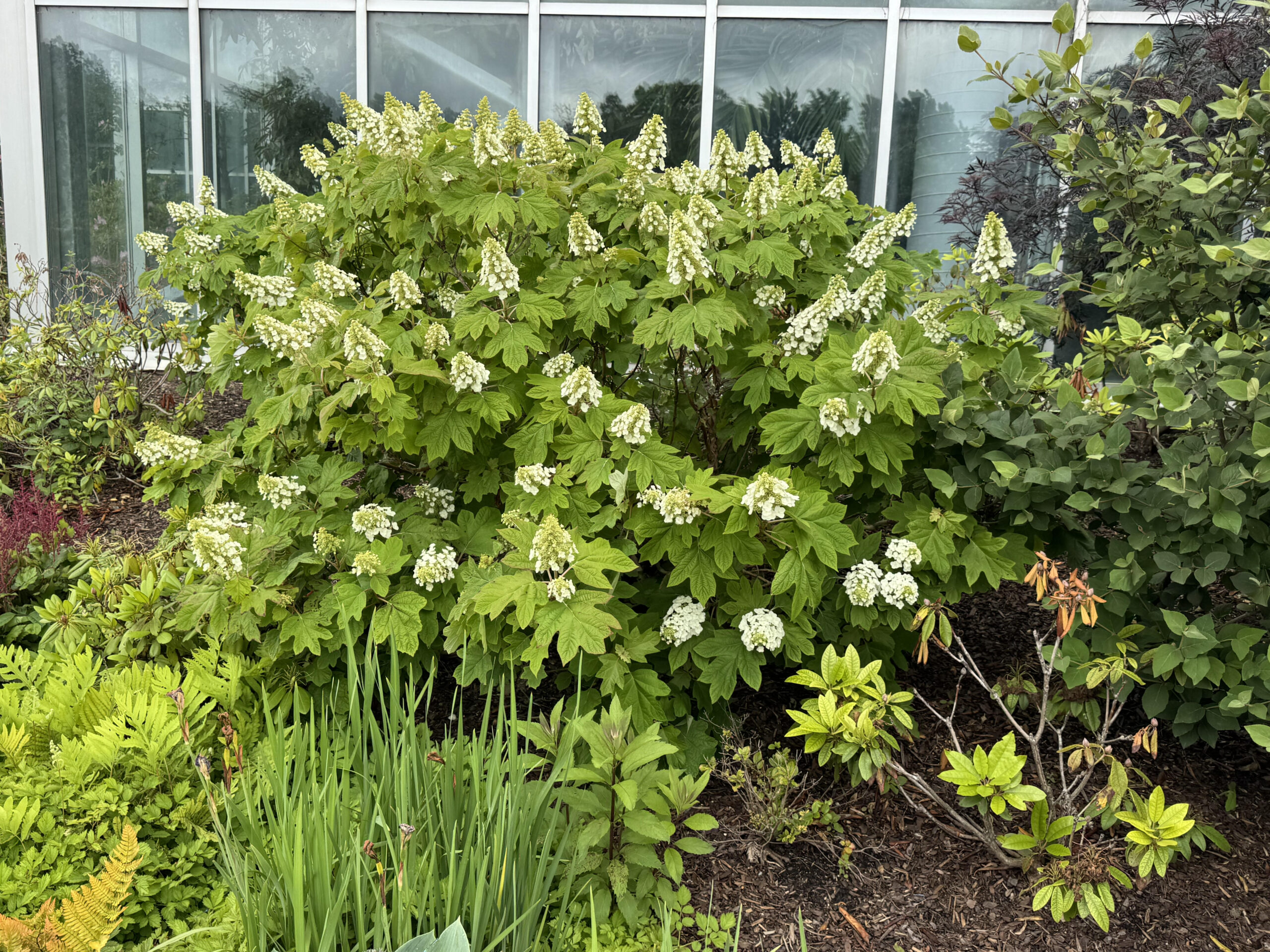
The Oakleaf Hydrangea is instantly recognizable by its deeply lobed, oak-shaped foliage—hence the common name—which unfurls in spring with a bronzy-burgundy tint before maturing to deep green. The leaves are substantial and architectural, adding textural interest to your garden even before the flowers appear. Come early summer, elongated panicles of creamy white flowers emerge, held proudly above the foliage in upright clusters. These blooms are densely packed and elegant, nothing like the mopheads or lacecaps you might know from other hydrangea varieties. As summer progresses, the flowers gradually shift to soft pink, then deeper rose tones by fall—a gentle color transformation that unfolds over weeks. The seed heads that follow are equally ornamental, persisting through winter and catching frost in ways that make December mornings feel special.

Growing it in your garden

This is where HYDRANGEA QUERCIFOLIA truly shines in New England gardens. Unlike its Asian cousins, the Oakleaf Hydrangea is genuinely at home in our climate. It’s hardy through Zone 5 winters without flinching, and in Connecticut, you’ll find it unfazed by our temperature swings and variable snow cover. Plant it in part shade to shade—it actually prefers afternoon shade in our hot summers and will thank you for protection from blazing western exposure. The real gift is its flexibility with soil and moisture. While it certainly appreciates consistent moisture during establishment, it’s remarkably tolerant of both wet clay soils and periods of dryness once settled in. This makes it perfect for those tricky low spots in your yard or for areas where drainage is less than ideal. Give it room to develop its naturally graceful, spreading form. At maturity, it’ll want 4-6 feet of space, but it’s not a plant that demands rigid pruning or aggressive management.

Through the seasons

Spring arrives early with the Oakleaf Hydrangea. The emerging foliage has that beautiful reddish cast that makes you feel like your garden is waking up with intention. By early June, those distinctive white panicles begin to unfurl, and the plant becomes an absolute focal point. July and August are peak flower season—the blooms are pristine and luminous, creating brightness even in shady corners. As September approaches, watch the color show: flowers fade to dusty rose, then deeper mauve tones. October brings that critical moment of beauty when the foliage itself turns burgundy to mahogany, complementing the faded flowers perfectly. And here’s the thing about winter: don’t rush to cut those spent flower heads down. Those tan and brown panicles, especially when frosted or dusted with snow, are gorgeous and add textural interest through the coldest months. You can prune in late winter, just before growth begins in spring.

Where it shines

The Oakleaf Hydrangea is your answer for shady woodland gardens, for that tough corner on the north side of your home, for areas where other plants have disappointed you with their fussiness. It’s magnificent as a specimen shrub in a mixed border, where its graceful form and long season of interest make it earn its space. Plant it in a shrub mass for a cohesive, naturalistic look, or use it as a focal point along a pathway. It’s also excellent in rain gardens and bioswales—areas designed to capture and filter runoff. The native pollinators love those flowers, and the plant itself is remarkably disease-free compared to other hydrangeas.

Perfect companions

Pair Oakleaf Hydrangea with shade-tolerant perennials like Astilbe or Japanese Anemone for a layered, woodland effect. Native ferns—Ostrich Fern and Christmas Fern both thrive alongside it. For additional shrub structure, combine it with Serviceberry or Stewartiodendron. The combination of textures and the succession of bloom times creates a garden that feels curated and naturally sophisticated.

Care tips

Mulch at planting time with 2-3 inches of organic material to help retain moisture and regulate soil temperature. Once established—typically by the second growing season—the Oakleaf Hydrangea becomes quite self-sufficient. Water during extended dry spells, particularly in summer. Pruning is minimal: simply remove any dead wood in early spring and shape lightly if needed. The plant naturally forms an elegant, spreading mound, so aggressive pruning usually isn’t necessary. Oakleaf Hydrangeas don’t require deadheading unless you absolutely prefer fresh flowers to the ornamental seed heads, and they don’t need fertilizing in average garden soil.

Quick facts

  • Hardiness Zone: 5-9
  • Mature Height & Spread: 4-6 feet tall and 4-6 feet wide
  • Bloom Season: Early summer through fall (June to September)
  • Light Requirements: Part shade to full shade
  • Water Needs: Moderate; drought-tolerant once established
  • Available at: Both our retail and wholesale locations

Oakleaf

Dark green shaped leaf shrub with large, white flowers turning pink / purple in Fall.

Pot Size (gallons), Height: #3 #7 24” B&B, 36”

Description

Oakleaf

OAKLEAF HYDRANGEA (HYDRANGEA QUERCIFOLIA)

If you’ve been searching for something that handles wet soil, deep shade, and Connecticut winters without complaint, while also delivering one of the most sophisticated looks a shrub can offer—look no further. The Oakleaf Hydrangea is that rare plant that seems to do everything elegantly. It’s the thoughtful gardener’s secret weapon, the one that makes visitors pause and ask, “What is that beautiful thing?” And the best part? It’s practically unfussy about where you plant it.

What it looks like

The Oakleaf Hydrangea is instantly recognizable by its deeply lobed, oak-shaped foliage—hence the common name—which unfurls in spring with a bronzy-burgundy tint before maturing to deep green. The leaves are substantial and architectural, adding textural interest to your garden even before the flowers appear. Come early summer, elongated panicles of creamy white flowers emerge, held proudly above the foliage in upright clusters. These blooms are densely packed and elegant, nothing like the mopheads or lacecaps you might know from other hydrangea varieties. As summer progresses, the flowers gradually shift to soft pink, then deeper rose tones by fall—a gentle color transformation that unfolds over weeks. The seed heads that follow are equally ornamental, persisting through winter and catching frost in ways that make December mornings feel special.

Growing it in your garden

This is where HYDRANGEA QUERCIFOLIA truly shines in New England gardens. Unlike its Asian cousins, the Oakleaf Hydrangea is genuinely at home in our climate. It’s hardy through Zone 5 winters without flinching, and in Connecticut, you’ll find it unfazed by our temperature swings and variable snow cover. Plant it in part shade to shade—it actually prefers afternoon shade in our hot summers and will thank you for protection from blazing western exposure. The real gift is its flexibility with soil and moisture. While it certainly appreciates consistent moisture during establishment, it’s remarkably tolerant of both wet clay soils and periods of dryness once settled in. This makes it perfect for those tricky low spots in your yard or for areas where drainage is less than ideal. Give it room to develop its naturally graceful, spreading form. At maturity, it’ll want 4-6 feet of space, but it’s not a plant that demands rigid pruning or aggressive management.

Through the seasons

Spring arrives early with the Oakleaf Hydrangea. The emerging foliage has that beautiful reddish cast that makes you feel like your garden is waking up with intention. By early June, those distinctive white panicles begin to unfurl, and the plant becomes an absolute focal point. July and August are peak flower season—the blooms are pristine and luminous, creating brightness even in shady corners. As September approaches, watch the color show: flowers fade to dusty rose, then deeper mauve tones. October brings that critical moment of beauty when the foliage itself turns burgundy to mahogany, complementing the faded flowers perfectly. And here’s the thing about winter: don’t rush to cut those spent flower heads down. Those tan and brown panicles, especially when frosted or dusted with snow, are gorgeous and add textural interest through the coldest months. You can prune in late winter, just before growth begins in spring.

Where it shines

The Oakleaf Hydrangea is your answer for shady woodland gardens, for that tough corner on the north side of your home, for areas where other plants have disappointed you with their fussiness. It’s magnificent as a specimen shrub in a mixed border, where its graceful form and long season of interest make it earn its space. Plant it in a shrub mass for a cohesive, naturalistic look, or use it as a focal point along a pathway. It’s also excellent in rain gardens and bioswales—areas designed to capture and filter runoff. The native pollinators love those flowers, and the plant itself is remarkably disease-free compared to other hydrangeas.

Perfect companions

Pair Oakleaf Hydrangea with shade-tolerant perennials like Astilbe or Japanese Anemone for a layered, woodland effect. Native ferns—Ostrich Fern and Christmas Fern both thrive alongside it. For additional shrub structure, combine it with Serviceberry or Stewartiodendron. The combination of textures and the succession of bloom times creates a garden that feels curated and naturally sophisticated.

Care tips

Mulch at planting time with 2-3 inches of organic material to help retain moisture and regulate soil temperature. Once established—typically by the second growing season—the Oakleaf Hydrangea becomes quite self-sufficient. Water during extended dry spells, particularly in summer. Pruning is minimal: simply remove any dead wood in early spring and shape lightly if needed. The plant naturally forms an elegant, spreading mound, so aggressive pruning usually isn’t necessary. Oakleaf Hydrangeas don’t require deadheading unless you absolutely prefer fresh flowers to the ornamental seed heads, and they don’t need fertilizing in average garden soil.

Quick facts

  • Hardiness Zone: 5-9
  • Mature Height & Spread: 4-6 feet tall and 4-6 feet wide
  • Bloom Season: Early summer through fall (June to September)
  • Light Requirements: Part shade to full shade
  • Water Needs: Moderate; drought-tolerant once established
  • Available at: Both our retail and wholesale locations