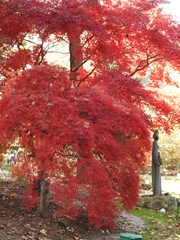
Red Dragon Japanese Maple

If you’re looking for a showstopper that’ll have your neighbors asking “where did you get that?!”, the Red Dragon Japanese Maple (ACER PALMATUM ‘DISSECTUM GARNET’) is absolutely it. This isn’t just another landscape tree—it’s a living work of art that transforms your garden into something truly magical, especially here in Connecticut where we appreciate the drama of seasonal change. With its cascading, deeply cut foliage that shifts from deep crimson to burgundy throughout the year, this elegant specimen brings sophistication and Japanese garden vibes to any setting.

What it looks like

The Red Dragon is a weeping Japanese maple with the most exquisitely delicate foliage you’ll ever see. Those feathery, finely dissected leaves—almost like they’ve been carefully cut into thin ribbons—create an incredibly fine texture that’s totally different from the bolder maples you might see around Connecticut. In spring, the new growth emerges in a gorgeous deep red or burgundy shade, and honestly, it just gets more dramatic from there. The branching structure is gracefully spreading and somewhat weeping, creating that elegant, fountain-like silhouette that makes these plants so coveted. The overall effect is refined and peaceful, like having a little piece of a Japanese garden right in your own backyard. Most mature specimens develop a distinctive mounding, cascading form that’s absolutely stunning as a focal point.

Growing it in your garden

Here’s the great news: the Red Dragon adapts really well to our New England climate. We’re solidly in the hardiness zone where this beauty thrives, and it’s actually tougher than many people think. That said, these maples do appreciate some thoughtfulness in placement. They love morning sun with afternoon shade—think of creating that dappled light you’d find under taller trees. In our Connecticut climate, this protects the delicate foliage from getting scorched in our hot summers while still allowing enough light for that gorgeous color development. They prefer well-draining soil that’s slightly acidic and rich in organic matter. If your soil tends toward clay (and let’s face it, lots of Connecticut gardens have that challenge), amend it generously with compost before planting. These trees don’t like wet feet, so good drainage is genuinely important. Plant in spring or fall when our temperatures are moderate, giving the roots time to establish before extreme weather hits.

Through the seasons

The Red Dragon’s seasonal progression is one of its greatest gifts. In spring, as everything else in Connecticut is still waking up, those new crimson leaves unfurl with such elegance, catching the light beautifully. Summer brings deep burgundy foliage that provides stunning contrast in the garden—pair it with silver-leafed plants or bright perennials and you’ve got pure magic. Fall is when things get really interesting, as the leaves deepen even further into rich wine and burgundy tones with hints of black. And here’s a bonus: even in winter, after the leaves drop, the graceful branching structure remains architectural and beautiful, especially if you get a dusting of New England snow clinging to those delicate branches. It’s genuinely a four-season ornamental.

Where it shines

The Red Dragon is perfect for creating a focal point in your garden where you want to draw the eye. It works beautifully as a specimen plant on a lawn, perhaps near a seating area where you can really appreciate those leaves up close. It’s also fantastic in containers on patios or decks—many Connecticut gardeners love this option because you can move it around to find the perfect light and protect it from harsh winter winds if needed. In woodland gardens or understory plantings, it creates layers of interest and color. It’s also wonderful near water features like ponds or streams, where its reflection doubles the beauty. Corner plantings, entryways, and anywhere you want a touch of elegance and drama—that’s where this maple shines.

Perfect companions

Plant your Red Dragon with complementary plants to really make it pop. Hostas are absolute winners underneath or nearby—their broad leaves provide a beautiful contrast to the maple’s fine texture, and they share similar growing preferences. Heucheras with their colorful foliage (try silvery or chartreuse varieties) create stunning color combinations. Japanese forest grass (HAKONECHLOA MACRA) is perfect for softening the base and reinforcing that Japanese garden aesthetic. Shade-tolerant ferns add further textural interest, and bleeding heart (DICENTRA) provides delicate white or pink flowers that complement the foliage beautifully. Astilbes offer another feathery texture at ground level, and their plumes echo the delicate quality of the maple leaves. Even simple shade perennials like epimedium or tiarella create peaceful, cohesive plant communities.

Care tips

Japanese maples, including this gorgeous Red Dragon, are pretty low-maintenance once established, but a few things help them truly thrive in Connecticut. Water regularly during the first year after planting, especially during our sometimes-dry Connecticut summers. Mulch around the base with 2-3 inches of organic material to keep roots cool and retain moisture, but keep it away from the trunk. Prune only to remove dead wood or to shape very gently—these naturally elegant forms don’t typically need much pruning. In spring, you can remove any branches that are crossing or growing awkwardly. Fertilizer isn’t usually necessary if you’ve amended the soil well at planting, but a light application of balanced, slow-release fertilizer in early spring won’t hurt. Watch for spider mites during hot, dry spells (common in Connecticut summers), and give the foliage a gentle misting if conditions get really dry. These trees prefer not to be heavily fertilized—it can actually reduce color intensity and make them more susceptible to stress.

Quick facts

  • Hardiness Zone: Zones 5-8 (perfect for Connecticut)
  • Mature Height & Spread: 6-8 feet tall and 8-10 feet wide, though it grows slowly
  • Bloom Season: Spring flowers (inconspicuous); foliage is the main attraction
  • Light Requirements: Partial shade to dappled sunlight (morning sun, afternoon shade ideal)
  • Water Needs: Moderate; keep soil evenly moist but not waterlogged
  • Available at: Both our retail and wholesale locations.

Red Dragon Japanese Maple

Best grown in moist, organically rich, slightly acidic, well-drained soils in full sun to part shade. Grows well in sandy loams. May be grown in full sun in the northern parts of its growing range, but prefers some part afternoon shade in the southern parts (including St. Louis) of its growing range.

Pot Size (gallons), Height: 24-30″

Description

Red Dragon Japanese Maple

If you’re looking for a showstopper that’ll have your neighbors asking “where did you get that?!”, the Red Dragon Japanese Maple (ACER PALMATUM ‘DISSECTUM GARNET’) is absolutely it. This isn’t just another landscape tree—it’s a living work of art that transforms your garden into something truly magical, especially here in Connecticut where we appreciate the drama of seasonal change. With its cascading, deeply cut foliage that shifts from deep crimson to burgundy throughout the year, this elegant specimen brings sophistication and Japanese garden vibes to any setting.

What it looks like

The Red Dragon is a weeping Japanese maple with the most exquisitely delicate foliage you’ll ever see. Those feathery, finely dissected leaves—almost like they’ve been carefully cut into thin ribbons—create an incredibly fine texture that’s totally different from the bolder maples you might see around Connecticut. In spring, the new growth emerges in a gorgeous deep red or burgundy shade, and honestly, it just gets more dramatic from there. The branching structure is gracefully spreading and somewhat weeping, creating that elegant, fountain-like silhouette that makes these plants so coveted. The overall effect is refined and peaceful, like having a little piece of a Japanese garden right in your own backyard. Most mature specimens develop a distinctive mounding, cascading form that’s absolutely stunning as a focal point.

Growing it in your garden

Here’s the great news: the Red Dragon adapts really well to our New England climate. We’re solidly in the hardiness zone where this beauty thrives, and it’s actually tougher than many people think. That said, these maples do appreciate some thoughtfulness in placement. They love morning sun with afternoon shade—think of creating that dappled light you’d find under taller trees. In our Connecticut climate, this protects the delicate foliage from getting scorched in our hot summers while still allowing enough light for that gorgeous color development. They prefer well-draining soil that’s slightly acidic and rich in organic matter. If your soil tends toward clay (and let’s face it, lots of Connecticut gardens have that challenge), amend it generously with compost before planting. These trees don’t like wet feet, so good drainage is genuinely important. Plant in spring or fall when our temperatures are moderate, giving the roots time to establish before extreme weather hits.

Through the seasons

The Red Dragon’s seasonal progression is one of its greatest gifts. In spring, as everything else in Connecticut is still waking up, those new crimson leaves unfurl with such elegance, catching the light beautifully. Summer brings deep burgundy foliage that provides stunning contrast in the garden—pair it with silver-leafed plants or bright perennials and you’ve got pure magic. Fall is when things get really interesting, as the leaves deepen even further into rich wine and burgundy tones with hints of black. And here’s a bonus: even in winter, after the leaves drop, the graceful branching structure remains architectural and beautiful, especially if you get a dusting of New England snow clinging to those delicate branches. It’s genuinely a four-season ornamental.

Where it shines

The Red Dragon is perfect for creating a focal point in your garden where you want to draw the eye. It works beautifully as a specimen plant on a lawn, perhaps near a seating area where you can really appreciate those leaves up close. It’s also fantastic in containers on patios or decks—many Connecticut gardeners love this option because you can move it around to find the perfect light and protect it from harsh winter winds if needed. In woodland gardens or understory plantings, it creates layers of interest and color. It’s also wonderful near water features like ponds or streams, where its reflection doubles the beauty. Corner plantings, entryways, and anywhere you want a touch of elegance and drama—that’s where this maple shines.

Perfect companions

Plant your Red Dragon with complementary plants to really make it pop. Hostas are absolute winners underneath or nearby—their broad leaves provide a beautiful contrast to the maple’s fine texture, and they share similar growing preferences. Heucheras with their colorful foliage (try silvery or chartreuse varieties) create stunning color combinations. Japanese forest grass (HAKONECHLOA MACRA) is perfect for softening the base and reinforcing that Japanese garden aesthetic. Shade-tolerant ferns add further textural interest, and bleeding heart (DICENTRA) provides delicate white or pink flowers that complement the foliage beautifully. Astilbes offer another feathery texture at ground level, and their plumes echo the delicate quality of the maple leaves. Even simple shade perennials like epimedium or tiarella create peaceful, cohesive plant communities.

Care tips

Japanese maples, including this gorgeous Red Dragon, are pretty low-maintenance once established, but a few things help them truly thrive in Connecticut. Water regularly during the first year after planting, especially during our sometimes-dry Connecticut summers. Mulch around the base with 2-3 inches of organic material to keep roots cool and retain moisture, but keep it away from the trunk. Prune only to remove dead wood or to shape very gently—these naturally elegant forms don’t typically need much pruning. In spring, you can remove any branches that are crossing or growing awkwardly. Fertilizer isn’t usually necessary if you’ve amended the soil well at planting, but a light application of balanced, slow-release fertilizer in early spring won’t hurt. Watch for spider mites during hot, dry spells (common in Connecticut summers), and give the foliage a gentle misting if conditions get really dry. These trees prefer not to be heavily fertilized—it can actually reduce color intensity and make them more susceptible to stress.

Quick facts

  • Hardiness Zone: Zones 5-8 (perfect for Connecticut)
  • Mature Height & Spread: 6-8 feet tall and 8-10 feet wide, though it grows slowly
  • Bloom Season: Spring flowers (inconspicuous); foliage is the main attraction
  • Light Requirements: Partial shade to dappled sunlight (morning sun, afternoon shade ideal)
  • Water Needs: Moderate; keep soil evenly moist but not waterlogged
  • Available at: Both our retail and wholesale locations.