
Description
QUERCUS X ‘REGAL PRINCE’
The Regal Prince Oak commands attention the moment you see it. This isn’t a tree that whispers in your landscape—it announces itself with architectural presence and undeniable grace. If you’re looking for a specimen oak that combines the best traits of its parent species while staying compact enough for residential gardens, this hybrid has been waiting for you.
What it looks like
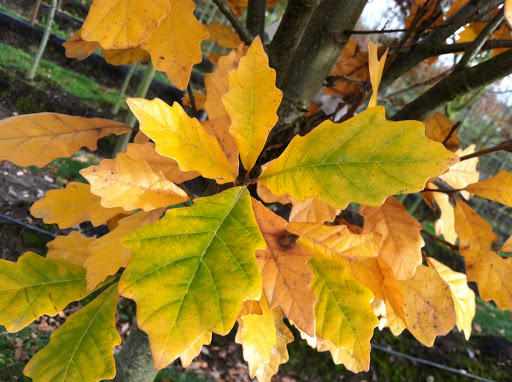
The Regal Prince Oak presents a dramatically columnar form that feels almost formal in its bearing. Unlike spreading oaks that demand sprawling space, this selection grows upright and refined, typically reaching 40 to 50 feet tall but only 15 to 20 feet wide. The foliage is deeply lobed—those signature oak leaves that make this tree unmistakably itself—and they emerge in spring as fresh green before deepening into a handsome dark emerald throughout summer. Come autumn, the show begins in earnest. The leaves transform into rich burgundy and deep red tones that hold remarkably well into November, giving you weeks of that particular kind of October glory that makes New England gardens legendary.
Growing it in your garden
Here’s what makes the Regal Prince such a smart choice for Connecticut landscapes: it’s an oak that actually wants to thrive here. This is a hybrid created by crossing the Red Oak with the Scarlet Oak, combining the vigor of both parents while eliminating some of their fussier characteristics. Plant it in full sun—six hours minimum, though more is better—and give it well-draining soil. Oaks aren’t fussy about soil pH, which means you’re not spending energy amending and fussing. They prefer soil that’s on the loamy side, but once established, the Regal Prince settles in with the confidence of a tree that knows its place in the world.
The columnar form means you can plant this oak closer to structures than you might with a traditional spreading oak. It’s perfect for creating vertical interest without overwhelming a property. Plant it as a specimen where you want a strong focal point, or use multiple trees to create a formal allée or screen.
Through the seasons
Spring in Connecticut brings fresh oak leaves unfurling in that tender pale green that somehow feels like a promise. By early summer, the canopy has filled in completely, providing dappled shade that’s perfect for shade-tolerant understory plants. The tree is wonderfully low-maintenance through the warm months—no special fussing required, just steady growth.
Fall is when the Regal Prince truly earns its place in your garden. While your neighbors’ maples might be finished by October, this oak is still delivering that deep burgundy-red color into late autumn. The leaves tend to persist longer than some oaks, which means extended color and extended interest. Winter reveals the tree’s strong structural form, which is handsome in a stark, architectural way that adds winter dimension to your garden.
Where it shines
This is your oak for formal gardens that need height without width. Use it as a street tree, a specimen in a larger lawn, or a backbone for an island planting. The columnar form makes it excellent for screening views or creating definition along property lines without the aggressive spread of traditional oaks. It’s also wonderful in transitional plantings where you’re moving from a more manicured garden into wilder areas—the Regal Prince adds structure without dominating.
Its deep root system and eventual size make it perfect for mature landscapes where you’re willing to invest in a tree that will be there for your children and grandchildren. This isn’t an instant-gratification plant; it’s a legacy tree.
Perfect companions
Plant the Regal Prince as your anchoring specimen, then let smaller plants tell supporting stories around it. Shade-tolerant understory plants like native spicebush, American witch hazel, or Connecticut natives such as eastern redwood can create layered interest beneath the canopy. In sunnier situations around the tree’s drip line, spring bulbs—daffodils, tulips, and native bloodroot—provide seasonal interest before the oak’s canopy fully leafs out and creates summer shade.
Care tips
Water deeply and regularly during the first two seasons as the Regal Prince establishes its root system. Once established—and oaks are notably good at getting established—this tree is remarkably self-sufficient. Minimal pruning is needed beyond removing dead or crossing branches in early spring. Oaks don’t typically suffer from major pest or disease issues in our region, though keep an eye out for occasional gypsy moth activity during peak years—which is rare and manageable.
Mulch around the base during the first few years to retain moisture and suppress competition, but keep mulch several inches away from the trunk itself to prevent rot.
Quick facts
- Hardiness Zone: 4–8
- Mature Height & Spread: 40–50 feet tall, 15–20 feet wide
- Bloom Season: Spring (catkins)
- Light Requirements: Full sun (6+ hours)
- Water Needs: Moderate; established trees are drought-tolerant
- Available at: Both our retail and wholesale locations.